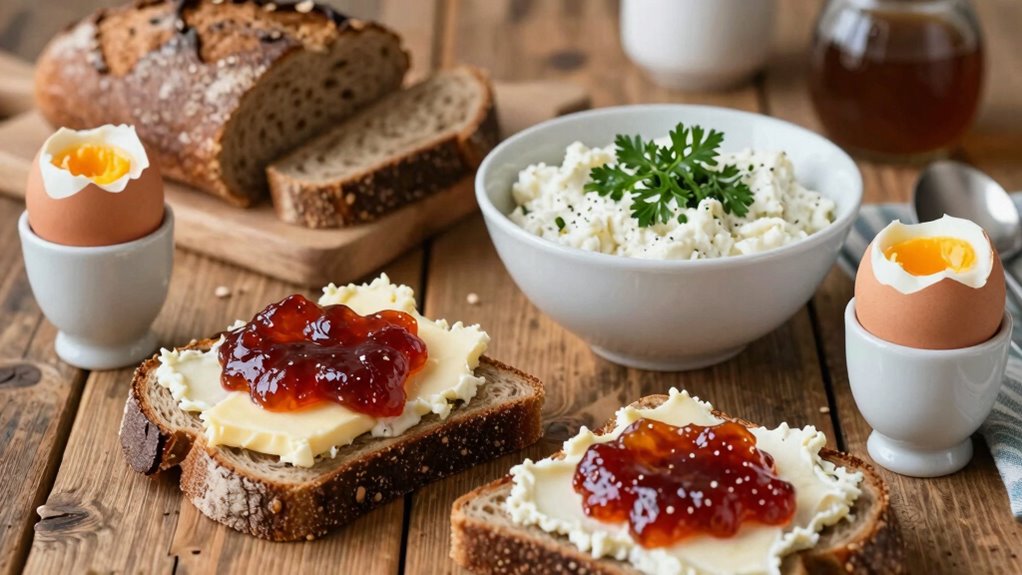

In Eastern European breakfasts, you’ll find bread, dairy, and eggs forming the heart of the meal. You might enjoy crusty rye or soft challah, often toasted with butter, preserves, or toppings like cold cuts and cheese. Eggs are prepared in various ways, from scrambled to fried, often with herbs and spices, while dairy products like yogurt and cheese add richness. These traditions reflect a culture deeply rooted in history and regional flavors—exploring them reveals even more about their culinary heritage.

Get kitchen staples and gadgets delivered free with Prime
- Fast, free delivery on millions of items
- Prime Video, Amazon Music and more included
- Member-only deals all year
Key Takeaways
- Bread serves as a central vessel for toppings like butter, preserves, cheese, and cold cuts in Eastern European breakfasts.
- Dairy products such as yogurt, cheese, and kefir are common toppings or ingredients, emphasizing regional dairy traditions.
- Eggs are prepared in various ways—scrambled, fried, or boiled—and often paired with herbs and bread.
- Traditional breakfasts highlight regional ingredients, reflecting cultural influences and historical food practices.
- The combination of bread, dairy, and eggs showcases regional identity, hospitality, and sustainable food sourcing.

Bread plays a central role in Eastern European mornings. You might find yourself slicing thick, crusty rye bread or soft, yeasted challah, often served fresh or toasted. These breads are more than just a side; they’re a vessel for other ingredients or toppings. In Poland, bread is frequently topped with butter and preserves, while in Hungary, it might be accompanied by cold cuts or cheeses. The traditional recipes emphasize simple ingredients, but their preparation techniques reflect centuries of cultural influences, from Slavic to Jewish traditions. You’ll notice that bread isn’t merely a carbohydrate but a cultural symbol, representing hospitality and sustenance.
Bread is a cultural symbol of hospitality and sustenance, enjoyed with butter, preserves, cold cuts, or cheeses across Eastern Europe.
Dairy products are equally crucial. You could enjoy a bowl of thick, tangy yogurt or a slice of cheese, both of which are staples in this region’s breakfast repertoire. In Romania and Bulgaria, dairy is often incorporated into breakfast dishes, either as a topping or mixed into other foods. Soured milk, or kefir, is common, offering a probiotic boost that’s deeply rooted in traditional recipes. These dairy products, influenced by the region’s pastoral history, showcase how dairy farming shaped local diets. They also add a creamy texture and richness to breakfast, balancing the heartiness of bread and eggs. Additionally, the region’s pastoral history influences the variety and quality of dairy products available, making them a fundamental part of the regional diet. The emphasis on local sourcing further supports sustainable practices in dairy production. A long-standing tradition of dairy consumption continues to influence modern breakfast choices, emphasizing freshness and quality.
Eggs, prepared in countless ways, tie everything together. You might scramble them with herbs and cheese, or enjoy them fried with a side of bread and pickles. Hard-boiled eggs are common on breakfast tables, especially in rural areas. Eggs symbolize nourishment and are often part of traditional recipes that reflect cultural influences from Ottoman, Slavic, and Central European cuisines. They’re versatile, quick to prepare, and complement other breakfast staples perfectly. Additionally, the use of local herbs and spices in egg dishes highlights the regional flavor profiles that define Eastern European cuisine. This focus on traditional food practices emphasizes the importance of sustainability and preservation of culinary heritage for future generations.
As an affiliate, we earn on qualifying purchases.
Frequently Asked Questions
What Are Common Regional Variations in Eastern European Breakfast Breads?
You’ll notice regional pastry varieties like Poland’s obwarzanek or Hungary’s pogácsa, each showcasing local flavors. Traditional bread accompaniments differ too; in Russia, rye bread is common, while in the Balkans, you might find flatbreads or lepinja. These variations reflect local ingredients and customs, giving each area a unique breakfast experience. Exploring these regional breads lets you taste the diverse culinary traditions across Eastern Europe.
How Do Dairy Products Differ Across Eastern European Breakfast Traditions?
You might think dairy products are similar across Eastern Europe, but dairy fermentation and regional dairy varieties tell a different story. In some countries, you’ll find tangy, fermented products like kefir or ryazhenka, while others prefer fresh cheeses like bryndza or quark. These differences reflect local traditions, climate, and available resources, giving each region its unique breakfast dairy experience. So, don’t overlook these regional varieties—they truly showcase local flavors.
Are Eggs Prepared Differently in Various Eastern European Countries?
You’ll find that egg preparation methods vary across Eastern European countries, reflecting local tastes and traditions. In some places, breakfast egg varieties include soft-boiled, poached, or fried eggs, often served with bread or sausage. In others, they might prepare scrambled eggs or omelets, sometimes mixed with herbs or vegetables. This diversity highlights regional culinary influences and offers a rich variety of flavors to start your day.
What Beverages Typically Accompany Eastern European Breakfasts?
You’ll usually find traditional coffee and fruit juices accompanying Eastern European breakfasts. Coffee, often strong and brewed traditionally, energizes your morning, while fruit juices—like apple, cherry, or apricot—add a invigorating, sweet touch. These beverages perfectly complement hearty breads, dairy, and eggs, creating a balanced start to your day. Whether you prefer a hot cup of coffee or a chilled glass of juice, they’re essential for a typical Eastern European breakfast experience.
How Do Seasonal Ingredients Influence Breakfast Choices in Eastern Europe?
Think of seasonal ingredients like a painter’s palette, constantly changing with nature’s mood. You’ll notice local ingredient shifts influence breakfast choices, bringing fresh berries in summer or hearty root vegetables in winter. These seasonal flavor inspirations encourage you to adapt dishes, adding new herbs, cheeses, or grains that reflect what’s available. This natural rhythm keeps your mornings vibrant and connected to the land’s ebb and flow.
Conclusion
So, savor the simple, satisfying staples of Eastern European mornings—bread, dairy, and eggs. These hearty ingredients harmonize to create wholesome, welcoming breakfasts that warm your day. By blending bold flavors with beloved traditions, you’ll discover delicious diversity in every bite. Embrace these enduring essentials, and let their comforting combination carry your mornings with charm and cheer. Because in Eastern Europe, every breakfast becomes a beautiful beginning, bursting with balance and bliss.
NFL season / tailgating Picks
team gear
As an affiliate, we earn on qualifying purchases.