
Ethiopian breakfasts feel communal and comforting because they focus on shared rituals, hearty dishes like injera with stews, and social interactions around the table. Preparing and eating together strengthens bonds, turning a meal into a celebration of community. The traditional coffee ceremony and other customs create a mindful, warm environment that emphasizes hospitality and connection. If you explore further, you’ll discover how these traditions make every breakfast a meaningful, unifying experience.

Get kitchen staples and gadgets delivered free with Prime
- Fast, free delivery on millions of items
- Prime Video, Amazon Music and more included
- Member-only deals all year
Key Takeaways
- Sharing a large injera platter promotes conversation and strengthens social bonds among diners.
- Traditional breakfast rituals, like the coffee ceremony, foster mindfulness and communal respect.
- Meals are designed for connection, emphasizing nurturing relationships over individual nourishment.
- Passing and serving food together creates a sense of belonging and collective participation.
- Beverages like coffee and honey wine enhance social interactions and celebrate cultural hospitality.
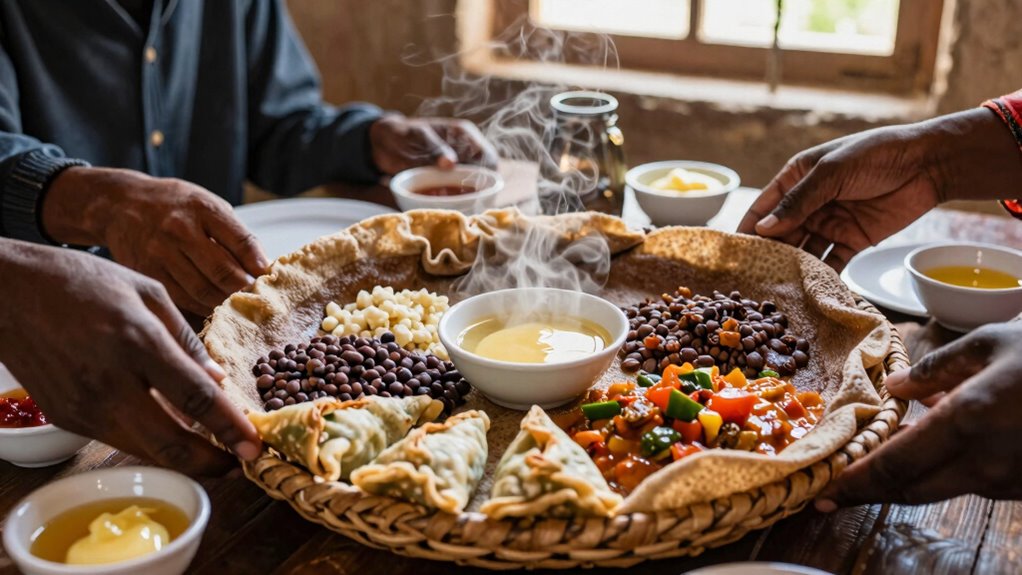
Ethiopian breakfasts are a vibrant reflection of the country’s rich culinary heritage, blending bold flavors and hearty ingredients to start your day. When you sit down to enjoy a traditional Ethiopian breakfast, you quickly notice how the meal isn’t just about nourishment—it’s about connection. The way the food is prepared, shared, and consumed reveals a deep-rooted sense of community that’s woven into every breakfast ritual. It’s common for families and friends to gather around a large platter of injera, a spongy sourdough flatbread, topped with an array of flavorful stews called wats. This communal style of eating encourages conversation and camaraderie, turning a simple meal into a bonding experience.
Part of what makes Ethiopian breakfasts feel so comforting is the shared experience. As you pass around the injera and serve each other portions of spicy lentil or beef stews, you become part of a tradition that’s been practiced for generations. The act of eating together isn’t just about satisfying hunger—it’s a way to nurture relationships, celebrate togetherness, and honor cultural roots. Every bite is infused with a sense of belonging, making the meal more meaningful than just the sum of its ingredients. Additionally, the traditional breakfast rituals often involve specific customs that reinforce social bonds and cultural identity. These rituals are passed down through generations, strengthening the cultural heritage of Ethiopian communities.
Sharing injera and stews nurtures bonds, celebrates tradition, and transforms a meal into a meaningful act of belonging.
Traditional beverages are also integral to these breakfast rituals. Coffee, known locally as buna, plays a starring role in many Ethiopian mornings. The coffee ceremony, with its aromatic beans roasted on the spot and brewed in a jebena (clay pot), is an unhurried moment of hospitality and warmth that often accompanies breakfast. Drinking coffee with friends or family isn’t just about caffeine; it’s about sharing stories, laughter, and the day’s hopes. The coffee ceremony itself is a carefully choreographed ritual that emphasizes mindfulness and respect. Similarly, tej, a honey wine, sometimes accompanies special breakfast occasions, adding a touch of sweetness to the morning. These traditional beverages deepen the communal feeling, turning breakfast into an event rather than just a meal. The ritualistic preparation of these drinks highlights the importance of tradition and mindfulness in Ethiopian culture.
What’s particularly notable is how the shared nature of these meals fosters a sense of unity and tradition that extends beyond just the breakfast table. In Ethiopia, breakfast is more than just fuel—it’s a ritual rooted in social connection and tradition. The act of preparing and sharing food, combined with the timeless customs of drinking traditional beverages, makes mornings feel warm, inclusive, and rooted in a collective identity. When you partake in these breakfast rituals, you’re not just eating—you’re experiencing a cultural tradition that emphasizes unity, hospitality, and the joy of shared moments. That’s what makes Ethiopian breakfasts feel so communal and comforting, no matter where you are.
As an affiliate, we earn on qualifying purchases.
Frequently Asked Questions
How Do Ethiopian Breakfast Traditions Vary Across Regions?
You’ll notice that Ethiopian breakfast traditions vary across regions, each showcasing its unique regional flavor and traditional ingredients. In the highlands, you might enjoy Injera with spicy stews like Doro Wat, while in the southern parts, you could savor porridge made from teff or millet. These regional differences reflect local tastes, climate, and available ingredients, making each breakfast experience special and authentic to its area.
What Are Common Beverages Served With Ethiopian Breakfast?
You’ll likely love the lively, aromatic coffee ceremony that’s central to Ethiopian mornings, where freshly brewed coffee beans perk up your senses. Alongside, fruit accompaniments like bananas or papayas add a sweet, juicy touch. These beverages and bites create a comforting, communal atmosphere, inviting you to savor each sip and slice, making your breakfast both a flavorful and friendly start to the day.
Are Ethiopian Breakfasts Suitable for Vegetarians?
Yes, Ethiopian breakfasts are suitable for vegetarians. You’ll find plenty of vegetarian options like injera topped with spicy lentil stews, vegetables, and dips. Plus, many dishes can be easily adapted with dairy alternatives such as plant-based yogurts or milks. This variety guarantees vegetarians can enjoy a hearty, flavorful meal without meat, making Ethiopian breakfasts both inclusive and comforting for all dietary preferences.
How Has Ethiopian Breakfast Culture Evolved Over Time?
Ethiopian breakfast culture has evolved through a blend of traditional breakfast etiquette and diverse culinary influences, reflecting Ethiopia’s history and regional diversity. You notice how new ingredients and dishes integrate with classic staples like injera and kitfo, adapting to modern tastes. This evolution fosters a sense of community and shared identity, making breakfast a time for connection. You see how these changes preserve the cultural essence while embracing innovation.
What Symbolic Meanings Are Associated With Traditional Ethiopian Breakfast Foods?
Think of traditional Ethiopian breakfast foods as a tapestry woven with symbolic significance and cultural symbolism. Injera, like a unifying canvas, represents community and shared strength, while spicy stews embody warmth and resilience. These dishes symbolize more than nourishment; they reflect hospitality, unity, and respect. Each ingredient and preparation method carries deeper meanings, reinforcing bonds and honoring heritage, making every breakfast a ritual of cultural identity and collective memory.
Conclusion
So, next time you sit down for an Ethiopian breakfast, remember it’s more than just food—it’s a timeless ritual that unites. Like sharing a bread during the Renaissance, breaking bread together here fosters warmth and community. It’s a tradition that transcends eras, reminding us that good company and hearty meals are the true treasures of any morning. Embrace this experience, and let it nourish not just your body, but your soul too.
Fall Picks
fall essentials
As an affiliate, we earn on qualifying purchases.