Turkish breakfasts are a lively and flavorful way to start your day, with menemen playing a central role. You’ll enjoy a savory scramble of eggs cooked with tomatoes, peppers, and spices, often served with fresh bread, olives, and cheeses. Tea is integral, brewed strong and poured into tulip-shaped glasses, encouraging slow sipping and lively conversations. If you’re curious, exploring more will reveal the rich regional variations and cultural significance behind this vibrant tradition.
Key Takeaways
- Menemen is a traditional Turkish breakfast dish made of scrambled eggs with tomatoes, peppers, and spices, symbolizing hospitality.
- Turkish breakfast emphasizes social gathering around a diverse table of bread, cheeses, olives, and fresh vegetables.
- Tea culture is central, with black tea served in tulip-shaped glasses, fostering connection and leisurely conversations.
- Regional variations of menemen reflect Turkey’s diverse culinary landscape, incorporating local ingredients and flavors.
- Breakfast in Turkey is more than a meal; it’s a cultural ritual promoting community and shared experiences.
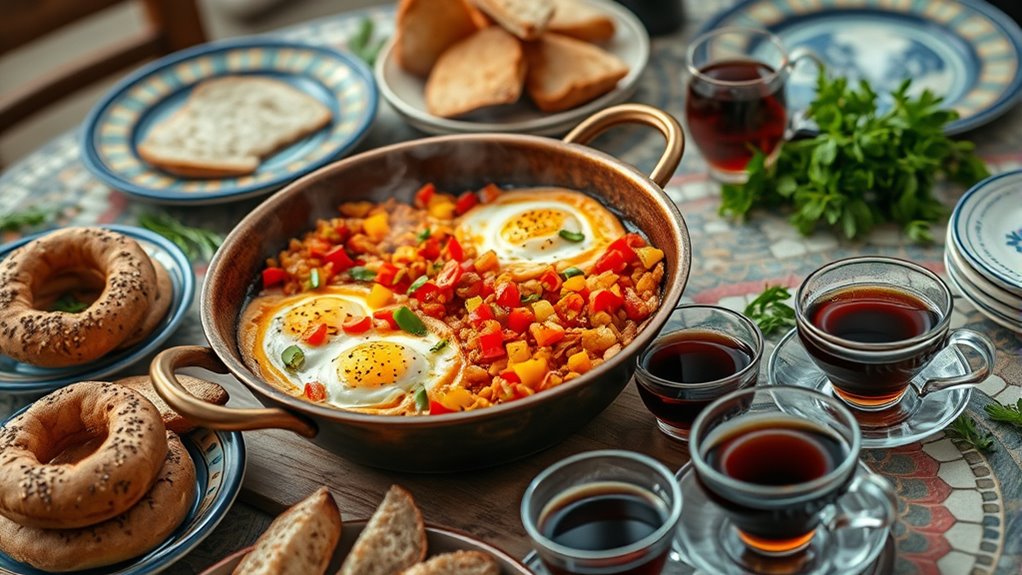
A Turkish breakfast is a vibrant and flavorful way to start your day, offering a rich variety of dishes that blend fresh ingredients and bold tastes. It’s more than just a meal; it’s a cultural experience that brings people together around the table. Central to this tradition is the beloved dish, menemen, a savory scramble of eggs cooked with tomatoes, peppers, and spices. Menemen’s popularity goes beyond its delicious flavor; it holds deep cultural significance, often symbolizing hospitality and community. Sharing menemen with family or friends reflects the Turkish value of togetherness, where breakfast becomes a social event rather than just a meal.
As you explore Turkish breakfasts, you’ll notice regional variations that add unique flavors and ingredients, highlighting local tastes and traditions. In coastal areas like Izmir, for example, menemen might feature fresh herbs or a splash of olive oil, emphasizing the Mediterranean influence. In contrast, in Anatolian regions, you might find it spiced more heavily or served alongside different types of bread or cheeses. These regional differences showcase Turkey’s diverse culinary landscape and how local ingredients shape traditional dishes. No matter where you are, though, the core idea remains the same: a hearty, flavorful start to your day that’s rooted in local customs.
Accompanying menemen, the Turkish breakfast table is often filled with an array of items, including fresh bread, olives, cheeses, and sliced vegetables. This variety reflects the cultural significance of breakfast as a nourishing and social ritual. You’ll also find a strong tea culture woven into the experience, with traditionally brewed black tea served in tulip-shaped glasses. Tea in Turkey isn’t just a beverage; it’s a symbol of hospitality and connection. You’re encouraged to sip slowly, engaging in conversation, making tea an integral part of your morning routine. The act of sharing tea fosters a sense of community, reinforcing the importance of relationships in Turkish culture.
Top picks for "turkish breakfast menemen"
Open Amazon search results for this keyword.
As an affiliate, we earn on qualifying purchases.
Frequently Asked Questions
What Are the Regional Variations of Menemen Across Turkey?
You’ll notice regional variations of menemen across Turkey, influenced by local ingredients and cooking techniques. In the Aegean region, you might find it made with fresh tomatoes and herbs, cooked quickly over high heat. In Central Anatolia, they often add peppers and use a slower simmering method. Coastal areas may include seafood or different spices, showcasing how regional ingredients and techniques shape each delicious version of menemen.
How Is Traditional Turkish Tea Prepared and Served?
You prepare traditional Turkish tea using classical tea brewing techniques, starting by boiling water in a çaydanlık, a special double teapot. You place loose black tea leaves in the upper pot and pour boiling water over them, letting it steep. Once ready, you serve the tea in small, tulip-shaped glasses, often accompanied by sugar cubes or lemon slices. The serving vessel styles highlight Turkish hospitality and make each sip a cultural experience.
What Are Common Accompaniments to a Turkish Breakfast?
You’ll typically enjoy dairy products like cheese and yogurt, along with fresh vegetables such as cucumbers, tomatoes, and olives. These accompaniments add flavor and balance to your meal, making your breakfast more satisfying. You might also find bread, honey, and jams on the table. Together, these items create a vibrant, nutritious spread that complements the flavors of menemen and the rich taste of Turkish tea.
How Do Turkish Breakfast Customs Differ Between Cities and Villages?
In bustling cities, you’ll find vibrant breakfast tables filled with fresh bread, cheeses, and lively chatter, reflecting urban customs. In villages, the scene shifts to peaceful mornings with homemade jams, olives, and slow-paced sharing, embodying local breakfast traditions. Rural life often emphasizes community and simplicity, while urban mornings highlight variety and social energy. You can almost taste the contrast between the energetic city and tranquil countryside in every bite.
Are There Specific Etiquette Rules for Drinking Turkish Tea?
When drinking Turkish tea, you should follow proper tea pouring etiquette by holding the tulip-shaped glass with your fingers on the stem and avoiding touching the bowl. It’s polite to sip quietly and not gulp, showing respect to your host. If someone pours tea for you, accept it with a smile and a small nod. Remember, polite tea drinking emphasizes patience, appreciation, and sharing the moment with others.
Conclusion
As you enjoy Turkish breakfasts, you savor the warmth of menemen, the aroma of freshly brewed tea, and the joy of shared moments. You experience tradition in every bite, community in every sip, and history in every dish. You celebrate the simple pleasures—flavor, friendship, and culture—that make Turkish mornings unforgettable. Embrace this vibrant ritual, where food and friendship intertwine, creating a breakfast experience that’s as rich and inviting as the country itself.