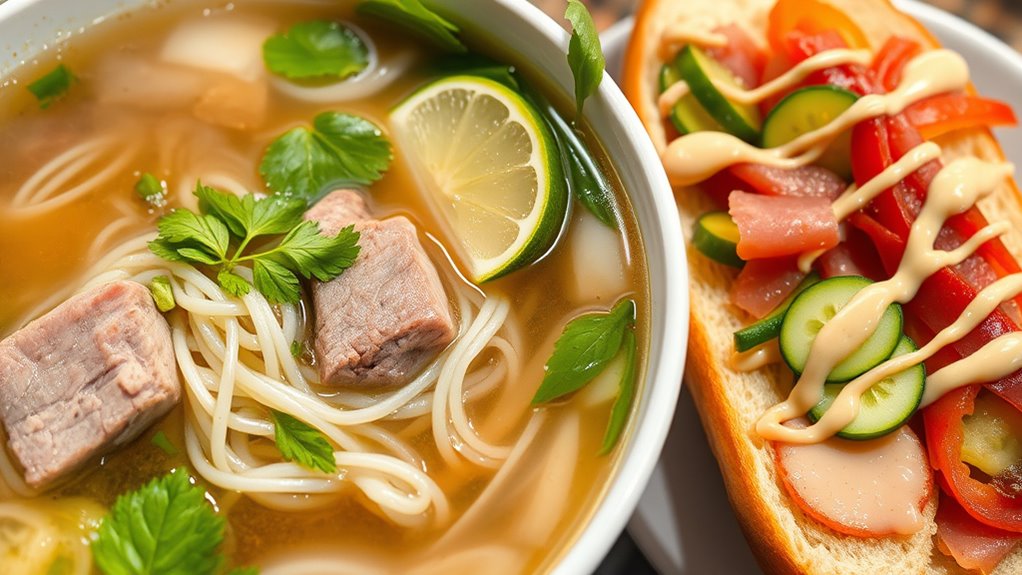

Vietnamese breakfasts like pho and banh mi highlight regional flavors and authentic ingredients that reflect Vietnam’s rich culinary heritage. Northern pho offers a clear, light broth emphasizing beef or chicken, while southern styles incorporate sweeter, aromatic broths with fresh herbs. Banh mi features crusty bread filled with high-quality meats and herbs, showcasing local traditions. Paying attention to region and ingredient quality enhances your experience. If you continue exploring, you’ll discover even more about the cultural significance behind these beloved dishes.
Key Takeaways
- Regional variations influence pho and banh mi, reflecting local ingredients, tastes, and presentation styles across Vietnam.
- Authentic Vietnamese breakfasts emphasize fresh ingredients, high-quality meats, and traditional preparation methods for rich flavors.
- Broth in pho is simmered for hours, resulting in a clear, aromatic, and flavorful base that varies regionally.
- Properly made banh mi features light, crusty bread with authentic fillings, highlighting Vietnam’s culinary heritage.
- Choosing authentic eateries ensures a genuine experience of Vietnam’s vibrant breakfast culture and regional distinctions.
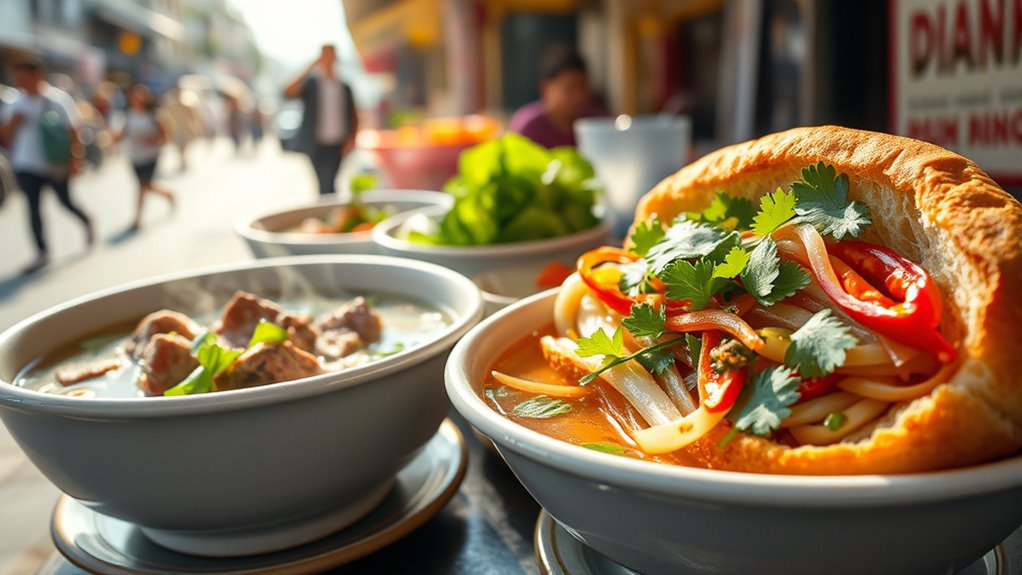
Vietnamese breakfasts offer a vibrant and diverse start to the day, blending bold flavors and fresh ingredients. When you explore dishes like pho and banh mi, you’ll quickly notice how regional variations influence their preparation and presentation. Different regions in Vietnam bring unique touches to these classics, from the subtle spices used in the north to the more robust flavors in the south. For instance, northern pho tends to have a clearer, lighter broth with less sweetener, emphasizing the purity of the beef or chicken. In contrast, southern versions often feature a sweeter, more aromatic broth, sometimes infused with additional herbs or even a splash of sugar. These regional differences showcase how local tastes and ingredients shape traditional recipes, making each bowl of pho a reflection of its origin. Additionally, the presentation style of these dishes can vary significantly, highlighting local culinary traditions and serving customs.
Ingredient authenticity is key when it comes to truly appreciating Vietnamese breakfasts. Authentic ingredients, such as rice noodles, fresh herbs like cilantro and Thai basil, and high-quality meats, are what elevate these dishes beyond simple comfort food. You’ll find that the best pho and banh mi rely heavily on fresh, properly sourced items—no shortcuts or artificial flavorings. For example, the rice noodles should be handmade or carefully selected to ensure the perfect chewy texture. The broth, simmered for hours with bones, spices, and aromatics, needs to be rich and clear, indicating proper technique and quality ingredients. Similarly, the bread for banh mi should be light, airy, and crusty, made with traditional methods to preserve authenticity. When you choose a spot that values ingredient authenticity, you’ll notice the difference in flavor and texture, making your breakfast experience genuinely Vietnamese.
Understanding regional variations and ingredient authenticity allows you to appreciate the depth of Vietnamese breakfast cuisine. Each bowl of pho or banh mi tells a story—of local ingredients, culinary history, and cultural influences. Whether you’re savoring a steaming bowl of northern pho with its delicate broth or biting into a crispy, flavorful banh mi loaded with pickled vegetables and savory meats, you’re tasting more than just food. You’re experiencing a tradition that’s been refined over generations. To truly enjoy these dishes, seek out places that honor their regional roots and prioritize authentic ingredients. Doing so guarantees a breakfast that’s not only delicious but also genuinely representative of Vietnam’s rich culinary heritage.
Frequently Asked Questions
What Are the Origins of Pho and Banh Mi?
You’ll find that pho and banh mi originated from Vietnam’s rich culinary evolution, shaped markedly by French influence during colonial times. Pho, a hearty noodle soup, combines traditional Vietnamese flavors with French beef broth techniques. Banh mi, a tasty sandwich, blends Vietnamese ingredients with French baguette traditions. This fusion reflects Vietnam’s history, creating iconic dishes that honor both local roots and colonial culinary influences.
Are There Regional Variations of These Breakfasts?
You’ll find regional variations of these breakfasts across Vietnam, each with unique flavors. In the north, pho features clearer broth and subtle herbs, while the south offers a sweeter, more robust version. Banh mi sandwiches incorporate local ingredients like pickled vegetables or spicy chili sauces depending on the region. About 80% of Vietnamese people enjoy these regional flavors, making each bite a journey into local ingredients and culinary traditions.
How Do Vietnamese Breakfast Customs Differ From Other Asian Countries?
You’ll find Vietnamese breakfast customs emphasize simplicity and communal dining, unlike some other Asian countries. The cultural significance lies in starting the day with nourishing, flavorful dishes like pho or banh mi, often enjoyed with family or friends. You should follow local dining etiquette, such as modestly eating, using chopsticks or spoons properly, and appreciating the flavors. This respectful approach to breakfast reflects Vietnam’s rich culinary tradition and social harmony.
Can Pho and Banh Mi Be Made Vegetarian or Vegan?
Yes, you can make pho and banh mi vegetarian or vegan. Many restaurants offer vegetarian substitutions like tofu, seitan, or vegetables in pho, replacing traditional meats. Vegan adaptations often exclude animal-based broths, using flavorful veggie stocks instead. For banh mi, you can choose plant-based proteins and omit mayonnaise or use vegan spreads. With these options, you can enjoy authentic Vietnamese breakfasts while sticking to your dietary choices.
What Are Traditional Beverages Served With These Breakfasts?
You’ll often find traditional drink pairings like strong Vietnamese coffee or tea served with breakfast. Regional beverage variations include sweet iced coffee with condensed milk or jasmine tea, which complement the flavors of pho and banh mi. You might also enjoy fresh sugarcane juice or herbal drinks depending on where you are in Vietnam. These beverages enhance your breakfast experience and reflect local tastes and customs.
Conclusion
Remember, breakfast is the most important meal of the day. Vietnamese breakfasts like pho and banh mi not only energize you but also offer a delicious glimpse into Vietnam’s rich culture. Whether you’re craving the warm comfort of soup or the satisfying crunch of a sandwich, these dishes prove that good things come to those who start their day right. As the saying goes, “Eat breakfast like a king,” and experience the taste of Vietnam’s morning magic.