

The history of tea and coffee shapes their distinct breakfast cultures through trade routes, colonial expansion, and religious rituals. Tea originated in China, spreading via the Silk Road, often linked to formal ceremonies and social hierarchy. Coffee began in Ethiopia, spreading through colonial networks, fostering casual, inclusive morning routines. Religious practices and social classes further influenced preferences, with modern trends shifting toward health-conscious, personalized options. Explore how these historic influences continue to shape your daily habits.
Key Takeaways
- Tea originated in China over 2,000 years ago, becoming a symbol of refinement and ritual in East Asian cultures.
- Coffee began in Ethiopia’s highlands, fostering energizing morning routines and informal social gatherings worldwide.
- Colonial trade routes and plantations expanded global consumption, embedding tea in Asian and European traditions and coffee in African and Middle Eastern customs.
- Tea historically signified social hierarchy with formal ceremonies, while coffee promoted casual, inclusive social interactions.
- Modern trends favor personalized, health-conscious brewing methods, blending historical rituals with contemporary lifestyle preferences.
Where Did Tea and Coffee Origins Begin?

Tea originated in ancient China, where it was first cultivated and consumed over 2,000 years ago. Early tea cultivation involved carefully tending tea plants, which quickly became a crucial part of Chinese culture. As you explore how tea spread, you’ll see that the process of tea cultivation laid the foundation for its global popularity. Meanwhile, coffee brewing began in the highlands of Ethiopia, where locals discovered the energizing effects of coffee cherries. From there, coffee’s roots expanded as you trace its journey through the Middle East, where brewing techniques evolved. Both beverages started with simple origins—tea in China and coffee in Ethiopia—yet both grew into cultural symbols, shaping breakfast traditions around the world today. The history of these beverages illustrates how cultural significance influenced their widespread adoption and enduring popularity, as well as how historical trade routes facilitated their dissemination across continents.
How Did Trade Routes Spread Tea and Coffee Worldwide?
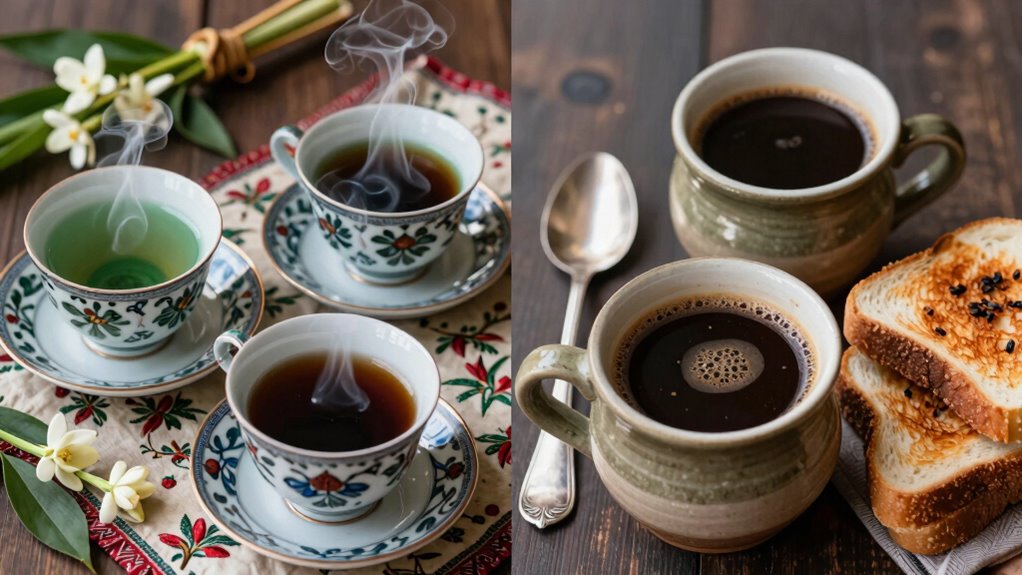
Trade routes like the Silk Road and maritime pathways connected distant lands, making it possible for tea and coffee to reach new markets. Colonial powers expanded these trade networks, boosting global distribution. Cultural exchanges along these routes helped shape how different societies embraced tea and coffee in their daily routines. Additionally, European cloud innovation played a role in supporting the infrastructure that facilitated these historic trade connections.
Ancient Trade Routes
Ancient trade routes played a crucial role in spreading the popularity of tea and coffee across the world. These trade routes, such as the Silk Road and Indian Ocean routes, facilitated the exchange of goods and ideas, enabling cultural diffusion. As merchants traveled, they carried tea from China and Southeast Asia, and coffee from Ethiopia and the Arabian Peninsula, introducing these beverages to new regions. The movement of these goods helped shape local customs and preferences, fueling their global appeal. The trade routes not only connected distant lands but also promoted the dissemination of brewing techniques, rituals, and tastes. This widespread exchange laid the foundation for modern tea and coffee cultures, making them integral parts of daily life worldwide. Additionally, the establishment of colonial plantations further expanded the cultivation and consumption of these beverages across different continents.
Colonial Expansion Impacts
As colonial powers expanded their territories, they actively spread the customs and commodities connected to their trade networks. This colonial influence played a pivotal role in establishing tea and coffee as global staples. European nations, seeking economic dominance, transported coffee from Ethiopia and Yemen, while tea traveled from China and India into new markets. These trade routes became the backbone of a lasting trade legacy, shaping local consumption habits. Colonies became key producers and exporters, embedding tea and coffee into daily routines worldwide. Through this expansion, the cultural significance of these beverages grew, transcending their origins. The colonial influence not only facilitated the physical spread but also impacted social practices, making tea and coffee central to breakfast cultures across continents. Their global presence is a direct result of colonial-driven trade routes and influence, which helped establish global beverage traditions that persist to this day. Additionally, the development of global trade networks ensured these beverages’ enduring popularity and integration into diverse cultural contexts.
Cultural Exchange Dynamics
Trade routes played a crucial role in spreading tea and coffee worldwide, connecting distant regions and facilitating their exchange. These routes fostered sociocultural identity and culinary fusion, allowing local customs to integrate these beverages into daily life. As tea and coffee traveled, they influenced local traditions, creating unique breakfast cultures. The table below highlights key trade routes and their impact:
| Route | Cultural Impact |
|---|---|
| Silk Road | Introduced tea to Central Asia |
| Maritime Routes (Indian Ocean) | Spread coffee to Africa and Middle East |
| Columbian Exchange | Brought coffee to the Americas |
| Overland Routes (China to Persia) | Spread tea through Persia and Russia |
| Trans-Saharan Routes | Introduced coffee to West Africa |
Trade enabled culinary fusion, shaping the diverse breakfast traditions we see today. Additionally, the dissemination of plant-based remedies through these routes contributed to the integration of herbal traditions into local health practices. Furthermore, the development of global trade networks facilitated not only the movement of these beverages but also the exchange of cultural practices related to their consumption. These trade pathways also played a significant role in cultural diffusion, allowing diverse societies to adopt and adapt new flavors and rituals associated with tea and coffee.
How Did Colonial Powers Influence Tea and Coffee Cultures?

Colonial powers played a pivotal role in shaping the global tea and coffee cultures we recognize today. Their colonial influence transformed local traditions into international commodities, establishing widespread consumption patterns. Through trade legacy, colonial authorities introduced tea and coffee to new regions, often prioritizing export over local customs. For example, British colonizers popularized tea in India and China, creating a lasting tea-drinking tradition. Similarly, European powers spread coffee cultivation across Africa and the Middle East, embedding it into daily routines. These colonial ventures not only expanded markets but also dictated how these beverages were prepared and consumed. The colonial trade legacy significantly contributed to the global dominance of tea and coffee today, shaping the cultural significance and routines associated with morning beverages across the world. Additionally, the cultural exchange facilitated by colonial interactions led to hybrid traditions that persist in many societies today. The colonial policies often influenced local preferences and brewing styles, further integrating these beverages into cultural identities. Moreover, the economic impact of colonial trade established enduring patterns of consumption and social rituals involving tea and coffee.
How Did Religious Practices Shape Morning Beverage Preferences?

Religious practices have profoundly influenced morning beverage preferences by shaping rituals and dietary restrictions that dictate what people drink to start their day. During religious fasting, many avoid certain foods and drinks, which influences beverage choices. In spiritual ceremonies, beverages like tea and coffee often hold symbolic value, representing clarity or divine connection. For example, some cultures prefer herbal infusions or water during fasting periods, avoiding caffeinated drinks altogether. Coffee may be favored for its energizing qualities in morning rituals, while tea is valued for its calming effects during spiritual practices. These traditions create distinct beverage habits rooted in religious beliefs, shaping how communities approach their mornings. Additionally, beverage symbolism often reinforces spiritual messages and cultural identity within these practices. Recognizing the cultural significance of these beverages helps explain their enduring role in religious observances across different societies. Furthermore, the ritualistic use of beverages strengthens community bonds and preserves cultural heritage over generations.
How Do Social Classes and Rituals Differ in Tea and Coffee Breakfasts?

You might notice that tea often symbolizes social hierarchy, with formal ceremonies reserved for higher classes. Coffee, on the other hand, tends to promote a more casual, inclusive atmosphere that blurs social boundaries. These differences in rituals reveal how social class influences breakfast traditions across cultures.
Social Hierarchies and Tea
Social hierarchies influence how tea and coffee are consumed during breakfast, shaping the rituals and accessibility associated with each. Tea often symbolizes tradition and social status, especially in cultures where it’s linked to refinement and etiquette. Its cultural symbolism reinforces class distinctions, making it a marker of upper social circles. Coffee, on the other hand, tends to be more accessible across social classes, often seen as a practical pick-me-up rather than a status symbol. The way you serve or drink tea can reflect your social standing, while coffee’s casual nature makes it a more democratic beverage.
- Tea rituals historically emphasize formality and respect.
- High society often associates tea with elegance.
- Coffee’s widespread availability breaks social barriers.
- Cultural symbolism shapes perceptions of refinement.
- Social hierarchies influence consumption patterns.
Rituals and Class Distinctions
Rituals around tea and coffee breakfast cultures reveal clear differences in how social classes express their identities. In tea cultures, elaborate rituals often signify higher social stratification, emphasizing tradition and refinement. These rituals carry deep ritual significance, marking social distinctions and reinforcing class boundaries through formal ceremonies or specific settings. Conversely, coffee breakfasts tend to be more informal, reflecting a broader social spectrum. For lower classes, coffee may symbolize efficiency and practicality, with rituals focused on quick preparation. Among the upper classes, coffee rituals can still carry ritual significance, often involving sophisticated brewing methods and social gatherings. Overall, these differences highlight how social stratification shapes breakfast rituals, with tea emphasizing tradition and hierarchy, while coffee promotes accessibility and modernity.
What Are the Modern Trends Shaping Tea and Coffee Morning Rituals?

Modern trends are transforming how people approach their morning routines with tea and coffee, driven by a desire for convenience, health, and personalization. You’re seeing a shift toward modern brewing techniques that make preparing your favorite beverage quicker and more efficient. Health trends influence choices, encouraging you to opt for organic, plant-based, or low-sugar options. Coffee and tea shops now offer personalized blends, catering to individual tastes and dietary needs. At-home gadgets like single-serve machines and cold brew makers make it easier to enjoy your morning ritual on your schedule. Additionally, mindful drinking and functional beverages—like adaptogenic teas or added vitamins—are gaining popularity, emphasizing wellness. These trends reflect a desire for a more tailored, health-conscious start to your day.
Frequently Asked Questions
How Did Local Climate Influence Tea and Coffee Cultivation Choices?
Your local climate directly influences crop selection and climate adaptation strategies. In warm, humid regions, tea thrives because it needs consistent rainfall and moderate temperatures, making it an ideal choice. Conversely, in cooler, mountainous areas, coffee adapts better due to its tolerance for higher altitudes and specific temperature ranges. This climate-driven crop selection shapes the types of beverages you find culturally dominant in different regions.
What Role Did Gender Norms Play in Tea and Coffee Consumption?
Gender norms govern your morning rituals, shaping how you consume tea or coffee. Social expectations often assign women to delicate tea times and men to bold coffee breaks, reinforcing traditional gender roles. These cultural cues influence your choices, dictating when, where, and how you indulge. By adhering to societal standards, you unconsciously perpetuate gender distinctions, making your breakfast habits a reflection of broader cultural beliefs and stereotypes about gender roles.
How Have Advertising Campaigns Shaped Cultural Perceptions of Beverages?
Advertising campaigns considerably shape your cultural perceptions of beverages through powerful branding influence and compelling advertising narratives. These campaigns create emotional connections, positioning tea and coffee as symbols of sophistication, comfort, or energy. By consistently reinforcing these messages across platforms, marketers influence your preferences and habits. Over time, this branding influence shapes how societies view these beverages, making them integral to daily routines and cultural identities.
In What Ways Did Industrialization Impact Morning Beverage Rituals?
Industrialization shifts turned your cozy morning routines into bustling rituals fueled by beverage commercialization. You now gulp down coffee or tea, often rushed and mass-produced, instead of leisurely sipping homemade brews. Factories mass-market your favorite drinks, making them more accessible but less personal. It’s like your morning just got a corporate upgrade—less charm, more convenience—proving that industrialization’s true gift was turning your peaceful start into a caffeinated race against time.
How Are Globalization Trends Affecting Traditional Tea and Coffee Cultures?
Globalization trends are transforming traditional tea and coffee cultures through increased global trade and cultural exchange. You might notice more coffee shops in regions historically known for tea or vice versa, blending customs and flavors. This interconnectedness encourages experimentation and hybrid rituals, making morning beverages more diverse. As you explore different cultures, you’ll find that these exchanges enrich your breakfast experience, fostering appreciation for both traditional and modern practices worldwide.
Conclusion
Ultimately, your morning rituals are a tapestry of history, influence, and individual identity. From the flavorful foundations of tea’s tradition to coffee’s enthralling culture, each sip tells a story shaped by centuries of trade, tradition, and transformation. Embrace the rich roots and modern moments, as you craft your own customs. Whether you prefer the peaceful pour of tea or the bold brew of coffee, your breakfast beverage embodies a beautiful blend of history, heritage, and personal habit.