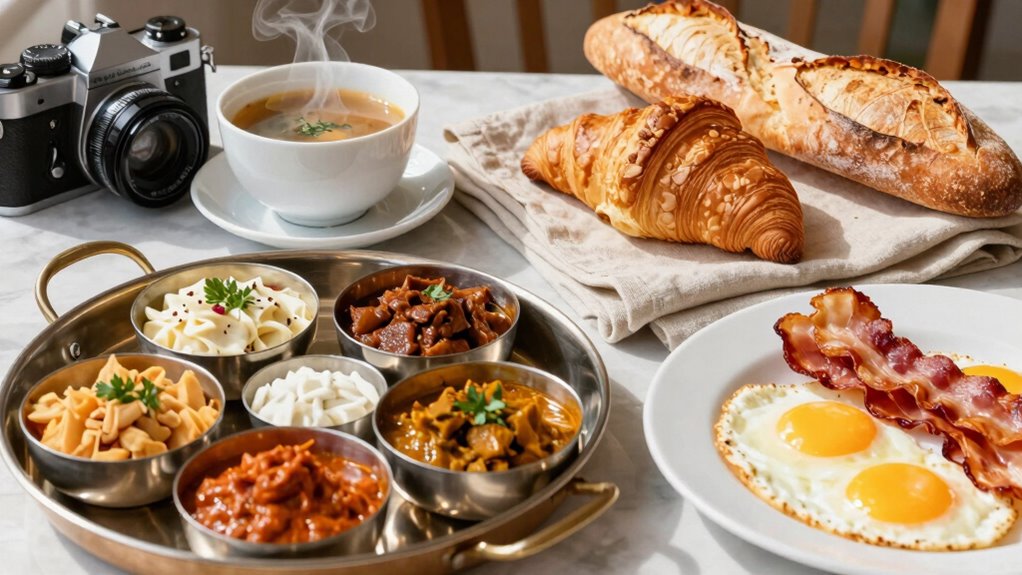

When traveling, understanding breakfast etiquette worldwide helps you avoid awkward moments. You should observe customs like utensil use, portion sizes, and sharing practices, which vary by culture. Respect local food choices, timing, and table manners to show appreciation. Avoid common mistakes like sticking chopsticks upright or speaking loudly. Paying attention to how locals behave guarantees smoother interactions. Keep exploring, and you’ll discover how to navigate these rules effortlessly and enjoy your breakfast experience wherever you go.

Get kitchen staples and gadgets delivered free with Prime
- Fast, free delivery on millions of items
- Prime Video, Amazon Music and more included
- Member-only deals all year
Key Takeaways
- Understand utensil customs, such as chopstick etiquette in Asia or proper placement of cutlery in Western countries.
- Observe local norms for sharing or serving communal dishes during breakfast.
- Respect specific breakfast rituals, including timing, social interactions, and appropriate dress codes.
- Avoid cultural taboos like sticking chopsticks upright in rice or using the left hand in certain cultures.
- Ask politely when unsure about specific customs to demonstrate respect and prevent unintentional offenses.
As an affiliate, we earn on qualifying purchases.
Why Breakfast Etiquette Differs Around the World

You may notice that breakfast customs vary greatly depending on where you are, and this is because different cultures have unique traditions and values that shape their dining practices. Your table manners at breakfast reflect these cultural differences, influencing how you handle utensils, seating, and conversation. Breakfast rituals often embody respect, social harmony, or religious beliefs, shaping what’s considered polite or impolite. For example, some cultures emphasize communal sharing, while others prioritize individual servings. These customs are deeply rooted in history and social norms, which influence how you approach your morning meal. Understanding these differences helps you appreciate diverse ways of starting the day and ensures you show respect for local traditions, making your travel experience more meaningful and culturally sensitive. Additionally, cultural dining norms can impact the types of foods served and the manner in which they are consumed, further enriching your understanding of global breakfast traditions. Recognizing the influence of traditional practices allows travelers to adapt more seamlessly and demonstrate cultural awareness during their interactions. Furthermore, awareness of social etiquette during breakfast can help travelers avoid unintentional offenses and foster positive connections with locals. Being conscious of local customs related to breakfast can also enhance your overall cultural competency and enrich your travel experiences. For instance, understanding mealtime manners can help you navigate unfamiliar settings with confidence and respect.
What Foods Are Typical and Respectful in Local Breakfasts

Understanding what foods are typical and respectful in local breakfasts can greatly enhance your dining experience and show appreciation for cultural traditions. In many cultures, traditional beverages like tea, coffee, or fermented drinks are essential to the breakfast presentation, highlighting regional flavors. For example, Japan’s miso soup or Turkish çay add authenticity to the meal. Respectful eating also involves respecting portion sizes and presentation styles—some cultures favor communal dishes, while others serve individual plates. Being aware of these customs helps you avoid unintentional disrespect. When you choose foods that align with local traditions, you demonstrate cultural appreciation and open the door to deeper connections. Incorporating energy-efficient cloud servers into your travel planning can also help you access local information seamlessly. Additionally, understanding pinball machine weights can be useful if you plan to visit arcades or collect machines during your travels. Recognizing cultural dining etiquette can further enhance your respectful engagement with local customs. Embracing these breakfast customs enriches your travel experience and shows genuine respect for local practices.
How to Use Utensils Correctly in Different Cultures

When using utensils across cultures, proper placement and handling show respect for local customs. You’ll find that techniques vary, from the way you hold a fork and knife to how you rest them between bites. Understanding these cultural differences helps you dine politely and avoid misunderstandings.
Proper Utensil Placement Techniques
Proper utensil placement varies markedly across cultures, reflecting different dining customs and etiquette standards. In many Western settings, place your fork and knife with the tines or blades facing inward during pauses, and rest utensils on the plate or the dish to signal you’re done. Keep your napkin discreetly placed to the side or on your lap, depending on local customs. In some Asian cultures, utensils are kept in hand or placed neatly on the plate, with minimal switching, emphasizing respect and efficiency. Be attentive to when to switch utensils—such as from a fork to a spoon—based on local etiquette. Here’s a quick visual guide:
| Culture | Utensil Placement | Napkin & Switching |
|---|---|---|
| Western | Rest on plate | Napkin on lap, switch when necessary |
| Asian | Held or placed on plate | Minimal switching, respectful use |
| Middle Eastern | Rest on plate or side | Keep clean, minimal switching |
Cultural Variations in Utensil Use
Across different cultures, the way you use utensils reflects local customs and social expectations. For example, in East Asia, metal chopsticks are standard, and you should hold them correctly to show respect. To do so:
- Use the top chopstick to pick up food, keeping it steady.
- Rest the chopsticks on your plate or a chopstick rest when not in use.
- Avoid pointing with or stabbing food with chopsticks.
- Follow soup spoon etiquette by gently sipping from the spoon’s side, avoiding slurping loudly.
- Being aware of utensil etiquette and practicing proper techniques demonstrates cultural awareness and appreciation.
- Proper table manners involve understanding the specific expectations for utensil use in each culture, which can vary significantly.
In many Asian countries, using chopsticks properly demonstrates good manners, while in Western cultures, proper utensil use involves avoiding resting elbows on the table. Knowing these variations helps you respect local customs.
Proper Behavior at Formal Breakfast Events
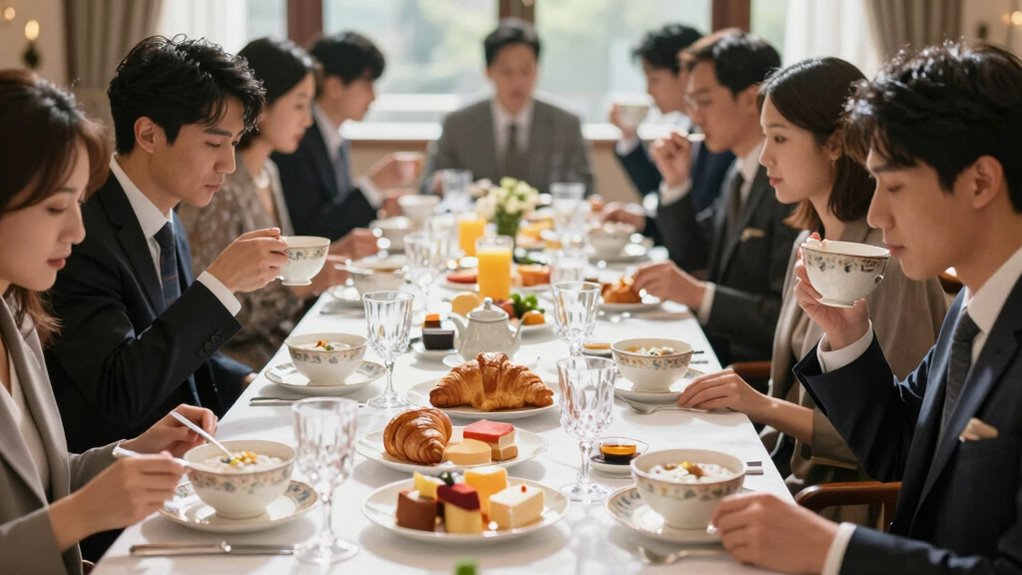
Attending a formal breakfast requires paying close attention to your manners and the event’s specific customs. Dress appropriately by adhering to the formal dress codes, which often mean wearing business attire or elegant clothing. Be mindful of seating arrangements; wait to be directed or follow the host’s cues to find your place. Keep your posture upright and avoid loud conversations or disruptive behavior. Use utensils quietly and correctly, and don’t start eating until everyone is served or the host begins. Maintain good eye contact and show appreciation for the meal with polite gestures. Remember, your behavior reflects respect for the hosts and the occasion, so stay attentive, courteous, and discreet throughout the event. Additionally, understanding water etiquette can be important in certain cultures during breakfast or meal settings. Incorporating connected technology into your dining experience can also enhance your awareness of cultural norms and etiquette. Being aware of piercing care and hygiene practices can help you maintain proper grooming and avoid discomfort during formal meals. Being familiar with cultural dining customs helps ensure respectful interactions and avoids inadvertent offenses.
Common Cultural Taboos and How to Avoid Offending Locals
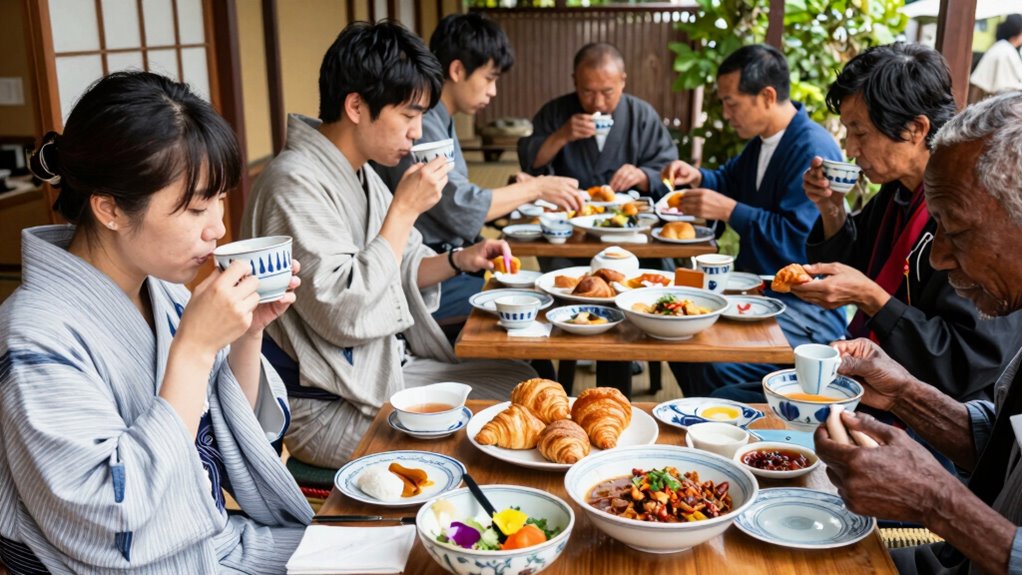
When you’re eating breakfast abroad, it’s important to respect local customs and etiquette to avoid offending anyone. Different cultures have unique breakfast traditions and manners that you should follow carefully. Being aware of these customs helps you show respect and enjoy your experience without making mistakes. Additionally, understanding the role of modern kitchen technology in various cultures can enhance your dining experience by highlighting how automation and smart appliances influence breakfast preparation around the world. Recognizing how cultural food practices influence breakfast habits can also deepen your appreciation for local customs and make your interactions more authentic. For example, in some regions, traditional breakfast rituals are deeply rooted in history and social significance, making it essential to observe and honor these practices. Moreover, appreciating the technological influences shaping breakfast habits can help travelers adapt to new environments more comfortably. Embracing these cultural differences fosters greater respect and enriches your travel experience.
Cultural Breakfast Customs
Understanding local customs is essential to avoid offending people during breakfast. Different cultures have unique breakfast table manners and coffee etiquette that you should respect. To blend in smoothly:
- Observe how locals handle utensils and whether they use hands or chopsticks.
- Follow the local norms for serving and sharing food, especially in communal settings.
- Respect coffee etiquette, such as whether to stir, add sugar, or drink directly from the cup.
- Be mindful of timing—some cultures see breakfast as a quick meal, others a social event.
- Recognizing cultural breakfast customs can help you navigate social situations and show respect for local traditions. Additionally, understanding how essential oils for breakfast are used in certain cultures can enhance your appreciation of regional wellness practices. Being aware of these breakfast etiquette differences can also prevent unintentional offenses and foster positive interactions. Incorporating awareness of cultural meal practices can further demonstrate your respect and adaptability to diverse environments.
- Paying attention to table manners in different regions can further demonstrate your respect and willingness to adapt to local customs.
Proper Dining Etiquette
Being aware of proper dining etiquette helps you avoid common cultural taboos that could offend your hosts or fellow diners. Pay attention to breakfast table settings, as they vary widely across cultures. For example, some countries prefer using utensils for desserts, while others might serve them with hands. Knowing the correct dessert etiquette shows respect and understanding. In many places, finishing your plate signals appreciation, but in others, leaving a little food is polite. Avoid sticking your chopsticks upright in a bowl of rice, as it’s considered disrespectful. Also, observe how locals handle serving dishes and silverware. Being mindful of sound healing science can also help you appreciate the calming atmosphere during meals. By respecting these customs, you’ll navigate breakfast interactions smoothly and leave a positive impression—making your travel experience more enjoyable and culturally enriching.
Tips for Navigating Breakfast Customs as a Traveler
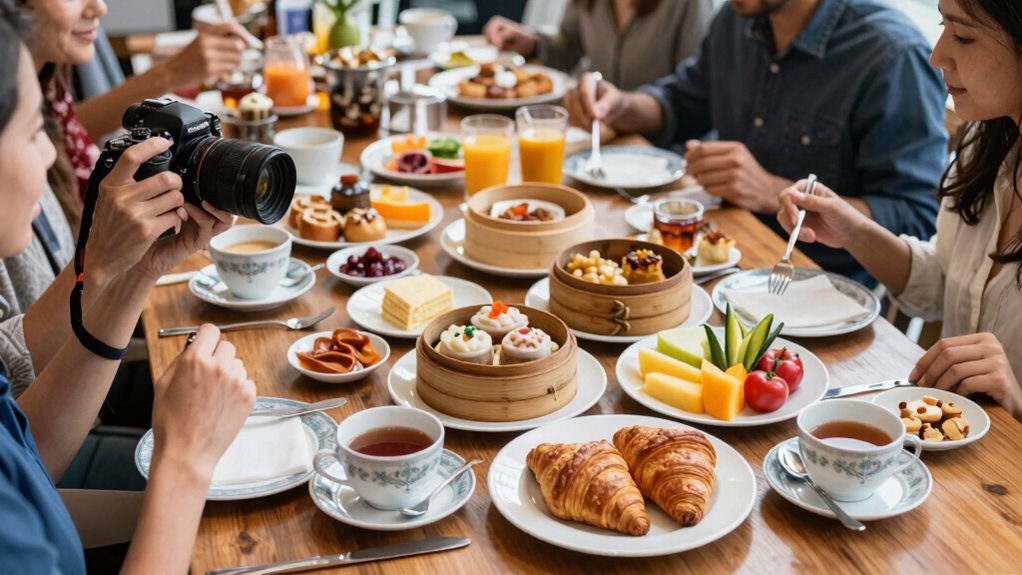
Exploring breakfast customs as a traveler can be straightforward if you take a few simple steps. First, observe local table manners to understand what’s appropriate, such as how to handle utensils or where to place your napkin. Second, familiarize yourself with beverage etiquette; for example, whether it’s customary to sip tea quietly or toast with a specific gesture. Third, pay attention to how dishes are served and shared, respecting any cultural norms. Fourth, don’t hesitate to ask politely if unsure—most hosts appreciate your effort to respect their customs. Fifth, understanding the role of foraging in some cultures can enrich your experience by offering insight into local food traditions. By following these tips, you’ll navigate breakfast traditions smoothly, showing respect for local practices and enhancing your travel experience.
Common Mistakes Visitors Make and How to Steer Clear
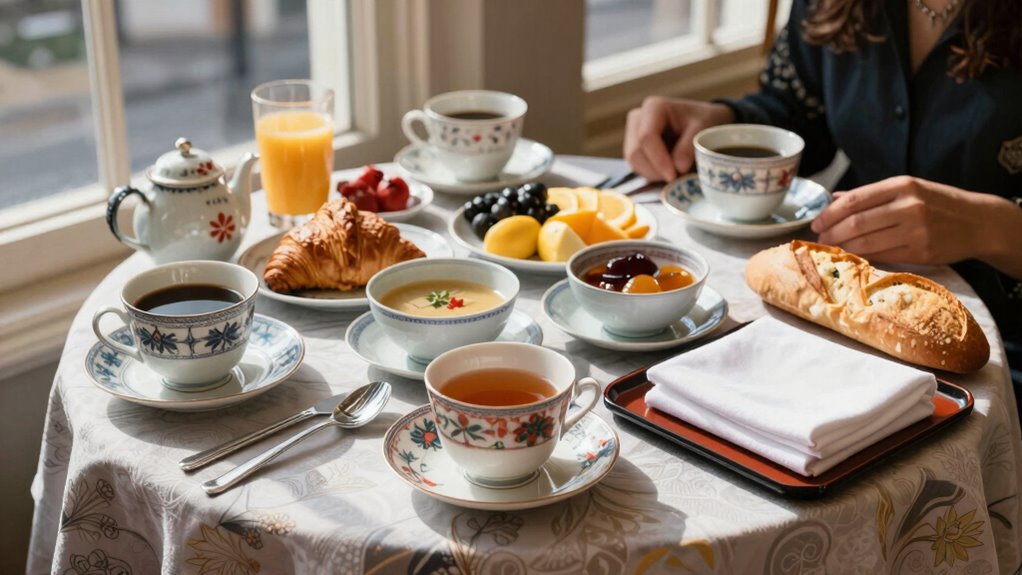
One common mistake travelers make is assuming that breakfast customs are the same everywhere, which can lead to awkward moments or unintended disrespect. To avoid this, pay attention to table manners and the table setting. For example, in some countries, using utensils differently or sitting at a certain angle matters. Here’s a quick guide:
| Culture | Common Mistake | Correct Practice |
|---|---|---|
| Japan | Stabbing food with chopsticks | Rest chopsticks on the holder |
| France | Holding bread improperly | Break bread with hands gently |
| Middle East | Using left hand for eating | Use right hand for etiquette |
| China | Tapping bowl with chopsticks | Keep utensils stationary |
| USA | Reaching across table | Ask to pass items politely |
Understanding these nuances helps you respect local customs and enjoy breakfast without faux pas.
Frequently Asked Questions
Are There Universal Breakfast Customs Travelers Should Always Follow?
You should always respect breakfast table manners and observe local customs, even if they differ from your own. Use utensils properly with traditional breakfast items, such as chopsticks in some countries or fingers in others. Be mindful of seating arrangements, avoid rushing, and wait for the host to start eating. Small gestures like saying thank you and showing appreciation for local dishes help you navigate universal breakfast etiquette successfully.
How Do Breakfast Etiquette Rules Differ Between Rural and Urban Areas?
Imagine breakfast as a mirror reflecting community values. In rural areas, hospitality shines through relaxed customs, where sharing food symbolizes warmth and connection. You might find yourself welcomed to eat with hands or offered hearty, communal dishes. In contrast, urban dining norms emphasize etiquette and individual space, with formal table manners and precise utensil use. Understanding these differences helps you respect local traditions, showing appreciation for rural warmth and urban refinement alike.
What Should I Do if I’M Unsure About Local Breakfast Practices?
If you’re unsure about local breakfast practices, it’s best to observe and follow local customs to respect cultural sensitivities. You can discreetly watch how others behave, such as using utensils or sharing dishes, and then mimic their actions. Don’t hesitate to ask a local for gentle dining tips—most people appreciate your effort to honor their traditions. Being attentive and respectful shows your genuine interest and helps you navigate unfamiliar breakfast etiquette smoothly.
Are There Specific Dress Codes for Formal Breakfast Occasions Worldwide?
When it comes to formal breakfast occasions worldwide, dress codes vary, but it’s always better to err on the side of caution. You should wear traditional attire if specified, and follow the dress code etiquette, such as wearing a suit or a dress. Think of it as dressing to impress; looking sharp shows respect for the event and hosts. When in doubt, choose classic and modest clothing to avoid standing out like a sore thumb.
How Can I Politely Decline Food I’M Not Comfortable Eating?
To politely decline food you’re uncomfortable with, gently say you’re not hungry or that you appreciate the offer, using respectful language. In cultural dining situations, it’s important to be mindful of table manners and show gratitude. You can also explain your dietary restrictions politely. This approach respects the host’s effort while maintaining good manners, helping you navigate diverse breakfast customs with tact and sensitivity.
Conclusion
Understanding breakfast etiquette worldwide helps you connect respectfully with locals and enjoy authentic experiences. By knowing what foods to try, how to handle utensils, and what behaviors to avoid, you’ll navigate cultural differences with confidence. Isn’t it rewarding to start your day with respect and curiosity? So, next time you travel for breakfast, remember these tips—because embracing local customs makes your journey richer and more meaningful.
Halloween Picks
halloween
As an affiliate, we earn on qualifying purchases.