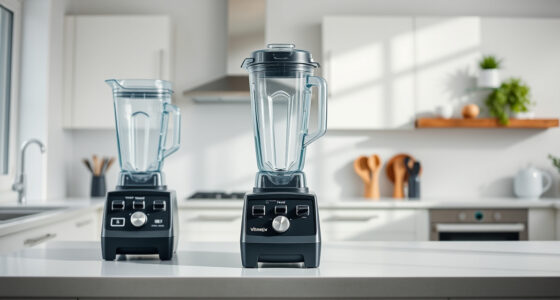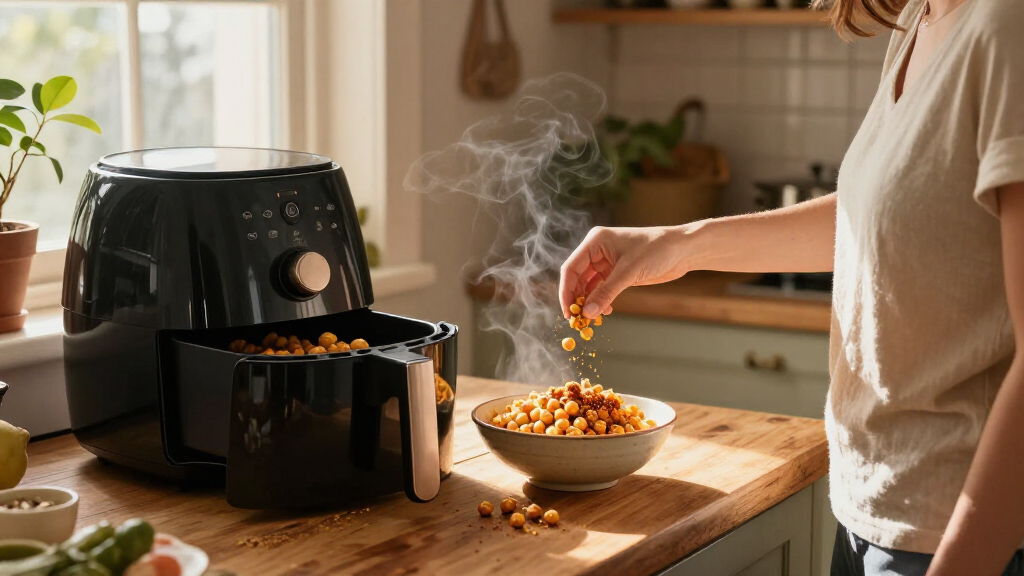
For healthy snacks, the choice is less about whether air frying is inherently healthy and more about how you cook: a basket air fryer concentrates hot air around a small batch, while a conventional oven handles snacks on a tray using an appliance you may already have. Either can cook vegetables, potatoes, chickpeas, and other snacks with little added oil; neither turns a heavily breaded or oversized portion into a nutritious one.

Get kitchen staples and gadgets delivered free with Prime
- Fast, free delivery on millions of items
- Prime Video, Amazon Music and more included
- Member-only deals all year

Cosori TurboBlaze Air Fryer, 9-in-1, 6 Qt, PFAS-Free Ceramic Coating
- ✔ Capacity: 6 quarts
- ✔ Functions: 9-in-1
- ✔ Fan speed: 3600 rpm
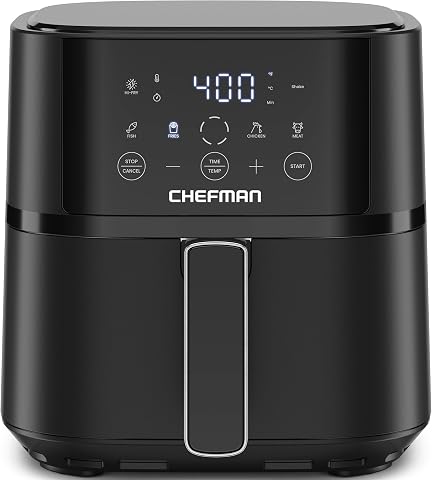
Chefman 4 QT Compact Air Fryer with Hi-Fry Technology
- ✔ Capacity: 4 QT
- ✔ Power: 1500W
- ✔ Voltage: 120V

Chefman 2-Quart Digital Mini Air Fryer, Black
- ✔ Capacity: 2 quarts
- ✔ Power: 900 watts
- ✔ Voltage: 120 volts
The air fryer generally wins for speed, crispness in small portions, and quick cleanup. The oven wins for batch size, flexibility, and value if it is already in your kitchen. Choose the air fryer if you make snacks often and want them ready quickly; stick with the oven if you cook for several people, use multiple trays, or do not want another appliance. The comparisons below assume a typical basket-style air fryer and a conventional home oven, since capacity and features vary by model.
At a Glance
| Criteria | Basket Air Fryer | Conventional Oven | Winner |
|---|---|---|---|
| Small-batch crispness | Often crisps exposed surfaces quickly; food needs room for airflow | Can crisp well, but often needs more time and careful tray arrangement | A |
| Preheating and cooking speed | Usually heats a smaller cooking chamber quickly | Typically takes longer to preheat, especially for a small snack | A |
| Batch size | Best for one or a few snack portions; crowding reduces crispness | Better for family portions and multiple trays | B |
| Oil use and nutrition | Can cook with little oil, but nutrition depends on ingredients and portion | Can also cook with little oil; ingredients and portion matter most | Tie |
| Range of snack types | Strong for vegetables, potatoes, and other foods that benefit from dry heat | More versatile for baked, moist, or larger-format snacks | B |
| Cleanup | Usually a small basket and tray to wash | More tray and oven cleanup, though liners may help where appropriate | A |
| Cost and kitchen space | Costs extra and occupies counter or storage space | No extra appliance purchase if already installed, but uses more kitchen space | B |
Cosori TurboBlaze Air Fryer, 9-in-1, 6 Qt, PFAS-Free Ceramic Coating
For households that make more than one snack serving at a time, the Cosori TurboBlaze 6 Qt is our strongest all-around choice. Its larger capacity separates it from both Chefman models: there is more room to cook a family-sized batch without dividing everything into several small rounds. The square basket can make productive use of its footprint for items arranged in a layer, though its shape may not suit every round food as naturally as a round basket.The 3600 rpm fan and temperature settings up to 450°F give this model a broad crisping range. Cosori says its TurboBlaze technology can deliver crispy results using up to 95% less oil; we would treat that as a product claim, not a guarantee for every recipe. Nine functions also offer more flexibility than the Chefman 4 QT’s four presets, although buyers who mostly cook one familiar snack may not need that breadth. The optional preheat function is another small consideration: for more consistent results, we may need to decide whether to preheat rather than rely on a fixed routine.Its PFAS-free ceramic coating and dishwasher-safe components are useful if easier cleanup and coating preference are priorities. The stated noise level below 53 dB is also a differentiator from the provided details on the Chefman options. The tradeoff is size: this is the least compact pick in the lineup, and the square basket can be awkward for some shapes. Choose it for flexibility and batch capacity; skip it if a small footprint matters more than cooking a larger quantity at once.
Pros:
- 6-quart capacity accommodates larger snack batches than either Chefman option.
- Temperature range of 90°F–450°F and nine functions provide broad cooking flexibility.
- PFAS-free ceramic coating and dishwasher-safe components simplify cleanup.
- Quiet operation is specified at less than 53 dB.
Cons:
- Square basket shape may be less efficient for some round foods.
- Preheating is optional, so buyers may need to adjust their routine for consistent results.
- Larger capacity takes more space than the two compact Chefman models.
Best for: Households that want one air fryer for a variety of lower-oil snacks and larger batches, with multiple cooking functions and a PFAS-free ceramic coating.
Not ideal for: People with very limited counter or storage space, or buyers who need a round basket for the foods they prepare most often.
Bottom line: We recommend the Cosori TurboBlaze for the broadest mix of snack capacity and cooking flexibility, provided its size and square basket suit your kitchen.
“We recommend the Cosori TurboBlaze for the broadest mix of snack capacity and cooking flexibility, provided its size and square basket suit your kitchen.”
Chefman 4 QT Compact Air Fryer with Hi-Fry Technology
The Chefman 4 QT Compact makes the most sense when the Cosori feels larger than your snack routine requires but a 2-quart mini would be restrictive. Its 4-quart capacity provides a middle ground: more room than the small Chefman for sharing a snack, while its compact design is intended to take up less counter space than a larger appliance. That makes it a useful fit for kitchens where the air fryer needs to earn its place.Its defining feature is Hi-Fry technology, described as supporting extra-crispy results. For snack foods where texture matters, that focus is more directly relevant than simply counting functions. The audible shake notification can also prompt us to redistribute food during cooking, helping avoid treating a full basket as if it needs no attention. Compared with the Cosori, however, this model has just four presets and does not list the same wide temperature range or coating details. Buyers seeking more varied controls and a larger batch capacity should move up to the Cosori.Touchscreen controls, automatic shutoff, and dishwasher-safe nonstick components cover practical day-to-day needs without an overly complex feature set. The limitation is clear: 4 quarts still may not be enough for a large household, especially if everyone wants a portion at once. Its preset count also makes it less flexible on paper than Cosori’s nine functions. We place it between the lineup’s largest and smallest models because it trades some versatility for a smaller, more focused countertop option.
Pros:
- Compact footprint is easier to accommodate than the 6-quart Cosori.
- Hi-Fry technology is aimed at extra-crispy results.
- Audible shake notification helps prompt more even cooking.
- Dishwasher-safe components make routine cleanup simpler.
Cons:
- Four presets offer less listed function variety than Cosori’s nine functions.
- Four-quart capacity may require multiple batches for larger households.
- The supplied details do not specify a temperature range.
Best for: Small households and snack makers who want more room than a mini air fryer offers, but prefer a compact appliance with straightforward touchscreen controls.
Not ideal for: Large families who need to cook substantial batches at once, or buyers who want a wider range of functions and temperature settings.
Bottom line: We would choose the Chefman 4 QT for a space-conscious kitchen that needs a practical middle capacity and a crisping-focused feature set.
“We would choose the Chefman 4 QT for a space-conscious kitchen that needs a practical middle capacity and a crisping-focused feature set.”
Chefman 2-Quart Digital Mini Air Fryer, Black
When counter space is the main constraint, the Chefman 2-Quart Digital Mini is the most focused choice here. Its small basket suits one or two people better than the 4-quart Chefman or 6-quart Cosori, and the stated dimensions of 10 × 10 × 8.3 inches and weight of 5.9 pounds help clarify its compact format. For a modest snack portion, that smaller scale can be easier to place and put away than a full-size appliance.The controls remain useful rather than bare-bones: digital touch operation and an adjustable temperature reaching 400°F provide more direct control than a tiny appliance might suggest. A shake reminder can prompt us to move food partway through cooking, while automatic shutoff adds a safety feature. Its basket and rack are dishwasher safe, matching the cleanup convenience offered by the larger picks. Compared with the 4-quart Chefman, though, it offers half the listed capacity, and compared with Cosori it has fewer stated functions and a lower maximum temperature.That capacity difference is the deciding factor. A small basket can work well for a single serving, but it may turn shared snacks into several cooking rounds, which can make timing and serving less convenient. The supplied specifications also list a minimum temperature of 95°C, which conflicts with the maximum of 400°F; we would verify that detail with the manufacturer before relying on low-temperature settings. We rank it third because it is the best space-saving option, not the strongest all-purpose snack maker. Choose it when compact size matters more than throughput.
Pros:
- Compact dimensions and 5.9-pound weight suit smaller kitchens.
- Digital controls offer adjustable temperatures up to 400°F.
- Shake reminder and automatic shutoff add practical cooking and safety prompts.
- Dishwasher-safe basket and rack help simplify cleanup.
Cons:
- Two-quart capacity is the smallest in this comparison and limits batch size.
- The supplied minimum temperature of 95°C conflicts with the stated 400°F maximum; confirm before relying on it.
- A 900-watt rating may mean a different cooking pace from the larger models; the provided details do not specify comparative cook times.
Best for: One or two people who want a lightweight, small-footprint air fryer for modest snack portions and straightforward digital controls.
Not ideal for: Families, frequent batch cooks, or anyone who wants broad temperature options and enough basket room to serve several people at once.
Bottom line: We recommend the Chefman Mini only when a compact footprint and one- or two-person portions matter more than batch capacity.
“We recommend the Chefman Mini only when a compact footprint and one- or two-person portions matter more than batch capacity.”
As an Amazon Associate we earn from qualifying purchases.
Key Differences
The clearest advantage of a basket air fryer appears when the snack is small, the goal is a browned or crisp exterior, and speed matters. Its compact cooking area can heat quickly, and a single layer of food gets strong airflow around it. That suits a quick portion of potato wedges, broccoli florets, or reheated leftovers. But the basket is not magic: pile food too high and it can steam or brown unevenly, forcing you to cook in batches.
The oven reverses that tradeoff. It is slower for a small snack, but a baking sheet or multiple racks can handle more food at once, and its larger space supports snacks that need a pan, a deeper dish, or gentler baking. On nutrition, neither appliance automatically wins. Both can reduce the need for added oil compared with deep frying, but the ingredients, quantity, salt, and toppings determine much of the result. If your oven already does the job and you cook snacks only now and then, the air fryer’s speed may not justify its price or storage footprint. Frequent snack makers who value fast small batches have a stronger case for buying one.
Detailed Comparison
Small-batch crispness (Basket Air Fryer wins — moderate)
The basket air fryer wins for a small portion, a moderate difference in its favor for foods with dry, exposed surfaces. Its compact cooking chamber moves hot air around a small load effectively, helping potato wedges or vegetables brown without much oil. The oven can also make crisp snacks, but may need a longer cook and a well-spaced tray. Neither does its best work when food is crowded: airflow or exposed surface area matters more than the appliance label.
Preheating and cooking speed (Basket Air Fryer wins — moderate)
The air fryer wins, often by a moderate practical margin for a quick snack. A smaller chamber generally takes less time to heat than a full oven, and portions cook quickly when arranged in a loose layer. That can make it easier to prepare a snack between meals without heating a larger appliance. Actual times depend on the recipe, appliance, and portion size, so follow food-safety guidance and check doneness rather than treating any time as universal.
Batch size (Conventional Oven wins — major)
The conventional oven wins by a major margin for larger households or prep sessions. A sheet pan can hold more food than a typical basket, and additional racks may allow multiple trays. The air fryer is more convenient for one or two servings, but a large snack order can require repeated batches. Those batches add hands-on time and may mean the first portion cools while the next cooks. Check appliance capacity before assuming a particular model solves that limitation.
Oil use and nutrition (minor difference)
This is a tie. Both appliances can cook many snacks with little or no added oil, and neither guarantees a healthier result. A lightly seasoned batch of vegetables remains different nutritionally from a large serving of packaged, breaded snacks, even if both are air-fried. A small amount of oil can help some foods brown, but the amount and ingredients matter more than whether the heat comes from a basket or an oven. Compare recipes and portions, not just appliance claims.
Range of snack types (Conventional Oven wins — moderate)
The conventional oven wins by a moderate margin for variety. It is suited to sheet-pan snacks and can also handle foods made in baking dishes, such as baked dips or larger portions. A basket air fryer is a strong fit for foods that benefit from space around each piece, but the basket shape can limit recipes that need a flat surface or more depth. Some air fryers include racks or accessories, yet their usable area remains model-dependent. Choose around the snacks you actually make.
Cleanup (Basket Air Fryer wins — minor)
The air fryer usually wins for a single serving, a minor-to-moderate convenience advantage. Its basket and tray are smaller than a full-size baking sheet, so there is less cookware to scrub. The oven may leave you washing a large pan, and spills inside the oven can add work. However, some air-fryer baskets have corners or coatings that need careful washing, while a lined oven tray can be simple to clean if the recipe and cookware allow it. Cleaning effort depends on the food and design.
Cost and kitchen space (Conventional Oven wins — major)
The oven wins if you already own and use one, a major value advantage for occasional snack cooking. It requires no additional appliance purchase and does not take countertop or cupboard space. An air fryer adds cost and a storage decision, though frequent use can make the convenience worthwhile. For a small kitchen, the footprint is a real tradeoff; for someone who cooks snacks most days, saving time and avoiding a full oven may have enough value to justify the purchase.
Basket Air Fryer: Pros and Cons
Pros:
- Quick and convenient for small snack portions.
- Often produces crisp surfaces without much added oil.
- Smaller basket is generally easier to wash than a full-size oven tray.
- Does not require heating the full oven for a quick serving.
Cons:
- Limited basket capacity can mean cooking in batches.
- Crowding makes results less even and crisp.
- Requires an additional purchase and counter or storage space.
- Nutrition still depends on ingredients, seasoning, and serving size.
Conventional Oven: Pros and Cons
Pros:
- Handles larger portions and multiple trays more easily.
- Already available in many kitchens, so it may cost nothing extra.
- Works with a wider range of pans, dishes, and snack recipes.
- Suitable for making several servings at once.
Cons:
- Usually slower to preheat for a small snack.
- Can be less convenient for a quick, crisp single portion.
- A full-size tray or oven interior may take more effort to clean.
- Uses more kitchen space than a countertop basket when installed, though it does not add another appliance.
Who Should Choose What
Choose Basket Air Fryer if:
- You make one or two snack portions frequently and value short cooking times.
- You often cook foods such as potato wedges or vegetables that benefit from crisp edges.
- You have counter or storage space and will use the appliance often enough to justify the cost.
- You prefer washing a compact basket rather than a large baking sheet.
Choose Conventional Oven if:
- You cook snacks for a family or want to prepare several portions at once.
- You already have a reliable oven and make snacks only occasionally.
- Your usual recipes need a baking tray, dish, or more room than a basket provides.
- You want to avoid adding another appliance or spending money for a convenience you may rarely use.
Skip both if: If your main goal is better nutrition rather than a particular cooking texture, focus first on snack ingredients, portions, and seasonings; a stovetop, microwave, or simple no-cook snack may suit your routine better.
Value for Money
If you already own an oven and make snacks occasionally, the oven is the better value: buying an air fryer pays for speed and convenience, not a guaranteed nutritional improvement. Paying more for a basket air fryer makes sense when you will use it regularly for quick, small batches and have room to keep it accessible. Its value falls if your portions routinely exceed the basket or if it will spend most of its time in a cupboard. For households that cook for several people, the oven’s capacity often outweighs the air fryer’s faster start. Compare the basket’s usable capacity, cleaning requirements, and footprint before paying extra for features you may not use.
Final Verdict
For most people who already own a conventional oven, start there: it is the stronger value, handles larger batches, and can make healthy snacks with little added oil. Choose a basket air fryer instead if quick single servings and crisp results are frequent priorities, not occasional conveniences. The deciding factor is portion size and frequency: small snacks made often favor the air fryer; family-sized trays or infrequent snack cooking favor the oven. Neither appliance makes food healthy by itself, so put the bigger emphasis on what goes into the snack and how much you serve.
Frequently Asked Questions
Are air-fried snacks healthier than oven-baked snacks?
Not automatically. Both methods can cook many foods with little added oil. Ingredients, portion size, salt, and toppings have a greater effect on nutrition than whether the food is in a basket air fryer or a conventional oven.
Which appliance makes crispier vegetable snacks?
A basket air fryer often crisps a small, well-spaced batch faster. An oven can also brown vegetables, especially when they are spread out on a tray, but it may take longer. Overfilling either appliance can lead to uneven results.
Is an air fryer worth buying if I already have an oven?
It can be worth paying for if you regularly make small snacks and value faster cooking and a compact cleanup. For occasional use, or when you cook several portions at once, the oven is usually better value because it avoids an extra appliance purchase.
Can I cook a family-size portion of snacks in an air fryer?
That depends on the model and the food. A typical basket may require several batches for a family, while a larger model can hold more. Check usable capacity and keep food spaced enough for hot air to circulate; nominal capacity alone does not show how much crisp food fits in one layer.
Halloween Picks
halloween
As an affiliate, we earn on qualifying purchases.