Controlling your breakfast portions helps you stay in tune with your daily macros, manage hunger, and prevent overeating. Use household items like a deck of cards for protein or your hand to estimate portions without a scale. Focus on balancing proteins, carbs, and fats while adjusting sizes based on your activity and hunger cues. Avoid common mistakes by practicing mindful eating and consistency. Keep exploring for practical tips that make managing your breakfast portions simple and effective.

Get kitchen staples and gadgets delivered free with Prime
- Fast, free delivery on millions of items
- Prime Video, Amazon Music and more included
- Member-only deals all year
Key Takeaways
- Use household items and hand gestures to estimate breakfast portions without a scale.
- Prioritize balanced macros: protein, complex carbs, and healthy fats, aligned with your goals.
- Visualize portion sizes with familiar objects like deck of cards or fist to promote mindful eating.
- Adjust your breakfast portions based on activity level and hunger signals for optimal energy.
- Practice consistency by combining visual cues, routine planning, and mindful habits to maintain balanced portions.
As an affiliate, we earn on qualifying purchases.
Why Controlling Breakfast Portions Helps Your Health
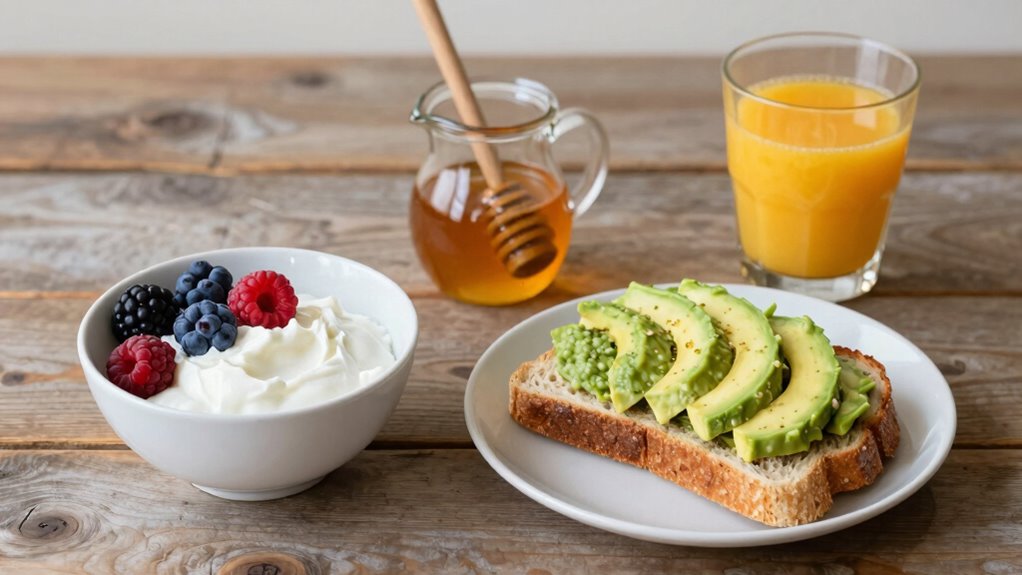
Controlling your breakfast portions is essential because it sets the tone for your entire day. Proper portion sizes help you manage meal timing, ensuring you don’t overeat or feel sluggish later. When you stick to balanced portions, you support your dietary restrictions, whether you’re watching carbs, fats, or calories. This consistency prevents overeating and helps regulate blood sugar levels, reducing hunger pangs. Smaller, controlled portions also promote mindful eating, making you more aware of what and how much you’re consuming. By paying attention to your breakfast size, you give your body the right energy boost without overwhelming it. Additionally, integrating portion control tools can help you measure and track your intake more accurately. Understanding food science principles can further enhance your ability to judge appropriate serving sizes and improve your overall dietary habits. Using connected cooking techniques can optimize your meal preparation, making portion control even easier. Incorporating visual cues and measurements can assist in training your eye to recognize proper portions naturally. This approach creates a more mindful eating experience that supports your health goals. Ultimately, managing your breakfast portions aligns with your health goals and keeps your metabolism steady from the start.
See How to Visualize Your Breakfast Portions Without a Scale
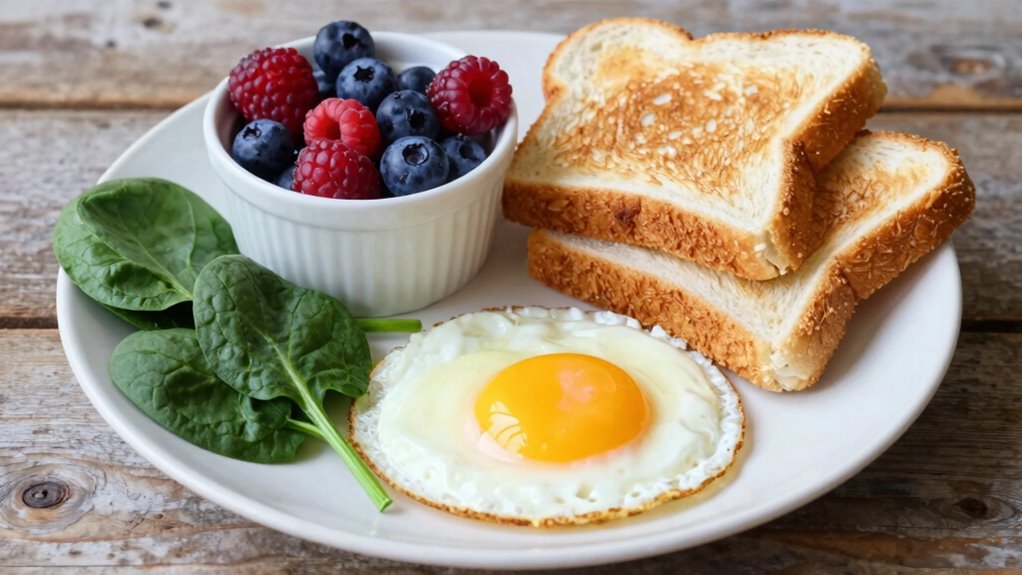
You don’t need a scale to estimate your breakfast portions—just use common household items like a deck of cards or a coffee mug. You can also visualize your servings with simple hand gestures, like a handful for nuts or a fist for grains. Comparing your portions to familiar objects makes it easier to stay on track without extra tools. Incorporating visualization techniques can help you develop a better sense of portion sizes over time. Additionally, understanding portion control can lead to healthier eating habits and improved overall wellness.
Use Common Household Items
Using common household items can make visualizing portion sizes much easier without a scale. Measuring cups are handy for estimating servings, especially liquids or loose foods like cereal or yogurt. For solid foods, portion plates are useful because they often have sections marked for different food groups, helping you balance your meal. A standard cup or mug can serve as a rough scoop for portions like oatmeal or fruit. A deck of cards can represent a serving of meat, while a tennis ball can help gauge a serving of fruit or vegetables. These simple items are accessible and easy to use, making it easier to keep your breakfast balanced without needing a scale. Understanding portion sizes can help you develop a more intuitive sense of how much food you should be eating. Additionally, visual cues from these household items can reinforce your ability to estimate portions accurately over time. Practicing with these items can build your confidence and improve your portion estimation skills naturally. Incorporating visualization techniques into your routine can further enhance your ability to judge serving sizes accurately. For example, comparing a portion to a common household item can make a significant difference in your portion control skills. With a little practice, you’ll naturally develop a good sense of appropriate portion sizes.
Visualize With Hand Gestures
Visualizing portion sizes with your hand is an easy and effective method to estimate servings without a scale. Using hand gestures allows for quick portion visualization, helping you stay on track with your breakfast goals. For example, a fist roughly equals one cup, perfect for grains or fruit. Your palm represents about three ounces of lean protein, like eggs or chicken. A thumb’s tip often indicates about one tablespoon, ideal for spreads or nut butters. These simple hand gestures make it easier to control portions on the go, providing a visual reference that’s always with you. By becoming familiar with these intuitive cues, you’ll develop a better sense of appropriate serving sizes without needing extra tools or measurements, making balanced eating more accessible and less complicated. Additionally, understanding portion control techniques can further improve your ability to manage your intake effectively. Developing consistent habits around visual cues can also help reinforce your portion awareness over time, especially when combined with mindful eating practices.
Compare to Familiar Objects
Familiar objects can serve as practical references for estimating portion sizes without a scale. When meal planning or calorie counting, these visual cues help you keep portions in check. For example,
- A deck of cards resembles a 3-ounce serving of cooked meat or poultry.
- A tennis ball is about the size of a cup of fruit or vegetables.
- A small computer mouse equals roughly 1 ounce of cheese or nuts.
- A smartphone matches the size of a slice of bread or toast.
Using these comparisons makes it easier to gauge portions at breakfast, ensuring you stay within your calorie goals without measuring every time. Additionally, practicing portion control techniques can help reinforce healthy habits and prevent overeating, supporting your overall nutritional goals.
Recognizing serving sizes enhances your ability to make mindful choices and maintain a balanced diet.
This simple method helps you develop a balanced approach to meal planning, avoiding overeating and supporting your health goals.
Furthermore, understanding proper portion sizes can help you identify misleading restaurant or packaged food servings, enabling better portion management.
Being aware of market variations in portion sizes can help you make more informed decisions when choosing foods from different sources.
Balance Protein, Carbs, and Fats in Your Breakfast
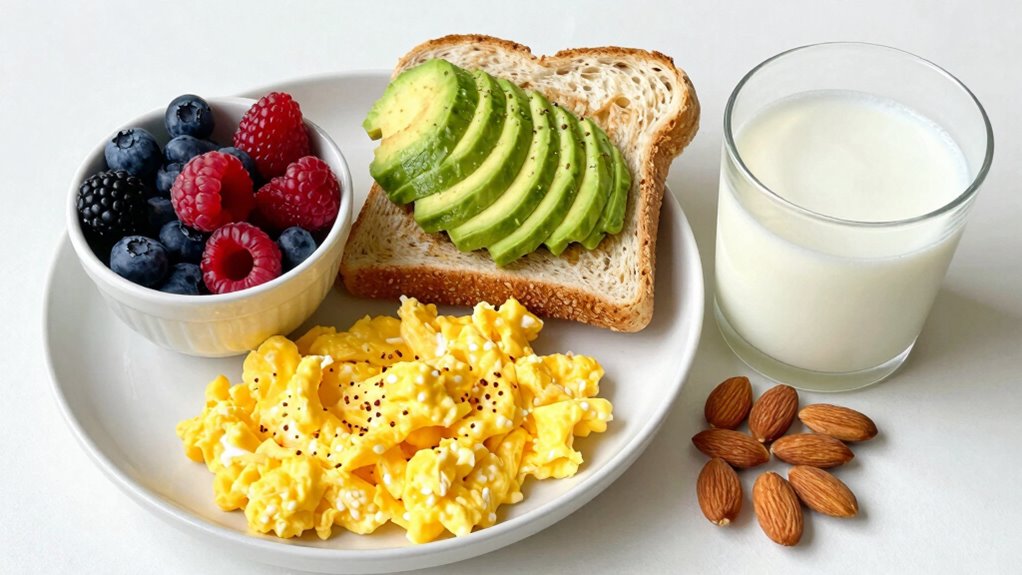
To start balancing your breakfast, focus on including the right portions of protein, carbs, and fats. Keeping these in check helps you stay energized and satisfied longer. Use simple portion control tips to make this process easy and effective. Incorporating mindfulness practices during meal preparation can also help prevent overeating and promote healthier choices. Being aware of lease terms and understanding your options can also support better decision-making when choosing your meals and managing your diet. Paying attention to nutritional information can further enhance your ability to make balanced and informed breakfast choices. Embracing impactful quotes about health and wellness can motivate you to maintain consistent healthy habits. Exploring eco-friendly accommodations can inspire you to adopt sustainable habits in other areas of your life, including your diet and lifestyle choices.
Balancing Macros Effectively
Balancing your macros in breakfast sets the tone for sustained energy and better nourishment throughout the day. To do this effectively, focus on key strategies:
- Prioritize protein to promote fullness and muscle repair, especially if you’re mindful of meal timing throughout the day.
- Incorporate complex carbs to fuel your morning without causing energy crashes, aiding in steady calorie counting.
- Add healthy fats for satiety and hormone support, balancing the overall macro profile.
- Keep portion sizes aligned with your daily goals to avoid over- or under-eating, making macro balancing easier.
- Understanding macro categories helps you create a balanced breakfast that supports your health and fitness goals.
Portion Control Tips
Getting your portion sizes right is key to maintaining a balanced breakfast that fuels your day without excess. Proper portion control helps you manage meal timing and prevents overeating later. To balance protein, carbs, and fats, start with a palm-sized portion of lean protein, like eggs or yogurt. Fill half your plate with whole grains or fruit for healthy carbs, and add a small handful of nuts or seeds for fats. When choosing breakfast toppings, opt for sliced fruit instead of sugary spreads, and use minimal butter or cream. Adjust portion sizes based on your activity level and hunger cues. Remember, controlling portions is about moderation, not deprivation. Incorporating mindful eating techniques can enhance your awareness and help you better recognize your body’s hunger signals. Being aware of traditional European dining customs can also help you develop a more intuitive approach to meal sizes. Keeping these tips in mind ensures your breakfast is nourishing, balanced, and sets a positive tone for the rest of your day.
Simple Ways to Recognize Standard Breakfast Portion Sizes

Recognizing standard breakfast portion sizes doesn’t have to be complicated. Many breakfast myths have led us to overestimate or underestimate what a proper serving looks like, but understanding portion psychology can help clarify. Here are four simple ways to gauge your breakfast portions:
Understanding breakfast portions is simple with these easy, practical tips to avoid common myths and eat mindfully.
- Use your hand — a palm-sized portion for protein, a fist for carbs.
- Visual cues — compare portions to everyday objects like a deck of cards or a baseball.
- Read labels — check serving sizes on packaging for accurate measurements.
- Practice mindful eating — pay attention to hunger cues instead of defaulting to large portions.
These tips help cut through breakfast myths, making portion recognition straightforward and realistic. By mastering these methods, you can enjoy balanced meals without overthinking, all while respecting your body’s natural signals.
Adjust Your Breakfast Portions Based on Hunger and Goals

To effectively adjust your breakfast portions, it’s essential to listen to your body’s hunger signals and align your intake with your personal goals. Your hunger cues can vary depending on your meal timing and breakfast frequency, so pay attention to how full or hungry you feel before and after eating. If you’re more active in the morning, you might need a slightly larger breakfast, whereas a lighter meal may suffice if you’re skipping breakfast or eating later. Consider how your breakfast fits into your overall daily routine and goals—whether you’re aiming for weight management, sustained energy, or muscle building. By tuning into your body’s signals and factoring in your schedule, you can customize portions that support your health without overeating.
Common Breakfast Portion Mistakes and How to Avoid Them

Many people fall into common traps when it comes to breakfast portions, often unintentionally overeating or underserving themselves. One big mistake is falling for serving size myths that suggest tiny portions are enough, leading to hunger soon after. Another issue is ignoring breakfast portion diversity, which can cause imbalances and cravings later. Here are four mistakes to watch for:
Avoid serving size myths and overlook diverse, nutrient-dense breakfast portions to stay satisfied and balanced.
- Relying on visual cues instead of measuring, causing inconsistent portions
- Using standard serving sizes that don’t match your hunger or activity level
- Overlooking snack-sized portions, which can lead to overeating later
- Focusing on quantity over quality, ignoring nutrient-dense options
Avoid these pitfalls to maintain balanced, satisfying breakfast portions that support your goals.
Easy Tips to Keep Your Breakfast Portions Consistent Every Day
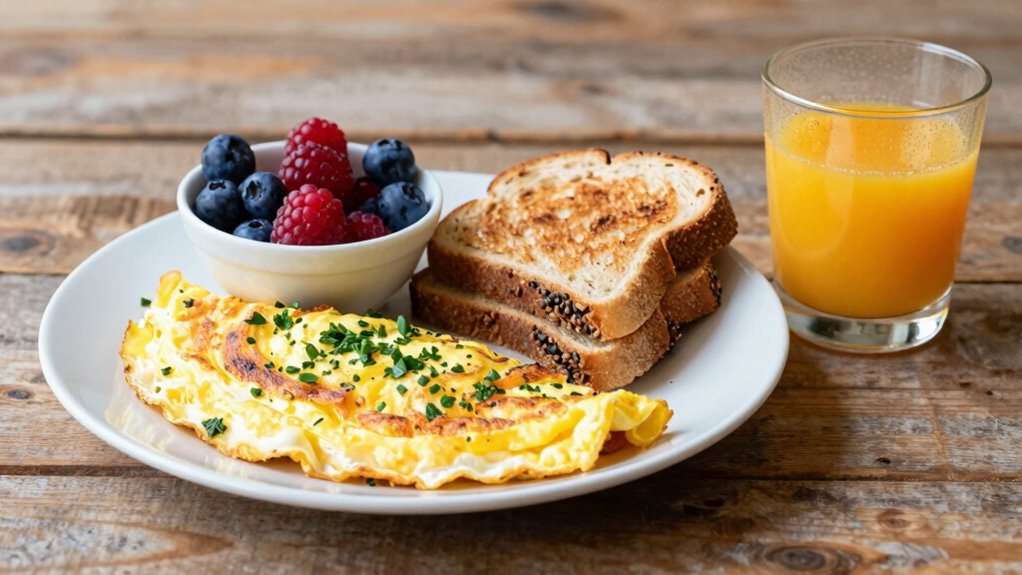
Maintaining consistent breakfast portions each day can be simple when you adopt a few practical strategies. Meal prep is your best tool—prepare your breakfast components in advance and portion them into containers. This not only saves time but guarantees each serving stays on track. To manage breakfast variety without overcomplicating portions, choose a set of core items and rotate them throughout the week, keeping portion sizes steady. Use measuring cups or a food scale when assembling your meals to avoid guesswork. Keep your routine simple: sticking to familiar portions helps prevent overeating and maintains balance. By planning ahead and standardizing your portions, you’ll enjoy breakfast variety without sacrificing consistency. This approach makes your mornings smoother and supports your health goals effortlessly.
Frequently Asked Questions
How Do Portion Sizes Vary for Different Age Groups?
You’ll find portion sizes vary for different age groups, affecting children’s nutrition and elderly eating habits. Kids need smaller portions to match their growth needs, while older adults might require nutrient-dense, manageable portions to maintain health. Pay attention to age-specific guidelines, adjusting your servings accordingly to guarantee balanced nutrition. Whether for children or seniors, understanding these differences helps you promote health and prevent over- or under-eating.
Can Portion Control Help With Specific Health Conditions?
Portion control can substantially help with specific health conditions, especially if you struggle with emotional eating, which affects 75% of adults. By managing portion sizes and adhering to proper meal timing, you can reduce overeating and stabilize blood sugar levels. This approach helps prevent flare-ups and manage symptoms, making your diet more effective and sustainable. Taking control of your portions empowers you to improve your overall health and emotional well-being.
What Are Quick Tips for Measuring Portions on the Go?
When you’re on the go, use measuring tools like portable spoons or cups to quickly gauge portion sizes. Keep a small portion size chart on your phone or wallet for reference, helping you make smarter choices instantly. Pre-portion snacks into small containers at home, so you’re ready when hunger strikes. These tips help you stay on track without the need for scales, making healthy eating easier wherever you are.
How Do Portion Sizes Differ Across Various Cultures?
Ever wondered how portion sizes vary across cultures? You’ll notice that cultural dining customs and traditional serving sizes shape these differences. In some regions, meals emphasize communal sharing and larger portions, while others prefer smaller, individual servings. These variations reflect cultural values and eating habits, influencing your perception of what constitutes a balanced meal. Embracing this diversity helps you appreciate different approaches and tailor portions to fit your personal and cultural context.
Are There Recommended Portion Sizes for Specific Dietary Plans?
Yes, there are recommended portion sizes tailored to specific dietary plans. When planning your meals, consider meal timing to guarantee balanced energy levels throughout the day. Adjust snack frequency based on your dietary goals, like smaller, more frequent snacks for weight loss or larger meals for muscle gain. Always listen to your body and consult guidelines for your specific plan to maintain proper portion sizes and nutritional balance.
Conclusion
By mastering simple portion sizes, you’ll enjoy a balanced breakfast without the hassle of scales. Imagine starting your day with colorful fruits and hearty eggs, feeling energized instead of overwhelmed by measurement. Small adjustments can turn a chaotic morning into a nourishing ritual. When you control your portions, breakfast becomes a calming routine rather than a source of confusion. Embrace these visual tricks, and watch your mornings—and health—transform effortlessly.
NFL season / tailgating Picks
team gear
As an affiliate, we earn on qualifying purchases.