Starting your day with a heart-healthy breakfast featuring oats, berries, and omega-3-rich foods can lower your risk of cardiovascular issues. Oats provide soluble fiber to help reduce cholesterol, while berries are packed with antioxidants that protect your blood vessels. Incorporating omega-3 sources like walnuts, flaxseeds, or hemp seed oil aids in lowering blood pressure and inflammation. Keep exploring to discover tasty ways to boost your morning routine and support your heart health.
Key Takeaways
- Combining oats and berries provides soluble fiber and antioxidants that lower cholesterol and combat oxidative stress.
- Incorporating omega-3-rich seeds like flaxseeds or walnuts supports blood pressure and reduces inflammation.
- A heart-healthy breakfast emphasizing whole grains, fruits, nuts, and seeds aligns with the Mediterranean diet principles.
- Omega-3s help decrease blood clot risk and improve vessel function, promoting overall cardiovascular health.
- Plant-based proteins from nuts and seeds reduce reliance on saturated fats and support LDL cholesterol reduction.
Starting your day with a heart-healthy breakfast can substantially reduce the risk of cardiovascular issues and boost overall well-being. One effective way to do this is by embracing the principles of the Mediterranean diet, which emphasizes fresh fruits, vegetables, whole grains, and healthy fats. Incorporating plant-based proteins into your morning meal not only aligns with this approach but also provides essential nutrients that support heart health. Think of adding legumes, nuts, or seeds to your breakfast to boost protein intake without relying on animal products, which can be high in saturated fats. These plant-based options help lower bad cholesterol levels and reduce inflammation, key factors in maintaining a healthy heart.
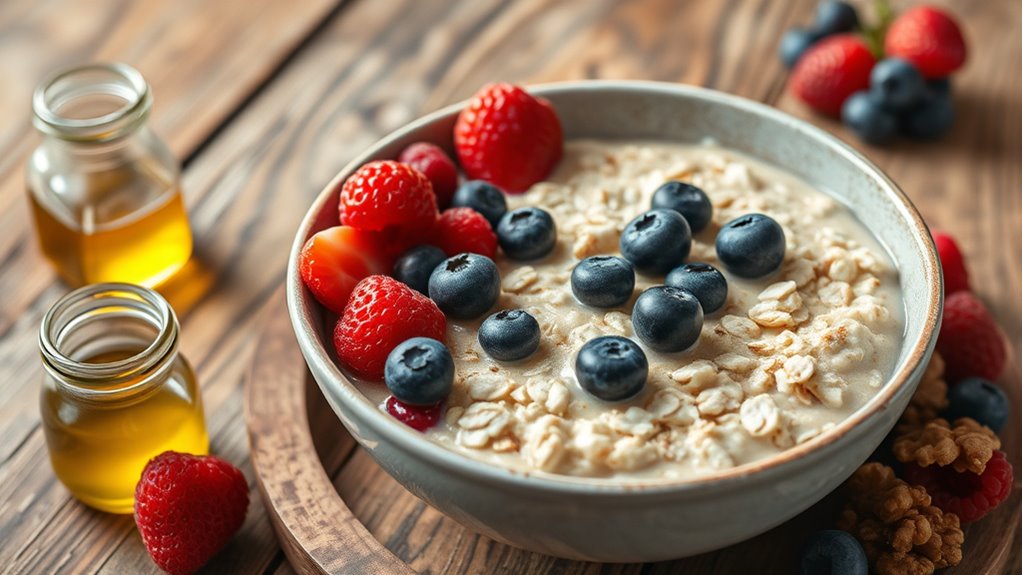
Oats are an excellent base for a heart-healthy breakfast because they are rich in soluble fiber, which helps lower cholesterol. When you prepare oatmeal, consider topping it with fresh berries, like blueberries or strawberries, which are packed with antioxidants. These antioxidants combat oxidative stress, reducing damage to your blood vessels and lowering your risk of heart disease. Berries also add natural sweetness, reducing the need for added sugars, which can harm your heart. Adding a sprinkle of flaxseeds or chia seeds not only enhances the fiber content but also introduces omega-3 fatty acids—another essential nutrient for cardiovascular health. Omega-3s help lower triglycerides, reduce blood pressure, and prevent clot formation.
Incorporating omega-3s into your breakfast can be as simple as adding a handful of walnuts or choosing plant-based oils like flaxseed or hemp seed oil. These sources are excellent alternatives to fish oil if you prefer a vegetarian or vegan diet. When you combine oats, berries, and omega-3-rich seeds, you’re creating a balanced meal that supports heart health from multiple angles. This combination helps maintain healthy blood pressure, reduces inflammation, and improves overall vessel function.
Frequently Asked Questions
Can These Breakfasts Prevent Future Heart Disease?
Yes, these breakfasts can aid in heart disease prevention by incorporating dietary strategies that boost your heart health. Eating oats, berries, and omega-3-rich foods regularly helps lower cholesterol, reduce inflammation, and improve blood vessel function. While they won’t guarantee you’ll avoid heart disease, making these healthy choices part of your routine can markedly lower your risk over time. Stay consistent and combine them with other heart-healthy habits for the best results.
Are There Any Side Effects From Eating Oats Daily?
Eating oats daily is generally safe, but you might experience some side effects. Oat digestion can cause bloating or gas for some people, especially if your gut isn’t used to high fiber. If you’re gluten-sensitive, check labels carefully, as oats can be contaminated with gluten. Moderation helps minimize any discomfort, ensuring you enjoy the heart benefits without unwanted effects.
How Much Omega-3 Should I Consume Each Morning?
You should aim for an Omega-3 intake of about 250-500 milligrams daily, depending on your health needs. Consuming this amount supports heart health, reduces inflammation, and boosts brain function. To meet this goal, include foods like fatty fish, flaxseeds, and walnuts in your breakfast. By balancing your Omega-3 intake each morning, you help maintain overall wellness and promote a healthier heart with every bite.
Can These Foods Improve Existing Heart Conditions?
Yes, incorporating foods like oats rich in oat fiber and berries packed with antioxidants can help improve existing heart conditions. Oat fiber lowers cholesterol, reducing strain on your heart, while berry antioxidants fight inflammation and oxidative stress. Eating these regularly supports better heart health, but always consult your doctor for personalized advice. Combining these foods with your prescribed treatment can enhance your heart health journey effectively.
Are There Suitable Alternatives for People With Food Allergies?
Like a navigator steering through stormy seas, you can find safe, heart-healthy breakfast options even with allergies. Dairy-free options, such as coconut or almond milk, serve as great bases. For nut allergy substitutes, try seeds like chia or sunflower seeds, which provide omega-3s and fiber. These alternatives help you maintain a nutritious start to your day without risking allergic reactions, keeping your heart strong and your mornings worry-free.
Conclusion
By starting your day with oats, berries, and omega-3-rich foods, you’re planting seeds for a healthier heart that will flourish over time. Think of your breakfast as the fuel that powers your heart’s engine, keeping it running smoothly and strong. Make these simple, tasty choices a daily habit, and watch your health bloom like a vibrant garden. Your heart’s future is in your hands—choose foods that nurture it every morning!