
TL;DR

Get kitchen staples and gadgets delivered free with Prime
- Fast, free delivery on millions of items
- Prime Video, Amazon Music and more included
- Member-only deals all year
Lidl US is recalling one lot of Gelatelli Coffee & Vanilla Gelato with Coffee Sauce & Cookie Pieces after routine quality testing found Listeria monocytogenes in a lab sample. The product was distributed to Lidl stores in 10 states and the District of Columbia; no illnesses have been reported. Customers should discard it or return it to Lidl for a full refund.
The affected product is sold in a **16-fluid-ounce clear plastic container with a brown lid**. Consumers can identify it by the UPC **4 0564897 22458**, lot number **085261**, and best-by date **MAR/26/2028**. The lot code and best-by date are printed on the bottom of the container.
The product was distributed from **July 19 through October 15, 2026**, to Lidl US stores in Delaware, the District of Columbia, Georgia, Maryland, New Jersey, New York, North Carolina, Pennsylvania, South Carolina and Virginia. Food Safety News reported that the recall followed routine testing that detected Listeria in a laboratory sample. The report did not specify where the sample was collected or provide further test details.
Customers who have the matching product should **discard it or return it to a Lidl store for a full refund**. Other food recalls have involved possible contamination, including sprouting seeds recalled over contamination concerns. A receipt is not required for a return, according to the recall information carried by Food Safety News. The report said **no illnesses had been reported** as of publication.
Why the Long Best-By Date Matters
The product’s best-by date is in **March 2028**, so it may remain in household freezers well after the distribution period. Food Safety News reported concern that customers could still have containers at home. Checking the lot number and date on the bottom of the container can help distinguish the recalled item from other Gelatelli products.
Listeria is a food-safety concern because contaminated food may **look, smell and taste normal**. The recall does not establish that anyone has become ill, but customers should not rely on appearance or taste to decide whether the product is safe. Returning or discarding the identified lot is the advised response.
People who are pregnant, older adults, young children and those with weakened immune systems face a higher risk of serious illness from Listeria, according to the health guidance included in the report. For pregnant people, infection can also cause severe outcomes for a pregnancy or newborn, even when the parent’s symptoms are mild.
Listeria testing kits for home use
As an affiliate, we earn on qualifying purchases.
As an affiliate, we earn on qualifying purchases.
How the Gelato Lot Was Identified
The reported trigger was a **routine quality test**, rather than a reported cluster of illnesses. A laboratory sample tested positive for Listeria monocytogenes, prompting Lidl US to recall the identified lot. The source report did not say whether any government agency conducted or reviewed the testing.
The recall applies to the specific product details listed above, not automatically to every flavor, lot or product sold under the Gelatelli name. Consumers should compare the **UPC, lot number and best-by date** on their package with the recall information before deciding whether it is affected.
What Testing and Illness Reports Show
The available report does not identify the number of containers involved, the locations where the positive sample was collected, or whether additional testing was conducted. It also does not provide a statement from Lidl US or a government regulator. Those details should not be inferred from the recall notice summarized by Food Safety News.
**No illnesses had been reported** at the time of publication, but that does not establish whether anyone may later develop symptoms. Listeriosis can take **up to 70 days** after exposure to produce symptoms, according to the health information in the report. It is not yet clear whether further recall updates or investigation findings will be released.
Check Freezers and Watch for Symptoms
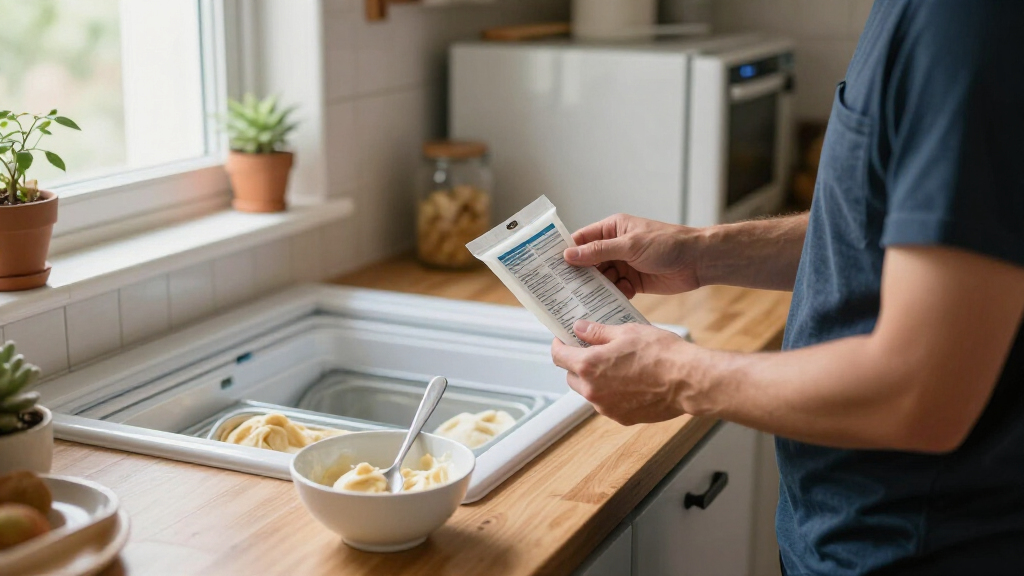
Customers should check their freezers for the product and confirm the **lot number and best-by date** on the container’s bottom. If the details match, they should discard it or take it to a Lidl store for a full refund; a receipt is not required, according to the reported instructions.
Anyone who ate the recalled gelato and develops symptoms should seek medical care and tell a clinician about the possible Listeria exposure. Symptoms listed in the report include **nausea, vomiting, persistent fever, muscle aches, severe headache and neck stiffness**. Consumers who ate the product should monitor for symptoms in the weeks after exposure; people at higher risk should contact a health professional if concerned.
Further information could clarify the scope of the affected lot, testing and any subsequent illness reports. Until then, the confirmed advice is limited to the identified product: do not eat it, and return or discard it.
Key Questions
Which Lidl gelato is included in the recall?
The recall covers **Gelatelli Coffee & Vanilla Gelato with Coffee Sauce & Cookie Pieces**, in a 16-fluid-ounce container, with UPC 4 0564897 22458, lot 085261 and best-by date MAR/26/2028.
Where was the recalled gelato sold?
It was distributed to Lidl US stores in **Delaware, the District of Columbia, Georgia, Maryland, New Jersey, New York, North Carolina, Pennsylvania, South Carolina and Virginia** between July 19 and October 15, 2026.
What should I do if I have the affected product?
Do not eat it. **Discard the gelato or return it to a Lidl store for a full refund**; the report says a receipt is not required for a return.
Have any illnesses been reported?
Food Safety News reported that **no illnesses had been reported** when its article was published on October 18, 2026. Listeria symptoms can take up to 70 days to develop, so that status may not capture later reports.
What symptoms should I watch for after eating it?
The report lists nausea, vomiting, persistent fever, muscle aches, severe headache and neck stiffness. Anyone who develops symptoms after eating the recalled gelato should seek medical care and mention the possible exposure.
Source: rss
Halloween Picks
halloween
As an affiliate, we earn on qualifying purchases.