To create a satisfying vegan breakfast, incorporate plant-based proteins like legumes, whole grains, nuts, seeds, and tofu or tempeh. Add options like nut butters, protein powders, or breakfast bars for convenience and extra nutrition. You can also include seitan or wheat gluten for hearty textures. Using these ingredients helps guarantee a well-rounded, protein-rich morning meal. Keep exploring to discover more tasty and nutritious options to power your day.
Key Takeaways
- Incorporate legumes like lentils, chickpeas, edamame, and green peas into breakfast spreads, patties, or smoothies for complete plant-based protein.
- Use whole grains such as oats, quinoa, and brown rice in porridges or bowls to add fiber, carbs, and plant protein.
- Include nuts and seeds like almonds, pumpkin seeds, and chia for added protein, healthy fats, and texture.
- Add plant-based protein powders (pea, rice, hemp) to smoothies or oatmeal to easily boost daily protein intake.
- Utilize tofu, tempeh, seitan, or wheat gluten as hearty, versatile protein sources in scrambles, hashes, or breakfast wraps.
Legumes: The Protein Powerhouses for Breakfast

Legumes are some of the most versatile and nutrient-dense plant-based proteins you can include in your breakfast. Their popularity is rooted in ongoing legume cultivation efforts worldwide, making them more accessible than ever. As plant-based protein trends grow, legumes like lentils, chickpeas, and black beans have become staples for vegan mornings. They offer high protein content, fiber, and essential nutrients, helping you start your day energized. Incorporating legumes into breakfast dishes is easy—think bean spreads, lentil porridges, or chickpea scrambles. Their adaptability fits into various cuisines and recipes, making them a go-to option for a nutrient-packed meal. Staying updated on plant-based protein trends ensures you maximize the benefits of legumes, supporting a healthy, sustainable vegan lifestyle. Utilizing vertical storage solutions can help you organize your pantry for easy access to your favorite legume varieties and other ingredients.
Whole Grains That Pack a Protein Punch
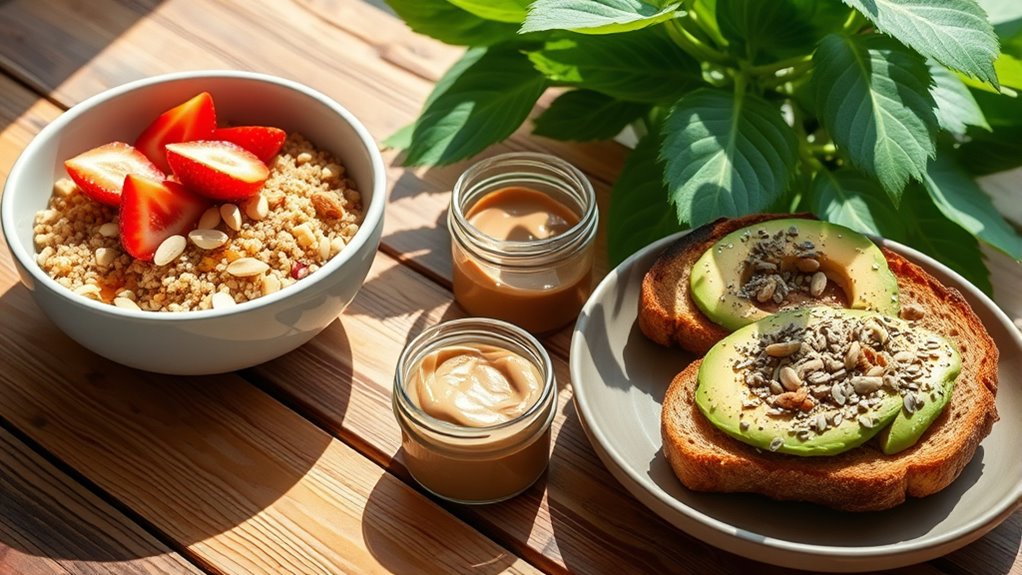
Whole grains are a fantastic addition to your vegan breakfast, offering a hearty source of plant-based protein alongside fiber and complex carbohydrates. They help keep you full longer and provide sustained energy. Incorporate grains like oats, quinoa, and brown rice into your morning routine for a nutritious boost. Imagine a steaming bowl of oatmeal topped with fresh fruit, or a quinoa breakfast porridge mixed with nuts and seeds. These grains work well with dairy alternatives like almond milk or soy yogurt, enhancing your breakfast beverages. Visualize a hearty grain-based smoothie bowl or a warm bowl of rice porridge. By choosing whole grains, you add texture, flavor, and a significant protein punch to your vegan mornings, making your breakfast both satisfying and nourishing. Additionally, identifying ripe grains can ensure you select the best quality for your recipes.
Nuts and Seeds: Small but Mighty Sources of Protein

Nuts and seeds are small but powerful sources of plant-based protein you can easily add to your breakfast. You’ll find a variety of options, each with different protein levels and flavors to suit your taste. Incorporating them into your morning meal boosts your protein intake effortlessly and deliciously. Including a handful of nuts or seeds can also help support overall health, making your breakfast both nutritious and satisfying.
Protein Content in Nuts
You’ll find that nuts and seeds are surprisingly rich sources of protein, making them valuable additions to a plant‑based breakfast. Different nut and seed varieties pack varying amounts of protein, so incorporating a mix can boost your intake. For example, almonds and pistachios offer around 6 grams per ounce, while pumpkin seeds provide about 9 grams. These options add not only protein but also healthy fats and fiber. When incorporating into breakfast, think beyond just snacking; sprinkle chopped nuts over oatmeal, blend seeds into smoothies, or add nut butters to toast. Visualize a handful of crunchy almonds, a spoonful of sunflower seeds, or a swirl of peanut butter—each contributes to your daily protein goal. Nut and seed varieties truly make breakfast both nutritious and satisfying.
Nut and Seed Varieties
Although small in size, nuts and seeds are powerhouses of plant-based protein that can considerably enhance your breakfast. Almonds, walnuts, and cashews provide healthy fats and protein, making them versatile additions. Chia seeds stand out for their high protein and fiber content; they can be added to smoothies or sprinkled on oatmeal. Nut butters also serve as tasty protein sources, especially when spread on whole-grain toast. Don’t forget almond milk, which is often fortified with extra protein and can be used in cereals or coffee. Incorporating a variety of these nuts and seeds boosts your protein intake and adds texture and flavor to your morning meal. Their small size makes them convenient for quick, nutrient-dense additions that support a balanced, vegan breakfast. Kia Tuning techniques can even optimize the nutritional profile of your meals by allowing for better digestion and absorption of these plant-based proteins.
Incorporating Into Breakfast
Adding nuts and seeds to your breakfast is an easy way to boost both flavor and nutrition. You can sprinkle them over oatmeal, blend into smoothies, or mix into plant-based yogurt. These small but mighty sources of protein enhance your meal’s texture and taste, making them perfect for breakfast. Try incorporating them into baking with legumes for added protein punch or enjoy them as convenient plant-based protein snacks on the go. Visualize a bowl of chia seeds and hemp seeds layered atop your morning porridge or a handful of almonds mixed into your favorite muffin batter. Their versatility makes it simple to elevate any vegan breakfast. Whether you’re adding crunch or creaminess, nuts and seeds are essential for a balanced, protein-rich start to your day. Understanding city dynamics can also help you choose the best ingredients and recipes suited for your new lifestyle.
Plant-Based Protein Powders and Smoothie Boosters

Plant-based protein powders and smoothie boosters offer a convenient way to increase your protein intake on a vegan breakfast. They seamlessly blend into smoothies, oatmeal, or yogurt, providing a quick nutrient boost. Many options use dairy alternatives like almond, soy, or oat milk, making them suitable for vegans and those with lactose intolerance. These powders often contain plant-based proteins such as pea, rice, hemp, or chia, offering a plant-derived alternative to animal-based proteins. They can help you meet your daily protein needs without sacrificing taste or convenience. Additionally, tuning modifications can improve the overall quality and performance of your smoothies, ensuring a more enjoyable and effective nourishing experience. Whether you’re looking for a post-workout shake or a nutritious start to your day, these powders make it easy to incorporate more plant-based proteins into your morning routine.
Tofu and Tempeh: Versatile Vegan Breakfast Options
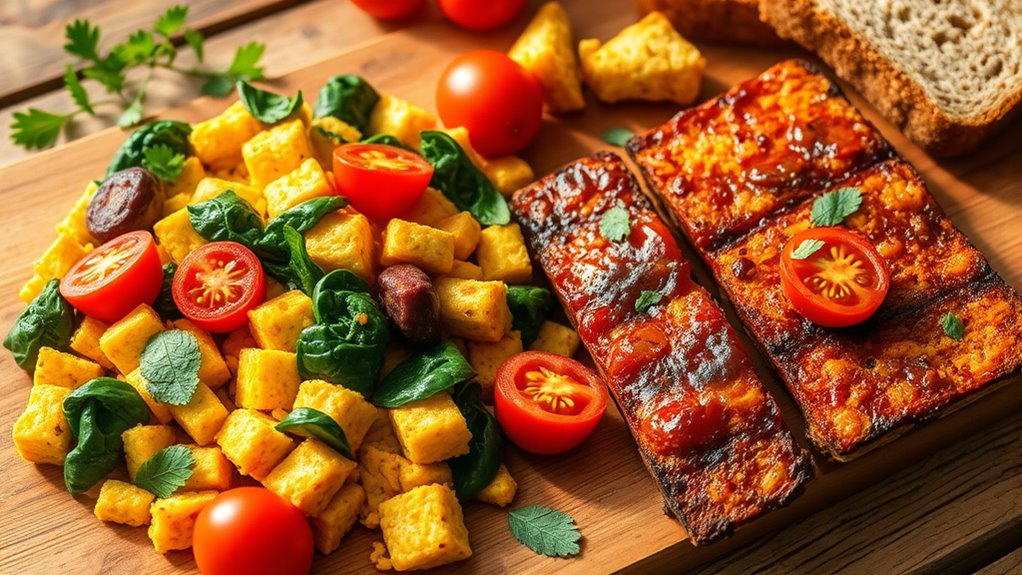
Tofu and tempeh are excellent, versatile options for enriching your vegan breakfast. They absorb flavors well and can be prepared in countless ways. For tofu, you might try scrambled tofu, tofu hash, or blended smoothies. Tempeh varieties, such as smoked, marinated, or crumbled, add depth and texture to your meal. Picture crispy fried tempeh strips layered over a grain bowl or soft tofu cubes in a spicy scramble. These plant-based proteins are perfect for creating hearty, satisfying breakfasts. You can experiment with various tofu recipes, from classic stir-fries to baked dishes, and explore different tempeh styles to suit your taste. Incorporating these options not only boosts your protein intake but also keeps your breakfast exciting and flavorful. Understanding protein sources can help you make informed choices to enhance your plant-based diet.
Edamame and Green Peas for a Fresh Protein Boost

Edamame and green peas pack a nutritious punch that can energize your breakfast. You’ll discover how their high protein content supports your daily needs and adds variety to your meals. Plus, there are plenty of creative ways to incorporate these fresh ingredients into your morning routine. Incorporating reliable, compassionate resources can also help you explore more plant-based options and improve your overall well-being.
Nutritional Benefits of Edamame
Have you ever wondered how edamame and green peas can give your breakfast a fresh protein boost? These legumes are rich in soy benefits, offering a complete protein with all essential amino acids. When you include edamame, you’re tapping into the nutrient-dense edamame harvest, packed with fiber, vitamins, and minerals. Imagine biting into:
- Tender, bright green pods bursting with flavor
- Creamy, satisfying beans that boost your energy
- A natural source of plant-based protein to keep you full longer
Edamame is a versatile ingredient, perfect for adding nutritional value without sacrificing taste. Its soy benefits support muscle growth and overall health while making your breakfast more satisfying and nourishing.
Creative Green Pea Recipes
If you’re looking to elevate your breakfast with a burst of plant-based protein, incorporating creative green pea recipes is a fantastic choice. Green peas and edamame pack a protein punch that can be easily added to smoothies or breakfast bowls. Try blending cooked green peas with soy milk and a scoop of pea protein powder for a nutrient-rich smoothie. You can also make green pea hummus as a spread or dip, perfect with whole-grain toast. For a savory twist, incorporate mashed peas into breakfast patties or veggie scramble. These recipes boost your protein intake naturally, making your morning more satisfying. Plus, they add fresh flavor and vibrant color to your plate, helping you start your day energized and nourished. The use of color accuracy in preparing these recipes ensures they look as appetizing as they taste.
Seitan and Wheat Gluten as Protein-Rich Alternatives

Seitan and wheat gluten stand out as popular protein-rich alternatives for those following a vegan breakfast. Seitan’s chewy texture closely mimics meat, thanks to wheat gluten processing that enhances its elasticity and firmness. When prepared well, it offers a satisfying bite and can absorb flavors easily. As you cook with wheat gluten, you’ll notice how it transforms into a dense, meat-like consistency, perfect for hearty dishes. Imagine:
- A savory, sliced seitan steak sizzling in a pan
- Wheat gluten dough shaping into burger patties
- Aromatic herbs and spices infusing the seitan for added flavor
These options provide a versatile base to experiment with, giving your breakfast a substantial, protein-packed boost. Additionally, maintaining a methodical approach in preparation helps ensure consistent quality and flavor in your dishes. Seitan and wheat gluten are excellent for creating satisfying, plant-based morning meals.
Nut Butters and Spreads to Elevate Your Morning
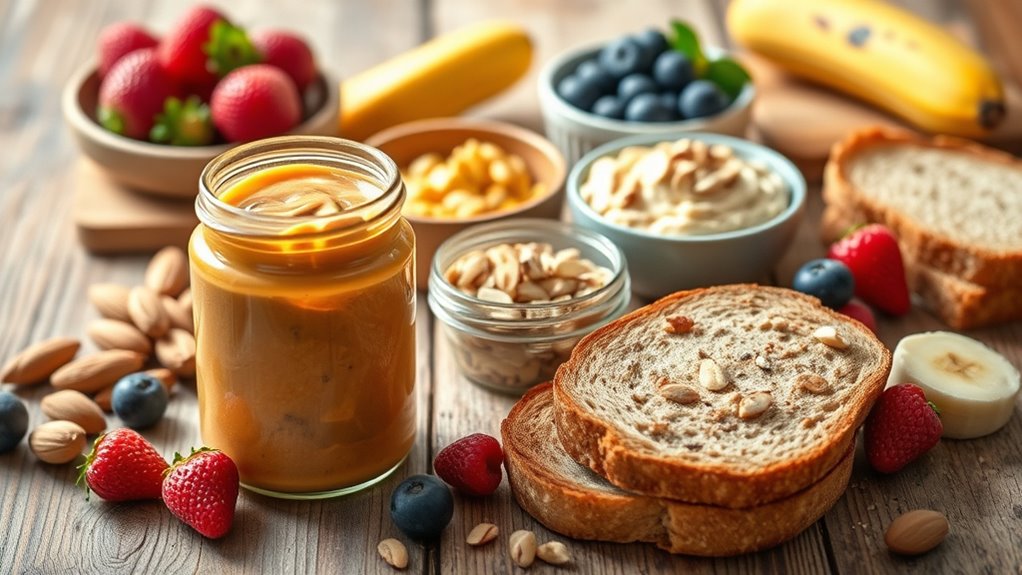
Building on plant-based proteins like seitan, incorporating nut butters and spreads into your breakfast can elevate both flavor and nutrition. Nut butters, such as almond or peanut, pair perfectly with milk alternatives like soy or oat milk. Spread them on toast, stir into oatmeal, or blend into smoothies for added richness. Top your bowls with fresh fruit toppings like berries or banana slices to boost vitamins and natural sweetness. These spreads also provide healthy fats and protein, making your meal more satisfying. For variety, try combining different nut butters or adding a drizzle of agave or maple syrup. Here’s a quick comparison:
| Nut Butter | Best Pairings |
|---|---|
| Peanut Butter | Banana slices, apple slices |
| Almond Butter | Berries, cinnamon, oat milk |
| Cashew Butter | Mango, coconut flakes |
| Sunflower Seed Butter | Chocolate, strawberries |
Breakfast Bars and Baked Goods With Plant Proteins

Incorporating plant-based proteins into breakfast bars and baked goods is an easy way to boost their nutritional value and satisfy your morning cravings. You can add ingredients like pea protein, hemp protein, or soy to create hearty, satisfying treats. Using dairy alternatives such as almond or oat milk, along with egg substitutes like flaxseed or applesauce, helps keep these recipes vegan and moist. Imagine biting into:
- Chewy granola bars packed with chia seeds and protein powder
- Moist muffins with a nutty flavor and a dense, satisfying texture
- Crispy cookies with a subtle sweetness and a protein boost
These options are perfect for on-the-go nutrition, ensuring you start your day energized. Incorporating plant proteins makes your baked goods both nourishing and delicious without sacrificing taste or texture.
Creative Combinations for a Balanced Vegan Breakfast
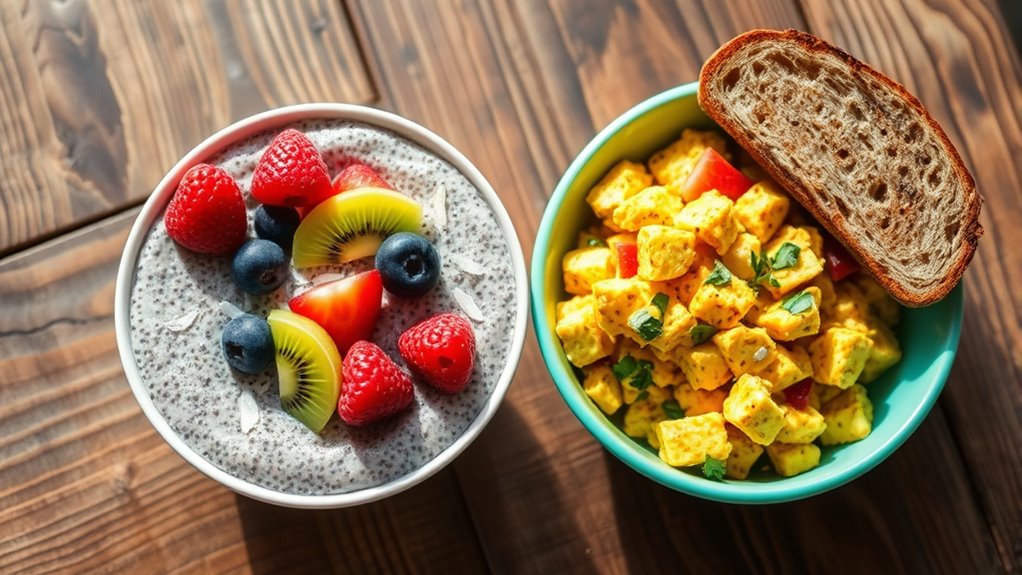
To create a balanced vegan breakfast, mixing diverse plant-based ingredients is key to ensuring you get a range of nutrients and flavors. Organizing your kitchen efficiently helps you combine ingredients seamlessly, making meal prep strategies more effective. For example, prepare overnight oats with chia seeds, nuts, and fresh fruit the night before, saving time in the morning. Incorporate tofu scramble with colorful vegetables and whole-grain toast for added protein and fiber. Smoothie bowls with plant-based protein powder, seeds, and berries also offer variety and nutrition. By thoughtfully arranging your pantry and fridge, you can quickly assemble creative combinations that keep breakfast exciting and balanced. This approach simplifies meal prep, reduces stress, and encourages consistent, nutrient-rich mornings.
Frequently Asked Questions
How Do Plant Proteins Compare to Animal Proteins in Amino Acid Profiles?
You might wonder how plant proteins compare to animal proteins in amino acid profiles. Plant proteins often lack amino acid completeness, meaning they don’t have all essential amino acids in adequate amounts. However, combining different plant sources boosts protein bioavailability, making your vegan meals nutritious. While animal proteins generally have higher bioavailability, with mindful choices and combinations, you can meet your amino acid needs effectively using plant-based options.
Are There Any Potential Allergenic Concerns With Plant-Based Breakfast Proteins?
Sometimes, you might face delicate matters like allergenic risks with plant-based proteins. While most people enjoy them without issue, some could have protein sensitivities or mild reactions. It’s wise to stay aware of potential allergenic concerns, especially if you notice any discomfort. Always check ingredient labels and consider trying new sources gradually. By doing so, you guarantee your vegan breakfast remains both nourishing and safe, catering to your unique needs.
What Are the Best Plant Proteins for Athletes or Active Individuals?
You want the best plant proteins for athletes or active individuals, so focus on those with high protein absorption rates. Look for options like pea, rice, or hemp protein, which are easy to digest and contain beneficial digestive enzymes. These help your body absorb nutrients efficiently, supporting muscle recovery and energy. Incorporating a variety of these proteins guarantees you get all essential amino acids, optimizing your performance and recovery.
How Can I Ensure Balanced Nutrition Using Only Plant-Based Breakfast Proteins?
Imagine your breakfast as a puzzle; each piece needs to fit perfectly for full nutrition. To guarantee balanced plant-based proteins, interpret nutritional labels carefully and choose diverse sources like beans, tofu, and quinoa. Use flavor enhancement techniques like herbs and spices to keep meals enjoyable. Consistently balancing these elements helps you meet your nutritional needs without sacrificing taste, turning your mornings into vibrant, nourishing starts.
Do Plant-Based Proteins Have Any Specific Storage or Preparation Requirements?
You ask if plant-based proteins need special storage or preparation. Proper storage involves keeping them in airtight containers in a cool, dry place to prevent spoilage. For preparation, rinse or soak dried options like beans and lentils to improve digestibility. Follow packaging instructions for cooked or processed proteins like tofu or tempeh. These tips guarantee your plant-based proteins stay fresh, safe, and ready for healthy, delicious breakfasts.
Conclusion
By incorporating these plant-based proteins into your breakfast, you’ll open a powerhouse of energy that could fuel a rocket to the moon! Imagine starting your day with a feast so nourishing and vibrant, it transforms your mornings into a symphony of flavor and strength. Embrace these options, and you’ll be unstoppable, powering through your day with the might of a thousand lions—all before your first cup of coffee!