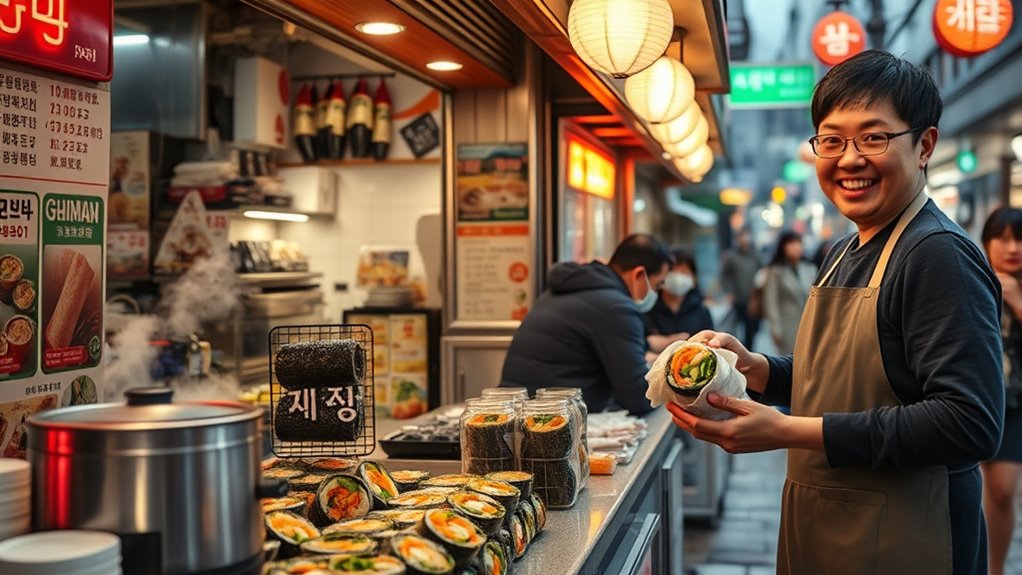

Seoul’s gimbap shops are perfect for quick, flavorful breakfast bites. You can enjoy colorful, traditional rolls filled with fresh ingredients like tuna, kimchi, or vegetables, often at budget-friendly prices. Find them in neighborhoods like Myeongdong or Jongno, where authentic and fusion varieties thrive. Service is fast, and the quality remains high, making them ideal for busy mornings. Keep exploring to discover the best spots and tips to enjoy your gimbap experience even more.
Key Takeaways
- Seoul’s gimbap shops offer quick, affordable breakfast options with fresh, pre-made rolls for busy mornings.
- Traditional shops in Jongno focus on authentic recipes, while Myeongdong and Hongdae feature innovative, fusion varieties.
- Most shops serve gimbap sliced into bite-sized pieces, ideal for eating on the go with hands or chopsticks.
- Customized orders are common; ask for ingredient preferences like extra radish or vegetarian options.
- Efficient service and simple menus ensure fast, fresh bites perfect for a quick morning start.
The Charm of Seoul’s Gimbap Shops
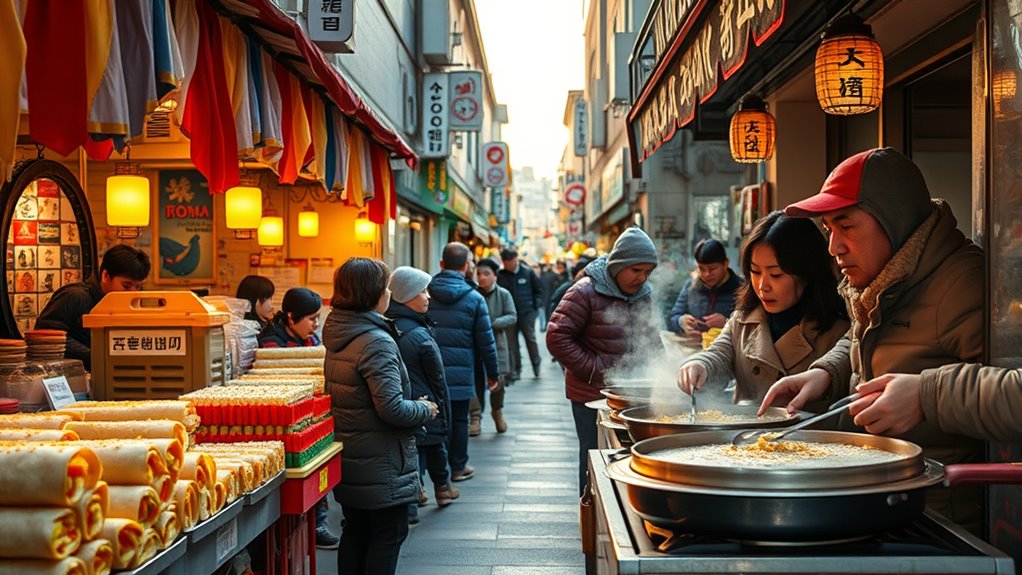
Few things capture the essence of Seoul’s street food scene like its gimbap shops. As you browse, you’ll notice how the gimbap presentation is both inviting and colorful, showcasing neatly rolled bites that reflect local craftsmanship. These shops often stick to traditional recipes, emphasizing fresh ingredients and time-honored techniques that give each roll authentic flavor. The aroma of seasoned rice, vibrant vegetables, and seasoned meats fills the air, drawing locals and tourists alike. The simplicity of these gimbap shops adds to their charm—no fancy decor, just a focus on quality and tradition. You can see the care in every roll, making each visit a small celebration of Korea’s culinary heritage. The attention to detail in each step of preparation highlights the deep-rooted culinary techniques passed down through generations, making Seoul’s gimbap scene truly special.
Popular Gimbap Varieties to Try

If you’re exploring Seoul’s gimbap scene, you’ll find that certain varieties stand out for their flavor and popularity. Classic options like tuna, kimchi, and bulgogi are favorites for their savory profiles. For a modern twist, try fusion varieties such as cheese-filled or spicy tuna gimbap, which add unique flavors to traditional bites. Vegetarian options are also widely available, featuring ingredients like spinach, carrots, cucumber, and pickled radish, perfect if you’re seeking a lighter or plant-based choice. These options cater to diverse tastes and dietary preferences, making gimbap a versatile quick breakfast. Understanding the signs and symptoms of diverse preferences can help you choose the perfect gimbap. Whether you prefer the classic or innovative, Seoul’s gimbap shops offer a range of popular varieties that are both satisfying and convenient.
Best Neighborhoods for Gimbap Enthusiasts

Exploring Seoul’s gimbap scene means discovering neighborhoods where the variety and quality of shops truly shine. Areas like Myeongdong and Hongdae stand out for their diverse offerings, blending traditional Gimbap history with innovative Gimbap fusion. In these neighborhoods, you’ll find shops that honor traditional recipes while experimenting with new flavors—think spicy kimchi, cheese, or even sushi-inspired Gimbap. Jongno is another hotspot, rich in history, where authentic Gimbap shops preserve the roots of this beloved snack. These neighborhoods attract Gimbap enthusiasts enthusiastic to experience the perfect balance of tradition and creativity, making them ideal for sampling the best Seoul has to offer. Whether you’re after a classic or a modern twist, these areas won’t disappoint. Creating the perfect farmhous bedroom ambiance can inspire a cozy atmosphere even when exploring Seoul’s vibrant street food scene.
Tips for Ordering and Enjoying Gimbap
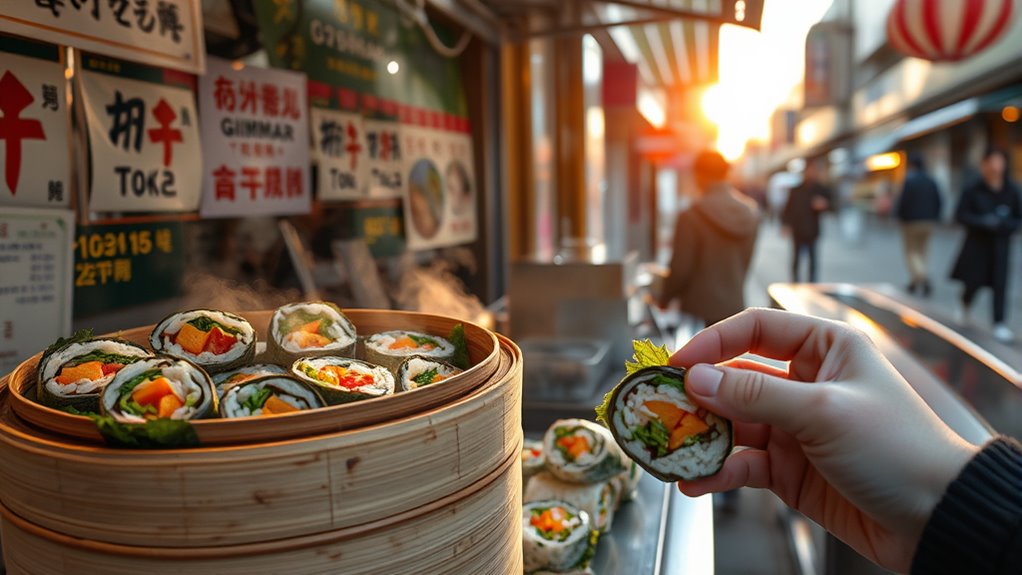
When ordering Gimbap in Seoul, paying attention to the ingredients and presentation can greatly enhance your experience. Follow basic Gimbap etiquette by being polite and clear about your preferences. Don’t hesitate to ask for ingredient customization—many shops happily accommodate requests like extra pickled radish or avoiding certain fillings. Observe how locals handle their Gimbap; typically, they cut it into bite-sized pieces and eat it with hands or chopsticks. To enjoy it fully, take small bites and savor each flavor combination. If unsure about what to choose, ask the vendor for recommendations. Remember, Gimbap is meant to be quick, convenient, and delicious—so relax, enjoy the process, and make it your own with personalized ingredients. Proper Gimbap presentation can also enhance your tasting experience and appreciation of the dish.
Affordable Prices and Quick Service
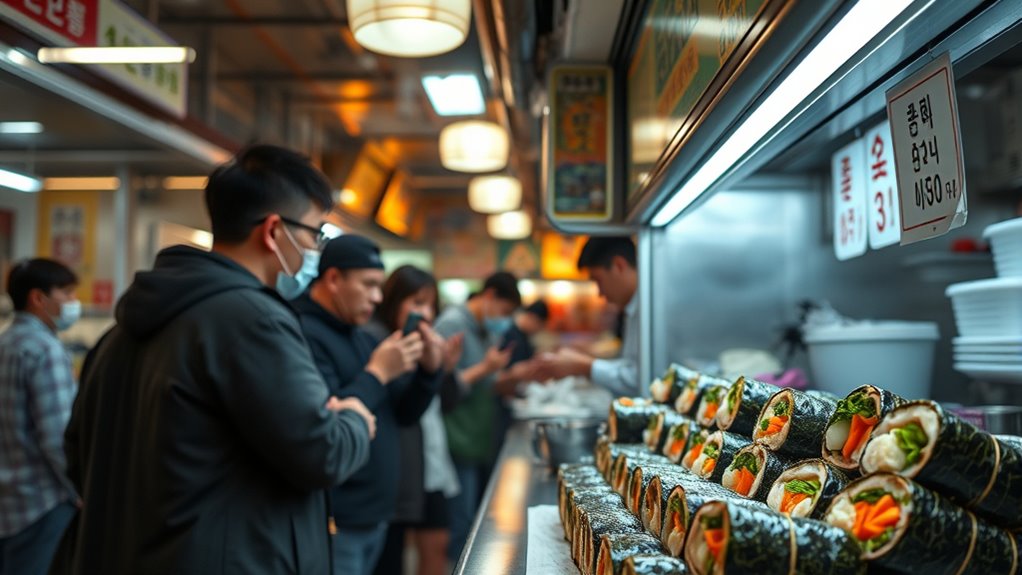
Gimbap shops in Seoul are known for their affordability and fast service, making them a popular choice for both locals and visitors on the go. Their pricing strategies focus on offering budget-friendly options without sacrificing quality, so you get good value for your money. Service efficiency is a key priority, with staff trained to serve quickly during busy mornings. You’ll find that the streamlined ordering process and prepared ingredients help keep lines moving smoothly. Many shops use simple menus and pre-made gimbap, ensuring you won’t wait long for your order. This combination of low prices and rapid service makes gimbap shops ideal for a quick breakfast, allowing you to start your day without delays or overspending. Additionally, understanding odor indicators can help you identify freshness and hygiene standards in these food establishments.
Cultural Significance of Gimbap in Seoul

Gimbap holds a special place in Seoul’s cultural and social life, symbolizing more than just a convenient snack. It reflects shared values like respect and community, often used in gatherings and celebrations. When eating gimbap, observing gimbap etiquette shows politeness—such as using chopsticks properly and not biting directly into the roll. Gimbap packaging also plays a role, emphasizing cleanliness and portability, making it ideal for busy mornings. Many Koreans see gimbap as comfort food, evoking nostalgic feelings and family traditions. Its presence at social events highlights its cultural importance. Additionally, the way gimbap is prepared and presented often involves attention to color accuracy, ensuring visual appeal that complements its taste. By understanding these customs, you gain insight into Seoul’s traditions, where a simple gimbap is more than just food — it’s a piece of the city’s identity.
Exploring Gimbap Shops Beyond Breakfast
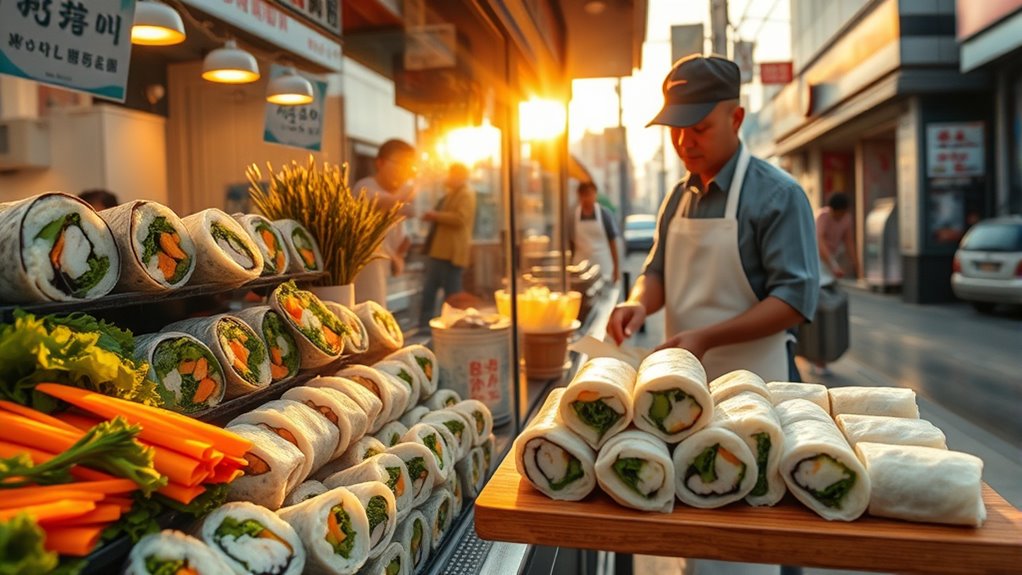
Although many people associate gimbap primarily with breakfast or quick snacks, in Seoul, these shops go far beyond morning hours. You’ll find gimbap being enjoyed as late-night snacks after a night out, offering comfort and convenience. Some shops experiment with fusion flavors, blending traditional ingredients with international twists like spicy tuna, cheese, or kimchi-mayo fillings. These creative options attract a diverse crowd looking for something more substantial or unique. Gimbap shops stay open well into the evening, serving as casual spots for friends or solo diners craving quick, satisfying bites. Whether you’re craving classic flavors or adventurous fusion varieties, Seoul’s gimbap shops provide a versatile experience that extends far past breakfast time. Embracing mindful decluttering can help shop owners organize their supplies efficiently, ensuring a clean and welcoming environment for customers.
Frequently Asked Questions
What Is the History Behind Seoul’S Popular Gimbap Shops?
You might wonder about the history behind Seoul’s popular gimbap shops. Their evolution traces back to Korea’s traditional street food culture, blending Japanese influences with local flavors. Over time, gimbap gained cultural significance as a convenient, nutritious meal for busy Koreans. Today, these shops serve as social hubs, reflecting Seoul’s vibrant food scene and deep-rooted culinary traditions, making them a beloved part of the city’s daily life.
Are There Vegetarian or Vegan Gimbap Options Available?
If you’re craving creative culinary choices, you’ll find plenty of plant-based options at Seoul’s gimbap shops. Many offer vegan-friendly fillings like seasoned spinach, pickled radish, and tofu, catering to vegetarians and vegans alike. These shops serve satisfying, savory bites that suit your dietary desires, making it easy to enjoy a quick, wholesome morning meal without compromising your plant-based principles.
How Do Gimbap Shops Vary Between Different Districts?
You’ll notice district differences in gimbap shops, as each area has its own vibe and specialties. In busy districts, shops often have lively atmospheres and quick service, perfect for a fast breakfast. Meanwhile, quieter neighborhoods might feature more cozy, traditional shops with personalized touches. These variations reflect local tastes and traditions, making each district’s gimbap shop unique and worth exploring for different atmospheres and offerings.
What Are the Health Benefits of Traditional Gimbap?
Traditional gimbap offers notable health advantages thanks to its nutritional content. You get a balanced mix of vegetables, which provide fiber and vitamins, along with protein from eggs or fish, and carbs from rice. These ingredients support your digestion, boost your energy, and promote overall wellness. By choosing authentic gimbap, you’re enjoying a convenient, nutritious snack that can fit into a healthy diet, giving you essential nutrients in a tasty package.
Can Tourists Find Authentic, Family-Run Gimbap Shops Easily?
Imagine stepping into a cozy, hidden garden where local flavors bloom with family traditions. You’ll find it easy to discover authentic, family-run gimbap shops, tucked away like treasured secrets. These shops are the heart of Seoul’s culinary family stories, offering genuine tastes that connect you to tradition. As you explore, you’ll feel the warmth and authenticity, making each bite a memorable journey into local culture.
Conclusion
Think of Seoul’s gimbap shops as vibrant morning hubs, like bustling beehives, where the sweet aroma pulls you in. I once watched a local expertly roll her gimbap with practiced ease, each slice revealing a perfect balance of flavors—like a tiny, delicious masterpiece. Whether you’re rushing to work or savoring a quick bite, these shops offer more than food; they offer a taste of Seoul’s heart, quick, satisfying, and full of life.