
Transform last night’s dinner into breakfast with creative hacks like turning roasted vegetables into a hash or frittata, and leftover meats into tasty breakfast burritos or wraps. Cold pasta or rice can become savory bowls or fried rice, while stews with eggs make hearty shakshukas. Spice up flavors with herbs, sauces, or cheese, and use clever techniques to keep textures appealing. Curious how to make these ideas a reality? Keep exploring for plenty of delicious, surprising transformations.
Key Takeaways
- Repurpose cooked meats and vegetables into savory breakfast hash or frittatas for quick, flavorful mornings.
- Transform leftover pasta or rice into breakfast bowls by adding eggs, herbs, and cheese.
- Use stews or soups as bases for shakshuka-style dishes with cracked eggs on top.
- Incorporate roasted vegetables and meats into breakfast wraps or burritos for portable meals.
- Reheat leftovers with added broth or sauces to enhance moisture and flavor, creating new breakfast options.
Why Using Leftovers for Breakfast Saves Time and Reduces Waste

Using leftovers for breakfast not only saves you time in the morning but also helps cut down on food waste. When you repurpose dinner leftovers, you practice sustainable dining by reducing discarded food. This approach streamlines your morning routine, allowing you to skip the prep work and jump straight into enjoying a meal. Proper kitchen organization makes it easier to access leftovers quickly, preventing unnecessary delays. By keeping leftovers visible and well-stored, you encourage regular use and minimize spoilage. This habit supports eco-friendly habits and fosters responsible consumption. Overall, transforming dinner into breakfast simplifies your mornings while promoting mindful, sustainable choices—making your kitchen more efficient and eco-conscious. Additionally, understanding the importance of food storage techniques can help preserve leftovers longer and maintain their quality. Properly labeling leftovers also helps prevent confusion and reduces waste by ensuring you know what’s available for quick meals. Incorporating efficient storage solutions can further enhance your ability to reuse leftovers effectively, reducing kitchen clutter and making meal prep even more streamlined.
How to Choose the Best Leftovers for Breakfast Recipes

Choosing the right leftovers for breakfast can make all the difference in creating quick, tasty, and satisfying morning meals. Focus on leftover selection that lends itself well to reheating or repurposing, such as roasted vegetables, cooked meats, or scrambled eggs. Avoid leftovers that spoil easily or have strong flavors that might overpower your breakfast dish. Proper storage techniques are essential—store leftovers in airtight containers in the fridge to keep them fresh and safe for consumption. Label your leftovers to track their age, and use them within a few days to prevent waste. When selecting leftovers, consider their texture and flavor, choosing versatile items that can be easily transformed into new breakfast favorites. Incorporating food safety practices ensures your leftovers remain safe to eat and maintain their quality. Additionally, understanding food preservation techniques can help extend the freshness of leftovers and reduce food waste. Preserving leftovers properly not only maintains their quality but also minimizes food waste, making your breakfast prep more sustainable. Proper storage not only preserves the quality but also helps prevent bacterial growth, ensuring a safe and enjoyable meal. This approach ensures your morning meal is delicious, convenient, and waste-free.
Reheating and Preparing Leftovers for Morning Cooking
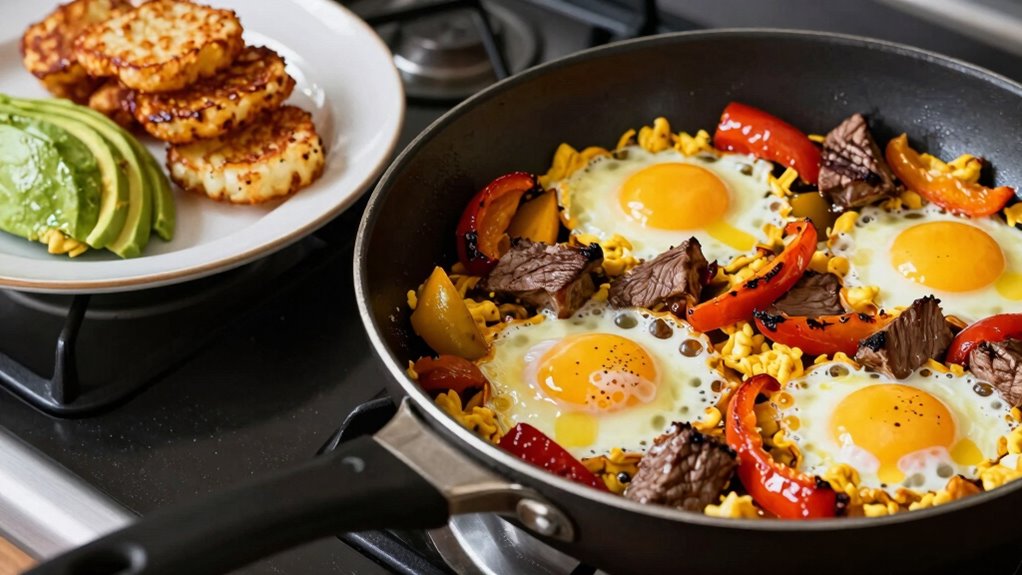
To guarantee your leftovers are ready for a quick and tasty breakfast, proper reheating and preparation are essential. This assures food safety and maintains flavor and texture. When reheating, keep these tips in mind:
- Use a microwave or stovetop, stirring occasionally for even heat.
- Check internal temperatures to avoid bacteria growth, aiming for at least 165°F.
- Repackage leftovers in appealing portions, using fresh herbs or garnishes to enhance presentation tips.
- Incorporating connected kitchen technology, such as smart appliances with temperature sensors, can help monitor reheating progress for perfect results. Utilizing food safety guidelines during reheating further ensures your leftovers are safe to eat and retain quality. Additionally, understanding energy-efficient reheating methods can reduce your household’s overall energy consumption while maintaining food safety standards. Employing smart temperature control devices can optimize energy use and ensure consistent heating. Being aware of reheating techniques can also help preserve the original flavors and textures of your meals.
How to Turn Roast Vegetables Into Delicious Breakfast Hashes or Frittatas
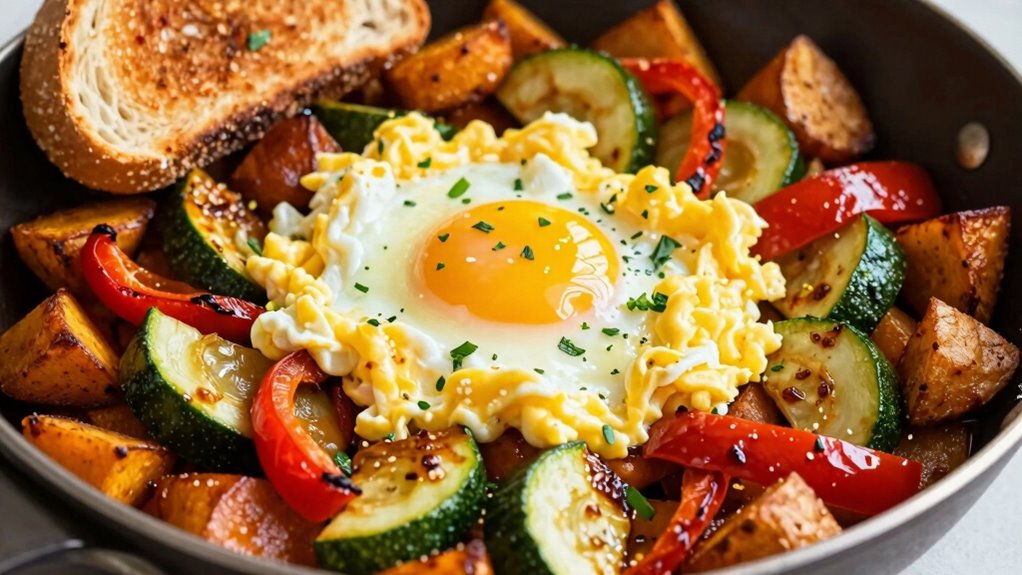
Transforming roast vegetables into breakfast hashes or frittatas is a smart way to save time and add flavor to your morning meal. Start by choosing a meat selection, like cooked sausage, ham, or bacon, to complement your vegetables. Proper vegetable pairing is key—pair hearty, caramelized roast veggies like sweet potatoes, bell peppers, or zucchini with savory meats for balanced flavor. For a hash, chop the vegetables and meat, then sauté in a skillet until heated through and slightly crispy. For a frittata, whisk eggs, fold in chopped roast vegetables, and sprinkle with cheese if desired before baking or broiling. This approach maximizes leftovers, creates satisfying textures, and guarantees a delicious start to your day. Understanding the culinary techniques behind reheating and repurposing leftovers ensures the best flavor and texture retention in your breakfast creations. Additionally, paying attention to food safety when handling and reheating leftovers helps prevent any health risks.
Creative Ways to Use Leftover Meats in Breakfast Burritos and Wraps

Leftover meats from your breakfast hash or frittata are perfect for creating flavorful breakfast burritos and wraps. To boost meal presentation and guarantee nutritional balance, choose meats like roasted chicken, steak strips, or turkey sausage. These add rich flavor and protein, making your wraps satisfying. When assembling, layer ingredients neatly to make each bite appealing. Consider adding fresh vegetables like peppers or spinach for color and crunch. Wraps can be tucked in foil or parchment for easy portability. Using leftovers this way minimizes waste and creates a hearty, balanced breakfast. Keep portions moderate to avoid overcrowding, and aim for a variety of textures to keep the meal enticing. These creative wraps turn simple leftovers into a nutritious, eye-catching start to your day.
Transforming Cooked Pasta and Rice Into Savory Breakfast Bowls or Fried Rice

To turn cooked pasta and rice into tasty breakfast bowls or fried rice, focus on perfecting their texture and flavor. Adding simple enhancements like herbs, spices, or a splash of soy sauce can make a big difference. Get creative with serving ideas to keep breakfast exciting and satisfying. Incorporating flavor profiles inspired by diverse cuisines can elevate your dishes and introduce new taste dimensions. Additionally, understanding food safety practices, such as proper reheating methods, ensures your leftovers remain both delicious and safe to enjoy. Incorporating storage techniques can also help maintain freshness and prevent spoilage.
Perfecting the Texture
Achieving the perfect texture is key when turning cooked pasta or rice into savory breakfast bowls or fried rice. To guarantee the dish holds together without becoming mushy, focus on texture improvement and consistency control.
- Use a hot skillet or wok to crisp up the grains or pasta, adding a slight char for added texture.
- Break up clumps by stirring vigorously or using a spatula, creating a more even, fluffy consistency.
- Add a splash of oil or a bit of broth during reheating to revive moisture and prevent dryness.
- Incorporating professional equipment such as a high-quality pan can also enhance your control over texture and achieve better results.
- Ensure proper temperature control during cooking to prevent overcooking or burning, which can negatively affect texture.
- Paying attention to heat distribution in your cookware can help you achieve more consistent results and better texture control.
- Utilizing techniques for even heating can further improve the overall texture and prevent hot spots that cause uneven cooking.
- Being mindful of ingredient moisture content can also influence the final texture, helping you avoid sogginess or dryness.
These techniques help you control the dish’s texture, making every bite satisfying. By paying attention to these factors, you’ll turn last night’s leftovers into a delicious, well-textured breakfast that’s both appealing and flavorful.
Flavor Enhancements Tips
Adding bold flavors can elevate your reheated pasta and rice from simple leftovers to irresistible breakfast bowls. To do this, incorporate seasonings like soy sauce, sesame oil, or a splash of hot sauce. Enhance taste with baking techniques such as crisping fried rice or adding a cheesy topping. Presentation styling also matters—use colorful herbs, sliced scallions, or a drizzle of sriracha to make your dish visually appealing. Incorporating cooking techniques can further improve texture and flavor.
Creative Serving Ideas
Transforming leftover cooked pasta or rice into a savory breakfast bowl or fried rice is a quick way to reinvent your leftovers. To elevate the dish, experiment with flavor combinations like savory herbs, spicy sriracha, or a drizzle of soy sauce. Presentation ideas make a big difference—serve in a colorful bowl topped with sliced green onions, a fried egg, or fresh herbs for visual appeal. Consider mixing in ingredients such as crispy bacon, sautéed vegetables, or cheese to add texture and richness. These creative serving ideas turn simple leftovers into appealing, hearty breakfast options. Additionally, incorporating food presentation techniques can enhance the visual appeal of your breakfast bowls. By focusing on vibrant toppings and thoughtful flavor pairings, you craft a satisfying meal that looks as good as it tastes, making breakfast both exciting and resourceful. Incorporating visual appeal strategies can also make your meal more appetizing and Instagram-worthy.
How to Convert Stews and Soups Into Breakfast Shakshuka or Hearty Bowls

Turning leftover stews and soups into breakfast dishes is a simple way to enjoy a hearty start to your day. You can easily transform them into shakshuka-like bowls by spooning the warm stew into a skillet, creating small wells, and cracking eggs into each. Cover and cook until eggs are set. For a different twist, add leftover smoothies to thicken the base, giving it a richer texture. Leftover salads, especially those with hearty ingredients like beans or roasted vegetables, can be chopped fine and mixed into the stew before heating, adding crunch and flavor. These conversions turn what might be leftover dinner into a nutritious, filling breakfast. You’ll find that these hearty bowls are quick, satisfying, and perfect for a busy morning.
Making Omelets and Scrambles With Leftover Cooked Vegetables

Leftover cooked vegetables from dinner are perfect for quick, flavorful omelets and scrambles the next morning. You can easily customize your dish with ingredient substitutions, like swapping roasted peppers for sautéed spinach or using cheese slices instead of shredded cheese. To make your breakfast appealing, focus on presentation plating by arranging the vegetables neatly on top or folding them into the eggs for a colorful, inviting look. When preparing, consider these tips:
- Use a non-stick pan for even cooking and easy flipping
- Mix vegetables evenly into the eggs for consistent flavor
- Garnish with fresh herbs or a drizzle of hot sauce for flair
With a little creativity, your leftover vegetables transform into a vibrant, satisfying breakfast that’s both quick and impressive.
Easy Ideas for Incorporating Cold Leftovers Into Toasts and Muffins

Cold leftovers can be a quick and delicious way to elevate your toasts and muffins. Start by chopping or shredding leftovers, like roasted vegetables, cooked meats, or even cheesy casseroles, into small pieces. Incorporate these into your baking techniques by mixing them into muffin batter or spreading atop bread before toasting. Proper food storage guarantees leftovers stay fresh and safe to use, making your breakfast prep seamless. For muffins, fold leftovers into the batter before baking for added flavor and texture. For toasts, spread a layer of leftover meats or vegetables on bread, then toast until crispy. These simple ideas help you make the most of your leftovers, saving time and reducing waste while creating tasty breakfast options.
Tips for Flavoring and Seasoning Leftover Breakfasts to Make Them Shine

Adding creative spice blends can instantly elevate your leftovers, giving them a new and exciting flavor profile. Fresh herbs bring brightness and freshness that transform the dish without much effort. Experimenting with these simple enhancements helps make your breakfast leftovers taste fresh and inviting.
Creative Spice Blends
To elevate your leftover breakfast, experimenting with creative spice blends is a game-changer. Understanding spice blend basics helps you craft unique flavor profiles that complement your dish. Think about flavor pairing—sweet with cinnamon and nutmeg, or savory with cumin and paprika—to bring new life to leftovers.
You can try adding:
- A dash of curry powder for warmth and depth
- A sprinkle of za’atar for a tangy, herbal twist
- A pinch of smoked paprika for smoky richness
These blends can transform plain leftovers into vibrant, flavorful meals. Keep in mind, balance is key—start small and adjust to taste. By exploring different spice combinations, you turn everyday leftovers into exciting new breakfast creations.
Fresh Herb Enhancements
Fresh herbs can instantly brighten leftover breakfast dishes, bringing vibrant flavor and aroma that turn leftovers into a new culinary experience. To maximize their impact, focus on herb preservation by storing herbs properly to maintain freshness. When seasoning, consider fresh herb pairing—basil, chives, parsley, or cilantro can elevate eggs, hash browns, or breakfast sandwiches. Finely chop herbs and sprinkle them over hot dishes just before serving to release their essential oils and enhance aroma. You can also mix herbs into spreads or sauces to add depth. Remember, a little goes a long way. Use herbs thoughtfully to balance and complement flavors without overpowering. This simple step transforms your leftovers into fresh, flavorful breakfast delights that feel new and exciting.
Troubleshooting Common Challenges When Transforming Leftovers Into Breakfasts

Transforming leftovers into breakfast can sometimes present unexpected hurdles, such as maintaining flavor and texture or preventing sogginess. To tackle these challenges, focus on presentation tips to make your dish appealing and appetizing. Using ingredient swaps can also improve texture and flavor—replace soggy vegetables with crispier options or add fresh herbs for brightness.
Here are some common issues and solutions:
- Sogginess: reheat leftovers quickly in a dry pan or oven to keep them crispy.
- Dryness: add a splash of broth or a drizzle of sauce to restore moisture.
- Bland flavor: boost taste with fresh herbs or a squeeze of citrus.
Weekly Meal Ideas: Incorporating Leftover Breakfasts Into Your Routine
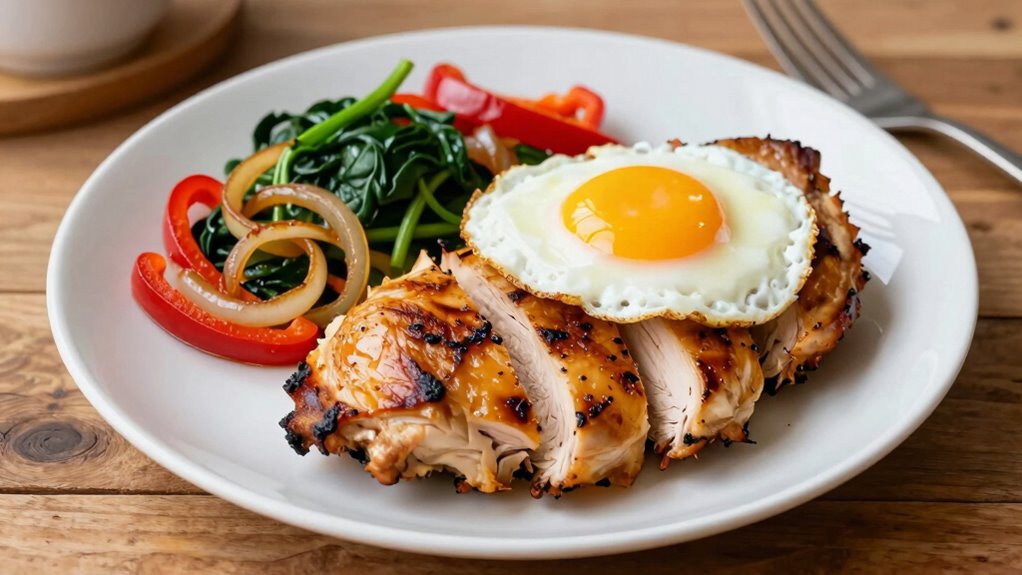
You can make your mornings easier by planning simple meal prep ideas that turn leftovers into new breakfast favorites. Get creative with how you use your dinner leftovers, like transforming roasted veggies into omelet fillings or repurposing cooked grains into breakfast bowls. Incorporating these strategies into your routine saves time and keeps breakfast interesting.
Meal Prep Ideas
Incorporating leftover breakfasts into your weekly meal plan can save time and reduce food waste. To do this efficiently, focus on smart food storage and versatile cooking techniques. Store leftovers in airtight containers to maintain freshness and prevent spoilage. When reheating, use gentle methods like stovetop or microwave to preserve texture and flavor. For meal prep ideas, consider:
- Turning scrambled eggs into breakfast burritos with added fillings, then freezing for quick mornings
- Transforming overnight oats into smoothies or yogurt bowls for variety
- Using leftover pancakes or waffles as bases for bread pudding or breakfast sandwiches
These strategies streamline your mornings, minimize waste, and keep your options fresh and exciting. Proper storage and innovative cooking techniques make leftover breakfast ingredients work harder for you.
Creative Breakfast Uses
Creative breakfast leftovers can add excitement to your weekly meal routine by offering quick and tasty options beyond the usual reheats. You can turn leftover pancakes, waffles, or muffins into delightful breakfast smoothies, blending them with fruits and yogurt for a nutritious start. Leftover desserts like bread pudding or pastry can be repurposed into breakfast treats, adding a touch of sweetness to your morning. These ideas save time and reduce waste while diversifying your menu. Here’s a quick visual for inspiration:
| Leftover Item | Creative Use |
|---|---|
| Pancakes/Waffles | Blend into breakfast smoothies |
| Muffins | Crumble over yogurt or oatmeal |
| Leftover desserts | Serve with fresh fruit or as a topping |
| Bread pudding | Slice and toast for a sweet breakfast |
| Pastries | Fill with eggs or cheese for savory twists |
Frequently Asked Questions
How Can I Ensure Leftovers Taste Fresh When Reheated for Breakfast?
To guarantee leftovers taste fresh when reheated for breakfast, use proper reheating techniques like gentle stovetop warming or microwave with a lid to retain moisture. Add a splash of water or broth if needed. To preserve flavor, store leftovers promptly in airtight containers and reheat only what you need. This helps maintain their taste and texture, making your breakfast delicious and satisfying every time.
What Safety Precautions Should I Take When Storing Leftovers for Breakfast?
Your leftovers could turn into a food safety nightmare if you’re not careful! Always follow food storage tips: refrigerate leftovers promptly within two hours, use airtight containers, and keep your fridge below 40°F. When reheating, guarantee food reaches an internal temperature of 165°F for reheating safety. These steps prevent bacteria growth and keep your breakfast safe and delicious, transforming yesterday’s dinner into a worry-free morning treat.
Are There Specific Leftovers That Shouldn’T Be Reused for Breakfast?
You should avoid reusing seafood leftovers and dairy leftovers for breakfast, as they spoil quickly and can cause food poisoning if mishandled. Seafood leftovers, especially shellfish and fish, are best eaten within a day or two and should be reheated thoroughly. Dairy leftovers like creamy sauces or cheese should be checked for sour smell or mold before reuse. When in doubt, it’s safer to discard these leftovers to prevent health risks.
How Do I Customize Leftovers to Suit Different Dietary Restrictions?
Think of leftovers as a blank canvas waiting for your creative touch. To customize for dietary restrictions, you can add gluten-free modifications like almond flour or rice-based products. For vegan adaptations, swap animal-based ingredients with plant-based options like tofu or chickpeas. You control the palette, so use herbs, spices, and safe alternatives to craft a breakfast that’s both satisfying and suits your dietary needs perfectly.
What Are Creative Presentation Ideas for Transformed Leftover Breakfast Dishes?
You can elevate your transformed leftover breakfast dishes with creative plating by stacking components or arranging them in eye-catching patterns. Use decorative garnishes like fresh herbs, colorful fruit slices, or edible flowers to add visual appeal. Play with contrasting textures and vibrant colors to make each dish inviting. A well-thought-out presentation transforms simple leftovers into a gourmet breakfast, impressing your guests and making your morning meal feel special.
Conclusion
Transforming last night’s dinner into breakfast is like turning yesterday’s puzzle pieces into a new masterpiece—you see the potential in every leftover. With a little creativity, you’ll save time, cut waste, and start your mornings with delicious surprises. Think of your leftovers as a blank canvas waiting for your magic touch. Embrace the challenge, and soon, breakfast will become your favorite part of the day—full of flavor, fun, and endless possibilities.