
To batch-cook breakfast for busy weekdays, plan a variety of nutritious options like muffins, energy balls, or breakfast sandwiches that can be prepared in advance. Use airtight containers for storage, label them with dates, and freeze items like burritos for convenience. Set up a prep station the night before to streamline your mornings, keeping quick snacks nearby. Want to discover more tips for hassle-free mornings? Keep exploring to make your routine smoother.

Get kitchen staples and gadgets delivered free with Prime
- Fast, free delivery on millions of items
- Prime Video, Amazon Music and more included
- Member-only deals all year
Key Takeaways
- Plan a variety of nutritious breakfast options to prevent monotony and meet different tastes.
- Prepare and cook multiple servings at once, then store in labeled, airtight containers for easy access.
- Use freezer-friendly recipes like muffins and breakfast burritos for long-lasting convenience.
- Organize your fridge and freezer with designated zones for pre-made breakfast items.
- Set up a nightly prep station to streamline morning routines and ensure quick, stress-free mornings.

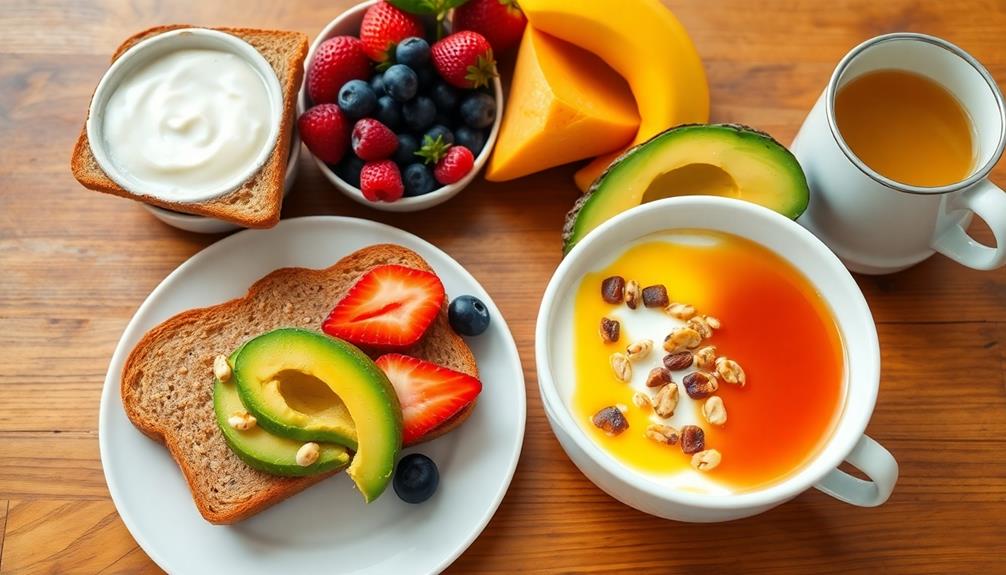
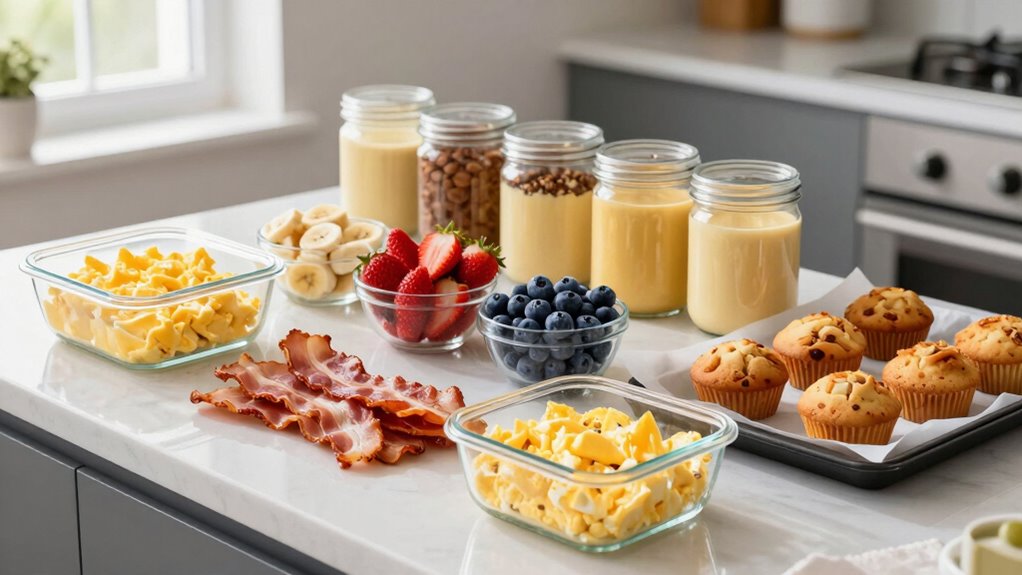
Mornings can be hectic, but batch-cooking breakfast saves you time and stress during busy weekdays. When you prepare your breakfast in advance, you avoid the scramble to find something nutritious or settle for less healthy options. Plus, you get to start your day with a meal that fuels you properly, making mornings smoother overall. To make this work, focus on creating healthy snack ideas that are easy to grab and go. Think protein-packed muffins, energy balls, or yogurt parfaits layered with fruit and granola. These options are portable, satisfying, and can be made in bulk, so you’re never caught off guard when time is tight.
Once you’ve cooked your breakfasts, proper meal prep storage tips become essential. Use airtight containers to keep your foods fresh and prevent spills in your fridge or freezer. Label each container with the date to guarantee you consume everything at its peak freshness. For items like cooked eggs, overnight oats, or breakfast burritos, consider dividing portions into single-serving containers. This way, you can quickly grab exactly what you need without thawing or portioning every morning. Freezer-friendly options like breakfast sandwiches or muffins can be stored for longer periods—just remember to defrost them overnight or microwave directly from frozen. Meal prep storage tips are crucial to maintaining freshness and organization. Incorporating biodiversity into your meal prep routine, such as using locally sourced ingredients, can also support sustainable living practices. Additionally, understanding food safety guidelines is vital to prevent spoilage and foodborne illnesses during storage.
Batch-cooking also means you need to think about variety to keep your mornings interesting. Prepare different breakfast options in advance, so you’re not stuck eating the same thing every day. Rotate between savory and sweet options, like egg muffins one day and banana oat pancakes the next. When planning your batch, keep in mind meal prep storage tips to maximize freshness and ease of use. Use freezer bags for larger batches of items like breakfast burritos, and stack containers to save space. Reheating should be quick and straightforward, so invest in microwave-safe containers that make it easy to get your breakfast hot and ready in minutes.
Finally, streamline your mornings by setting up your prep station the night before. Place all your pre-made breakfast items in a designated area of the fridge or freezer, so you’re not hunting for ingredients when you’re in a rush. Keep a few healthy snack ideas within reach for a quick energy boost if needed. With some planning and the right storage strategies, you’ll find that batch-cooking breakfast transforms your mornings from chaotic to calm, helping you start each day with a nutritious meal that keeps you energized until lunchtime.
Frequently Asked Questions
How Long Can Cooked Breakfast Leftovers Be Stored Safely?
Cooked breakfast leftovers are safe to eat within 3 to 4 days if stored properly in an airtight container in the fridge. For storage safety, make sure to cool leftovers quickly and keep your fridge at or below 40°F (4°C). Leftover longevity depends on proper storage, so label containers with dates. If you want to keep them longer, consider freezing, which can extend safety up to 2-3 months.
What Are the Best Containers for Freezing Breakfast Foods?
You want the best containers for freezing breakfast foods—look for ones that excel in freezer organization and container durability. Opt for stackable, airtight plastic or glass containers, which keep your meals fresh and prevent spills. Silicone freezer bags are flexible, space-saving options perfect for individual portions. By choosing these, you simplify freezer organization, protect your meals, and guarantee your breakfast leftovers stay tasty and safe for later enjoyment.
Can Batch-Cooked Breakfasts Be Reheated Without Losing Quality?
Yes, batch-cooked breakfasts can be reheated without losing quality if you use the right reheating methods. To preserve texture, avoid high heat and opt for gentle reheating like microwaving on medium or using an oven. Cover foods to retain moisture, and stir or flip halfway through. This approach helps maintain flavor and texture, ensuring your breakfast stays tasty and satisfying even after reheating.
Are There Any Breakfast Foods That Don’t Freeze Well?
You’ll want to watch out for freezing pitfalls, as some breakfast foods just don’t hold up well. Eggs, for example, often become rubbery, and crispy items like fried potatoes tend to lose their texture. Non-freezable options include fresh fruit, yogurt, and crispy toast. These foods are better enjoyed fresh because freezing can compromise their taste and texture, making them less appealing when reheated or thawed.
How Can I Customize Batch Breakfasts for Dietary Restrictions?
You can customize batch breakfasts for dietary restrictions by choosing versatile ingredients. For gluten-free options, incorporate gluten-free oats, nuts, and fresh fruits. For vegan adaptations, substitute eggs with flaxseed or chia seed mixtures, and use plant-based milk. You can also add vegetables or tofu for extra protein. This way, you create nutritious, satisfying meals suited to your specific needs, making busy mornings easier and healthier.
Conclusion
Now that you know how to batch-cook breakfast, you’re all set to start your busy mornings on the right foot. With a little prep, you’ll save time and avoid the morning scramble. Remember, a stitch in time saves nine—so get those meals ready ahead of schedule. Before you know it, mornings will be smoother, and you’ll have more time to enjoy your coffee and a moment of peace. Happy cooking!
Halloween Picks
halloween
As an affiliate, we earn on qualifying purchases.