
To brew barista-quality coffee at home, start by selecting fresh, high-quality beans suited to your preferred flavor profile. Grind them consistently with a burr grinder, adjusting the size based on your brewing method. Use filtered water heated between 195°F and 205°F, and control the water flow for even extraction. Invest in good equipment and fine-tune your techniques, like steam temperature and pour pace. Keep experimenting, and you’ll discover richer flavors—there’s more to learn for that perfect cup.
Key Takeaways
- Select high-quality, fresh coffee beans suited to your preferred flavor profile and grind them to appropriate consistency for your brewing method.
- Use a burr grinder for uniform grind size and precisely adjust it to optimize extraction for your brewing technique.
- Maintain water temperature between 195°F and 205°F and use filtered water to ensure optimal extraction and flavor clarity.
- Control water flow rate and extraction time to achieve balanced flavors, avoiding over- or under-extraction.
- Master brewing techniques like proper pouring, milk steaming, and latte art to enhance presentation and overall coffee quality.
Selecting the Right Coffee Beans

Choosing the right coffee beans is the foundation of making barista-quality coffee at home. To do this, you need to understand coffee plant varieties, which influence flavor profiles, acidity, and body. For example, Arabica beans are known for their smoothness and complex flavors, while Robusta beans offer a stronger, more bitter taste with higher caffeine content. Additionally, bean origin regions play an essential role. Coffee from Ethiopia often features fruity and floral notes, while beans from Colombia tend to be balanced with nutty undertones. Knowing where your beans come from helps you select the flavor profile you prefer. By paying attention to coffee plant varieties and bean origin regions, you set the stage for brewing a rich, satisfying cup of coffee at home. Understanding coffee quality can also help you choose beans that deliver the best flavor and freshness.
Mastering the Grind Size and Consistency

Achieving the right grind size is essential for extracting the best flavors from your coffee. If your grind is too fine, your brew may taste bitter or over-extracted; too coarse, and it’ll be weak or under-extracted. Consistency in your grind size guarantees uniform extraction, resulting in balanced flavor. Use a burr grinder to get a uniform grind and adjust it based on your brewing method. Keep track of your settings and results to refine your process. Here’s a quick guide:
| Grind Size | Ideal Brewing Method | Resulting Flavor |
|---|---|---|
| Extra fine | Espresso | Rich, intense |
| Fine | AeroPress, Turkish | Strong, bold |
| Medium | Drip, pour-over | Smooth, balanced |
| Coarse | French press, cold brew | Light, clean |
| Very coarse | Cold brew, percolator | Mild, mellow |
Maintaining grind size consistency is crucial for achieving optimal extraction and flavor.
Perfecting Your Brewing Technique

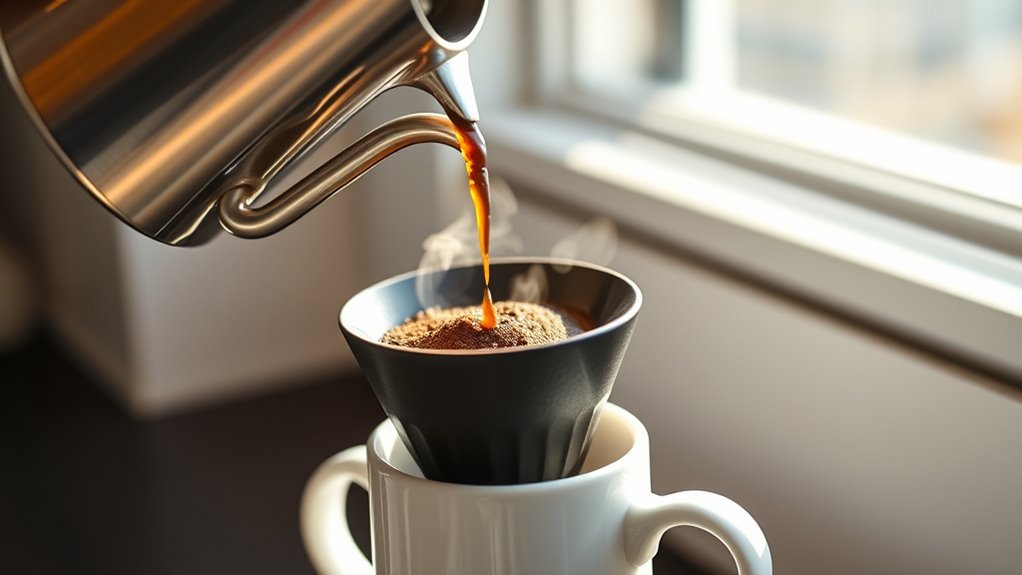
To brew barista-quality coffee at home, mastering your technique is essential. Focus on your pouring method and milk steaming to create smooth, glossy microfoam ideal for latte art. Practice consistent pouring angles and speeds to produce beautiful designs. Proper coffee storage also plays a vital role; keep beans airtight in a cool, dark place to preserve freshness and flavor. Use freshly ground coffee to ensure ideal extraction, which directly impacts taste and crema. When steaming milk, aim for the right temperature—around 150°F—without overheating. Consistent technique in grinding, brewing, and milk frothing elevates your coffee game. Additionally, understanding how color accuracy in your coffee equipment can influence the appearance of crema and foam may help you refine your presentation. With patience and practice, you’ll develop a confident hand for latte art and enjoy richer, more flavorful coffee every time.
Maintaining Optimal Water Quality and Temperature

Once you’ve refined your pouring technique and milk steaming skills, paying attention to water quality and temperature can make a noticeable difference in your coffee’s flavor. Start with water filtration to remove impurities and guarantee a clean taste. Using filtered water also protects your equipment from mineral buildup. Maintaining the right mineral balance is essential—too many minerals can cause bitterness, while too few can result in flat flavors. Aim for a mineral content that’s balanced and consistent. Additionally, keep your water temperature between 195°F and 205°F (90°C–96°C) for optimal extraction. Consistent temperature helps reveal the coffee’s full flavor profile without over-extraction or under-extraction. Incorporating water level detection technology can further optimize water use and improve brewing precision. By controlling water quality and temperature, you’ll elevate your home brewing to barista level.
Using the Right Equipment and Tools

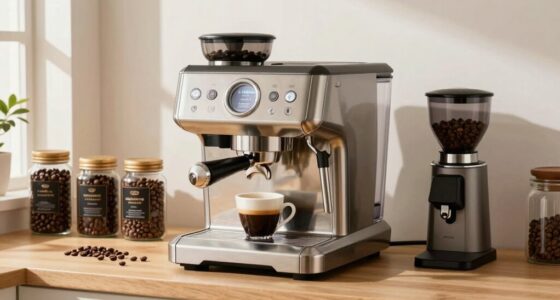
Using the right equipment and tools is essential for brewing barista-quality coffee at home. An espresso machine is vital because it extracts rich, full-bodied shots with the right pressure and temperature. Invest in a quality machine with good temperature stability and a reliable portafilter. A milk frother is equally important for creating creamy, textured milk that complements your espresso. You can choose between steam wands or electric frothers, but make sure it produces smooth, microfoam. Good tools also include a grinder for consistent coffee grounds and a tamper to evenly pack your coffee. Using proper equipment helps control variables and guarantees each cup meets barista standards. With the right setup, you’ll consistently brew professional-quality coffee right in your kitchen.
Fine-Tuning Your Brew for Maximum Flavor

To get the most flavor from your coffee, start by adjusting your grind size to match your brewing method. Keep an eye on your brew time and make small tweaks to prevent over- or under-extraction. Finally, guarantee your water temperature stays just right to unlock the full richness of your beans. Additionally, understanding the caffeine content in your espresso can help tailor your brew to suit your energy needs caffeine content in espresso.
Adjust Grind Size
Adjusting your grind size is essential for revealing the full flavor potential of your coffee. The right grind affects extraction and guarantees your brew is balanced. Too fine, and you risk over-extraction, making your coffee bitter; too coarse, and it’ll be weak with under-extraction. Consistency is key—use a good burr grinder to achieve uniform grind size. Experiment by changing the grind in small steps until you find the sweet spot for your brewing method. Here’s a quick guide:
| Grind Size | Best For |
|---|---|
| Fine | Espresso, Aeropress (short) |
| Medium | Drip coffee, pour-over |
| Coarse | French press, cold brew |
Adjust until your brew tastes perfect. For optimal results, consider using a vetted appliances lab to find high-quality grinders and equipment that can help you achieve consistent results.
Perfect Brew Time
Once you’ve set the right grind size, fine-tuning your brew time can reveal the full complexity of your coffee’s flavor. The perfect brew time depends on factors like coffee freshness and your brewing schedule. Too short, and you’ll miss out on richness; too long, and bitterness may dominate. To find the ideal timing, pay attention to the extraction process and adjust accordingly. Additionally, understanding market volatility can help you anticipate how different brewing conditions impact flavor extraction.
- Observe how quickly your coffee drips or flows, and tweak the brew time if it’s too fast or slow.
- Taste frequently during brewing to identify the point when flavors peak.
- Consider your coffee’s freshness—fresher beans often require slightly shorter brew times for maximum extraction.
Mastering brew time ensures maximum flavor without over-extraction or under-extraction.
Optimize Water Temperature
Water temperature plays a crucial role in extracting the full range of flavors from your coffee beans. If the water’s too hot or too cold, you’ll miss out on key aromatic compounds and achieve under- or over-extraction. Aim for a temperature between 195°F and 205°F, adjusting based on your beans’ water mineral content. Hard water with high mineral content can require slightly lower temperatures to prevent over-extraction, while softer water may need a bit higher heat. Additionally, control your water flow rate to ensure consistent contact time, which influences extraction and flavor clarity. Slow, steady flow allows for better temperature stability, ensuring your water interacts evenly with the coffee grounds. Incorporating proper water temperature management is essential for the best brewing results, as it directly impacts the extraction process and overall flavor profile. Fine-tuning these factors helps you brew a balanced, flavorful cup every time.
Frequently Asked Questions
How Long Should I Store Coffee Beans for Optimal Freshness?
You should store coffee beans for no more than two to four weeks to preserve freshness. Proper coffee storage involves keeping beans in an airtight container, away from light, heat, and moisture. This helps maintain their flavor and aroma, ensuring you enjoy maximum freshness with each brew. Regularly check your storage conditions and avoid refrigerating or freezing beans, as temperature fluctuations can compromise freshness and flavor over time.
Can I Brew Espresso With a Standard Drip Coffee Maker?
You can’t expect a standard drip coffee maker to brew true espresso because it lacks the specialized brew pressure needed. An espresso machine forces hot water through finely ground coffee at high pressure, creating that rich, concentrated shot. Without the right equipment, you’re just shooting in the dark. While you can try mimicking espresso, investing in a dedicated espresso machine guarantees you get the authentic, barista-quality results you’re after.
What’S the Best Way to Clean My Coffee Equipment Regularly?
You should establish regular cleaning routines to keep your coffee equipment in top shape. Use gentle cleaning solutions for daily maintenance, and descaling methods monthly to remove mineral buildup, especially if you have hard water. Run water through your machine after each use, and deep clean parts like the brew basket and portafilter weekly. Following these steps guarantees your equipment stays clean, functioning well, and consistently brewing great coffee.
How Does Altitude Affect Brewing Temperatures and Times?
Altitude effects your brewing process because higher elevations have lower boiling points, which means water boils at a lower temperature. You need to make brewing adjustments, like increasing brew time or slightly raising your water temperature, to extract ideal flavors. These changes help compensate for the thinner air and guarantee your coffee’s richness isn’t compromised. Adjusting for altitude effects lets you brew consistently delicious coffee, no matter where you are.
Are There Specific Water Minerals That Improve Coffee Flavor?
You’ll find that water mineralization plays a vital role in enhancing coffee flavor. A good mineral balance, especially with calcium and magnesium, helps extract more nuanced flavors without overpowering the beans. Avoid water that’s too soft or too hard, as it can dull or mask taste. Using mineral-balanced water guarantees your brew has clarity and vibrancy, making your coffee taste richer and more complex every time.
Conclusion
Remember, practice makes perfect. By choosing quality beans, dialing in your grind, and mastering your technique, you’ll brew barista-quality coffee right at home. Don’t forget to pay attention to water quality and use the right tools to enhance flavor. Keep experimenting and fine-tuning your process—after all, Rome wasn’t built in a day. With patience and passion, you’ll enjoy café-worthy coffee anytime you want. Happy brewing!