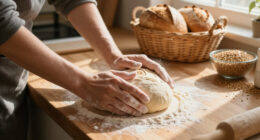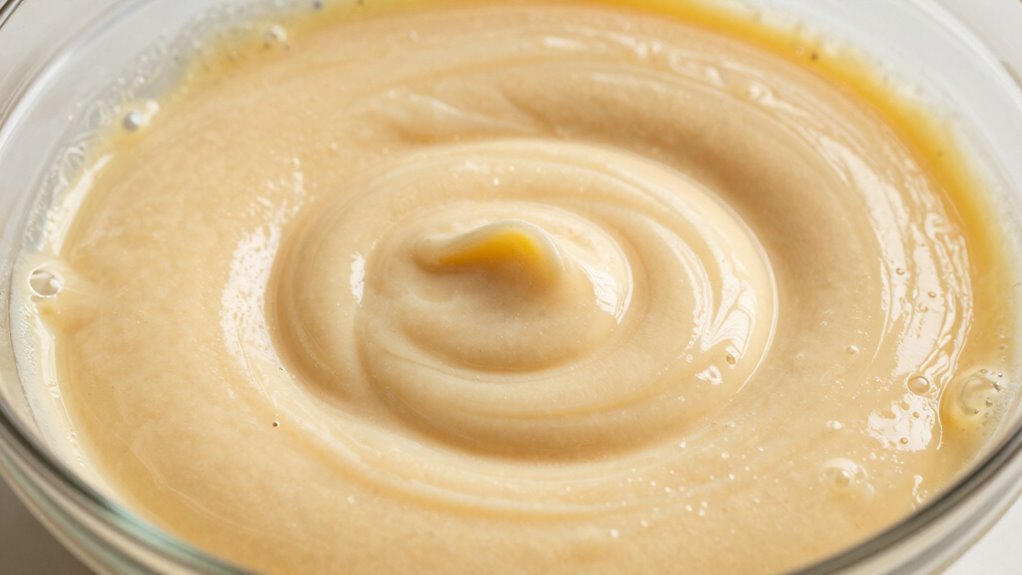

The texture of your pancake batter is key because it directly affects how tender, fluffy, and evenly cooked your pancakes turn out. Proper mixing prevents overdeveloping gluten, which can make them dense or chewy. It also guarantees the batter isn’t grainy from sugar crystallization, helping your pancakes brown nicely and stay soft. If you want light, perfect pancakes every time, understanding how batter texture influences results is essential—stick around for more tips to improve yours.

Get kitchen staples and gadgets delivered free — and shop member deals
- Fast, free delivery on millions of items
- Access to Prime Big Deal Days deals on October 6–7
- Prime Video, Amazon Music and more included
Key Takeaways
- Proper batter texture ensures pancakes are tender, fluffy, and have a desirable mouthfeel.
- It influences how the batter spreads and cooks, impacting final pancake shape and consistency.
- Achieving the right texture prevents overdeveloped gluten, which can make pancakes dense or chewy.
- Managing sugar crystallization affects batter smoothness, browning, and tenderness.
- Focused mixing techniques help control gluten formation and batter behavior, leading to better results than following recipes blindly.
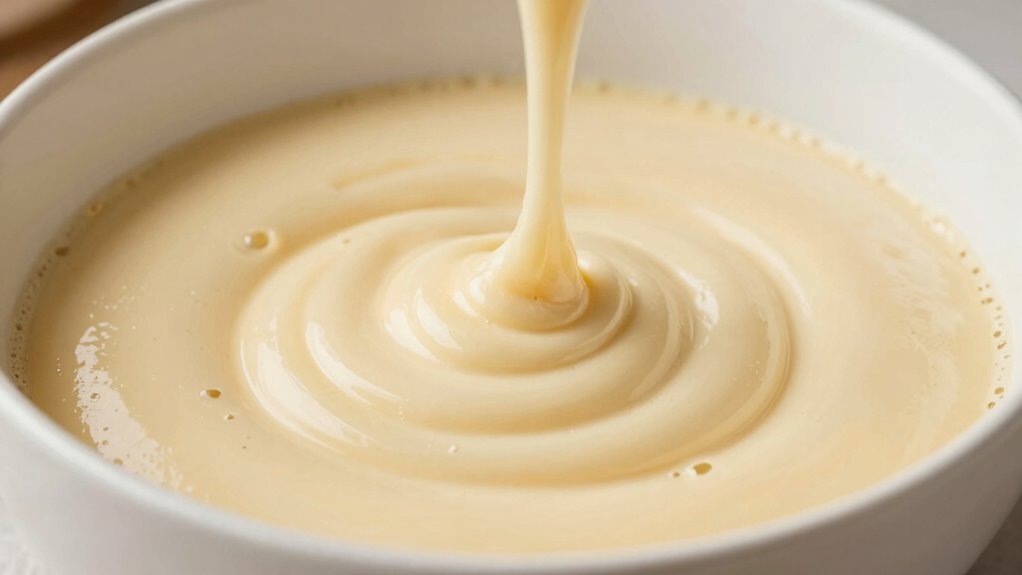
The texture of pancake batter plays a essential role in determining the final outcome of your pancakes. When you start mixing your ingredients, you’re shaping more than just the flavor—you’re influencing how the batter behaves as it cooks. Two key factors that impact this are gluten development and sugar crystallization. Understanding how these processes work can help you craft pancakes that are tender, fluffy, and perfectly textured every time.
Gluten development occurs when you combine flour and liquid, forming a network of proteins that give structure to your batter. If you mix too vigorously or for too long, you’ll encourage excessive gluten formation, resulting in dense, chewy pancakes instead of light, airy ones. Conversely, under-mixing can lead to uneven texture and pockets of flour that don’t hydrate properly. The goal is to develop just enough gluten to give structure without overdoing it. Gentle mixing until the ingredients are combined, with some lumps remaining, is usually enough. This way, you preserve a tender crumb while ensuring the batter holds together during cooking. Proper batter handling is key to achieving consistent results. Additionally, controlling the mixing process helps prevent overworking the batter and maintains the desired texture. Proper handling of the batter also minimizes the risk of overdeveloping gluten and ensures the batter remains light and tender.
Sugar crystallization also plays a significant role, especially if your recipe contains a good amount of sugar. When the batter is mixed, sugar dissolves into the liquid, but if you overmix or let the batter sit for too long, sugar can begin to recrystallize. This crystallization can cause the batter to become grainy or gritty, affecting how smoothly the pancakes cook and how tender the final product is. Additionally, sugar influences browning through caramelization, which depends on the right balance. Too much crystallization can hinder even browning, resulting in unevenly colored pancakes. To prevent this, mix just enough to dissolve the sugar fully and avoid letting the batter sit too long before cooking. Proper batter handling and understanding of these processes can make all the difference in achieving a perfect pancake texture. Being mindful of sugar crystallization helps maintain a smooth batter and optimal browning.
non-stick pancake batter spatula
As an affiliate, we earn on qualifying purchases.
As an affiliate, we earn on qualifying purchases.
Frequently Asked Questions
How Can I Fix Overmixed Pancake Batter?
To fix overmixed pancake batter, gently fold in a little more milk or water to loosen the mixture and restore its proper texture. Avoid overmixing again by using light, gentle strokes with your spatula. Incorporate flavor enhancers like vanilla or cinnamon during your next mix, and apply proper cooking techniques—pour batter onto a hot, lightly greased skillet for fluffy, evenly cooked pancakes. This guarantees ideal flavor and texture.
What Ingredients Influence Batter Consistency the Most?
You influence batter consistency mainly through flour ratios and liquid measurements. Adjust the flour ratio: too much makes your batter thick and dense, while too little results in runny pancakes. Be precise with liquid measurements—adding extra milk or water thins the batter, while less makes it thicker. Balance these ingredients carefully, and you’ll achieve the perfect pancake texture every time, ensuring fluffy, tender results.
Should Batter Be Smooth or Lumpy?
You should aim for a slightly lumpy batter, not completely smooth, to achieve the best pancake texture. A batter that’s too smooth can lead to dense pancakes, while small lumps help trap air, giving you fluffiness. Focus on flavor balance by avoiding overmixing, and cook at the right temperature to make sure of even cooking. This combination results in pancakes that are light, flavorful, and perfectly textured.
How Does Resting Batter Affect Texture?
Resting pancake batter allows gluten development, which can help improve texture and structure. As it rests, the flour absorbs liquids, leading to better consistency preservation. This process results in lighter, fluffier pancakes with a tender crumb. Be sure not to overrest, or the batter might become too thick or sticky. By resting your batter properly, you can achieve a more consistent, enjoyable pancake every time.
Can Batter Texture Change During Cooking?
Batter texture does change during cooking, like a chameleon shifting colors. As heat hits, dough elasticity increases, causing bubbles to form and creating fluffiness. Simultaneously, flavor develops as ingredients interact, enriching each bite. You’ll notice the batter becoming more solid and cohesive, shaping the pancake’s final form. This transformation highlights why understanding how batter evolves during cooking helps you master perfect pancakes every time.
Conclusion
Remember, your pancake batter is like a blank canvas—its texture shapes the masterpiece. When you pay attention to its consistency, you’re guiding the batter’s journey from simple ingredients to fluffy perfection. Think of each pour as a gentle whisper of promise, and each flip as a triumphant sunrise. The true magic lies in the subtle dance of moisture and thickness, transforming humble ingredients into a golden symbol of breakfast bliss. Trust the texture, and savor the art of pancake making.
NFL season / tailgating Picks
team gear
As an affiliate, we earn on qualifying purchases.