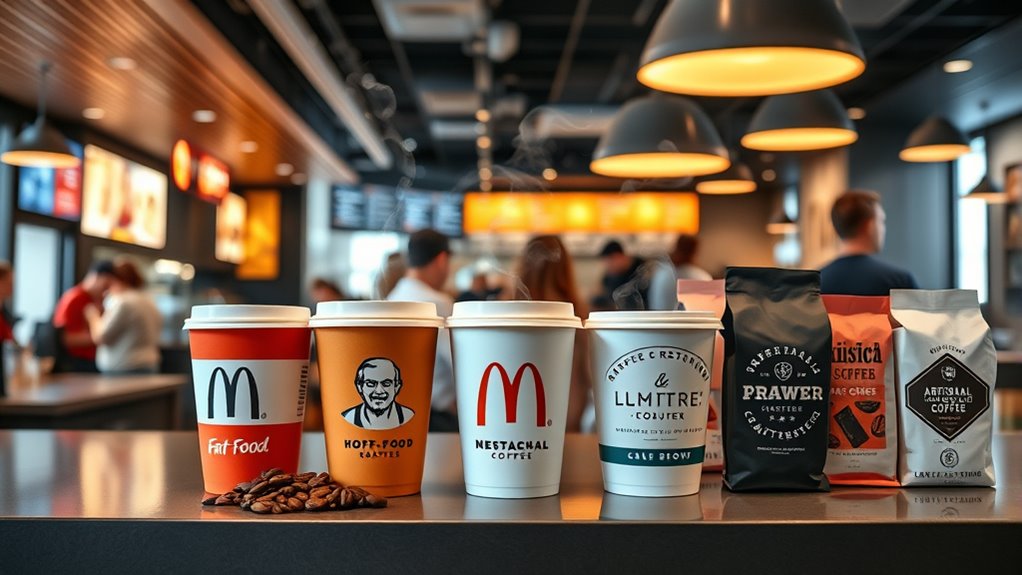

Fast-food brands are teaming up with coffee roasters to offer higher-quality, sustainable, and customizable beverages. These collaborations focus on unique blends, responsible sourcing, and eco-friendly practices, helping brands build trust and stand out. Partnerships often introduce specialty drinks and innovative menu options that attract more customers. If you want to explore how these alliances are shaping market trends and what’s next, there’s more to uncover below.
Key Takeaways
- Fast-food brands are collaborating with roasters to offer premium, customizable, and specialty coffee options to meet evolving consumer preferences.
- These partnerships emphasize sustainability, responsible sourcing, and eco-friendly practices to enhance brand trust and authenticity.
- Collaborations include limited-time products, personalized experiences, and innovative blends to attract and retain customers.
- Technology plays a key role in supply chain transparency, sustainability tracking, and delivering interactive, customer-centric campaigns.
- Such partnerships strengthen brand storytelling, boost loyalty, and position brands as environmentally responsible leaders in the coffee market.
The Evolution of Coffee in Fast Food Chains

The way coffee is served in fast food chains has transformed profoundly over the past few decades. You now notice that many brands emphasize sustainability initiatives, such as sourcing ethically grown beans and reducing waste, to appeal to environmentally conscious consumers. These efforts are often integrated into their branding strategies, positioning coffee as a responsible and quality-driven choice. Fast food chains have shifted from basic offerings to premium, customizable coffee options, aligning with modern tastes and values. This evolution reflects a broader commitment to environmental responsibility and brand differentiation, helping companies stand out in a competitive market. Additionally, incorporating sustainable practices into their supply chains demonstrates a proactive approach to addressing environmental impacts, fostering consumer trust and loyalty. As a result, your coffee experience is more diverse, sustainable, and aligned with growing consumer expectations for ethical practices.
Key Factors Driving Collaborations With Roasters

You recognize that strong collaborations with roasters can set your brand apart through unique coffee offerings. Prioritizing quality and consistency helps build trust with your customers and enhances your reputation. Ultimately, these factors drive successful partnerships that elevate your coffee experience.
Brand Differentiation Strategies
Brand differentiation is essential in attracting consumers and standing out in a competitive coffee market. You can achieve this through branding innovation, creating unique brand identities that resonate with your target audience. Collaborating with roasters allows you to incorporate distinctive coffee blends, enhancing your brand story and appeal. Menu diversification is another key strategy, giving your customers a variety of options that reflect your brand’s personality and meet diverse tastes. These collaborations enable you to introduce specialty brews or exclusive offerings that set you apart from competitors. By focusing on branding innovation and expanding your menu, you create a memorable experience that encourages loyalty and attracts new customers. Additionally, understanding drivetrain components and how they impact coffee equipment can help ensure the quality and consistency of your brews. Ultimately, these strategies help your brand carve a unique space in the crowded coffee landscape.
Quality & Consistency Focus
Maintaining high quality and consistency is what truly sets successful coffee brands apart in a crowded marketplace. When you prioritize rigorous brewing standards and supplier consistency, you guarantee every cup meets customer expectations. Collaborating with roasters helps you refine these standards, delivering uniform flavor profiles across locations. Consistent quality builds trust and encourages repeat business, which is essential for growth. To achieve this, focus on:
- Strict adherence to brewing standards
- Regular quality checks of supplier products
- Training staff on proper brewing techniques
- Sourcing from reliable, vetted roasters
- Monitoring flavor consistency across batches
- Implementing color accuracy protocols in the roasting process to ensure visual consistency and quality.
Popular Partnerships and Notable Examples
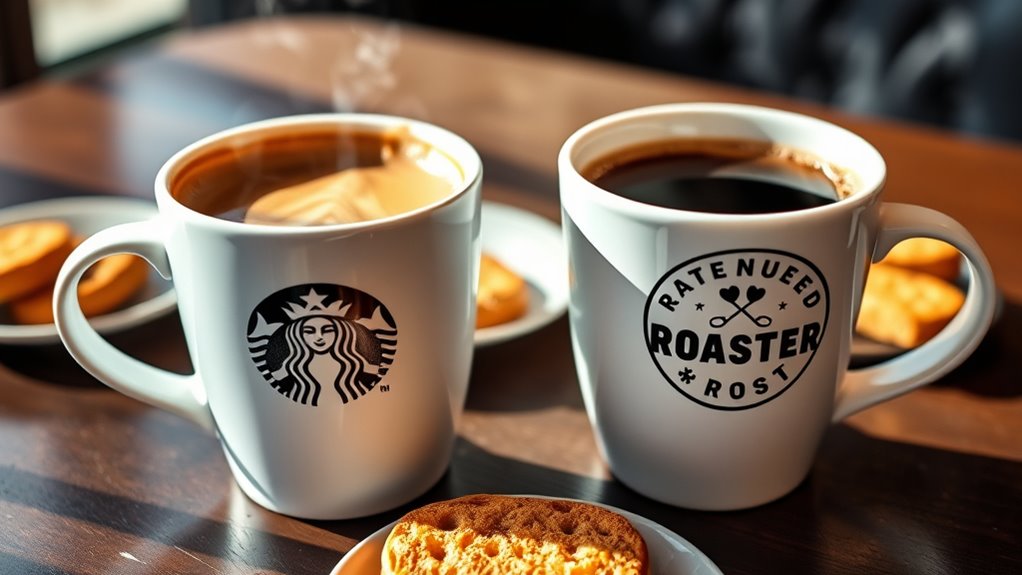
Some of the most successful coffee partnerships involve well-known brands teaming up with local or specialty roasters to create unique blends and experiences. For example, Starbucks has collaborated with local roasters to promote sustainability initiatives, emphasizing ethically sourced beans and eco-friendly practices. Similarly, Dunkin’ has partnered with renowned roasters to craft signature blends that highlight brand storytelling, connecting consumers to their origins and values. These collaborations often showcase shared commitments to responsible sourcing and environmental efforts, resonating with customers who care about sustainability. Notably, these partnerships can also influence consumer loyalty by fostering a sense of community and shared purpose. Notable examples also include McDonald’s working with specialty roasters to develop premium espresso offerings, reinforcing their brand identity. These partnerships stand out because they bring authenticity and a sense of community, making the coffee experience more meaningful and engaging for consumers.
Impact on Consumer Preferences and Market Trends
Partnerships in the coffee industry considerably influence consumer preferences and market trends by shaping perceptions of authenticity and social responsibility. When fast-food brands team up with roasters, you notice shifts in consumer behavior, as people increasingly value transparency and ethical sourcing. These collaborations drive market influence by popularizing specialty coffee and sustainable practices. You might see more demand for ethically sourced beans or eco-friendly packaging, reflecting evolving values. Such partnerships also boost brand loyalty, encouraging you to choose brands that align with your social beliefs. They create buzz and set new standards within the industry, impacting your purchasing decisions. Overall, these collaborations steer market trends toward higher quality, sustainability, and authenticity, directly affecting your preferences as a conscious consumer. Additionally, the emphasis on transparent supply chains enhances consumer trust and encourages more ethical consumption habits.
Challenges and Opportunities in Coffee Collaborations

While collaborations in the coffee industry open up exciting possibilities for innovation and growth, they also bring significant challenges that can impact both partners and consumers. Supply chain issues are a primary concern, as coordinating sourcing, quality control, and logistics between fast-food brands and roasters can be complex. Any disruption risks tarnishing brand reputation and customer satisfaction. Branding considerations also play a critical role; aligning brand identities without compromising each partner’s image requires careful strategy. Additionally, maintaining consistency across outlets and ensuring the partnership resonates with target audiences can be difficult. However, these collaborations offer opportunities to leverage each other’s strengths—such as expanding reach or co-developing unique products—if you navigate supply chain hurdles and branding concerns effectively. Done right, they can drive mutual growth and innovation. Regular quality checks, like assessing bad lemon juice, are essential to uphold product standards and keep consumer trust intact.
Future Outlook for Fast-Food and Coffee Roaster Alliances

As consumer demand for premium coffee continues to grow, fast-food chains and coffee roasters are increasingly exploring innovative alliances to meet this appetite. The future of these partnerships looks promising, driven by sustainability initiatives and enhanced digital engagement strategies. You can expect more brands to prioritize eco-friendly practices, such as ethically sourced beans and waste reduction, to appeal to conscious consumers. Digital engagement will play a key role, with brands leveraging mobile apps, loyalty programs, and social media to deepen customer relationships. Collaborations may also involve limited-time offerings and personalized experiences to boost loyalty. Additionally, technology will enable better supply chain transparency and sustainability tracking, reinforcing brand values. AI-powered data analytics will further support these efforts by providing insights into consumer preferences and operational efficiencies. Overall, these alliances will evolve to deliver more sustainable, interactive, and customer-centric coffee experiences.
Frequently Asked Questions
How Do Partnership Agreements Typically Influence Coffee Pricing Strategies?
Partnership agreements shape your coffee pricing strategies by influencing pricing dynamics through contractual negotiations. When brands and roasters collaborate, they often agree on fixed or flexible prices, which can stabilize costs or allow for adjustments based on market changes. These negotiations help you manage supply costs, ensuring your pricing remains competitive. Ultimately, such agreements give you more control over your coffee prices, benefiting your business and customer loyalty.
What Are the Environmental Sustainability Considerations in These Collaborations?
You should consider that environmental sustainability is a key factor in modern collaborations. While it’s tempting to see these partnerships as just business, they often aim for sustainable sourcing and eco-friendly packaging, which benefits everyone. By prioritizing these practices, you help reduce environmental impact, support ethical supply chains, and promote a greener future. So, these collaborations aren’t just about coffee—they’re about making a positive difference for the planet.
How Do Brand Collaborations Affect Customer Loyalty and Brand Perception?
You’ll find that brand collaborations boost customer engagement and strengthen brand image, leading to increased loyalty. When you see your favorite brands working together, it creates excitement and trust, making you more likely to stick with them. These partnerships often showcase innovation and shared values, which influence how you perceive the brands. As a result, you feel more connected, and your loyalty deepens because the collaboration reflects your preferences and lifestyle.
Are There Regional Differences in Coffee Partnership Trends Across Countries?
You’ll find that regional preferences and cultural influences dramatically shape coffee partnership trends across countries. In some regions, bold flavors dominate, leading to partnerships that emphasize local tastes, while others prefer premium, artisanal blends reflecting their cultural pride. These differences are like night and day—making each market uniquely vibrant and dynamic. So, yes, regional and cultural nuances create a vivid mosaic of coffee collaborations worldwide, each tailored to local cravings and traditions.
What Role Do Digital and Social Media Play in Promoting These Collaborations?
Digital and social media are key in promoting coffee collaborations. You can see social media campaigns that excite fans and generate buzz, making collaborations more visible. Influencer collaborations help you reach wider audiences, as trusted voices share their experiences. These platforms create instant engagement, allowing you to see real-time feedback and boost brand visibility, ultimately strengthening the partnership’s success and appeal to coffee lovers everywhere.
Conclusion
As you see, these collaborations aren’t just blending coffee beans—they’re brewing a new era of flavor and innovation. By partnering with roasters, fast-food brands stir up excitement, shaping your coffee experience and market trends alike. Will these alliances stand the test of time, or fade like yesterday’s brew? One thing’s certain: in this caffeinated dance, both sides are better together, creating a rich tapestry that keeps you coming back for more.