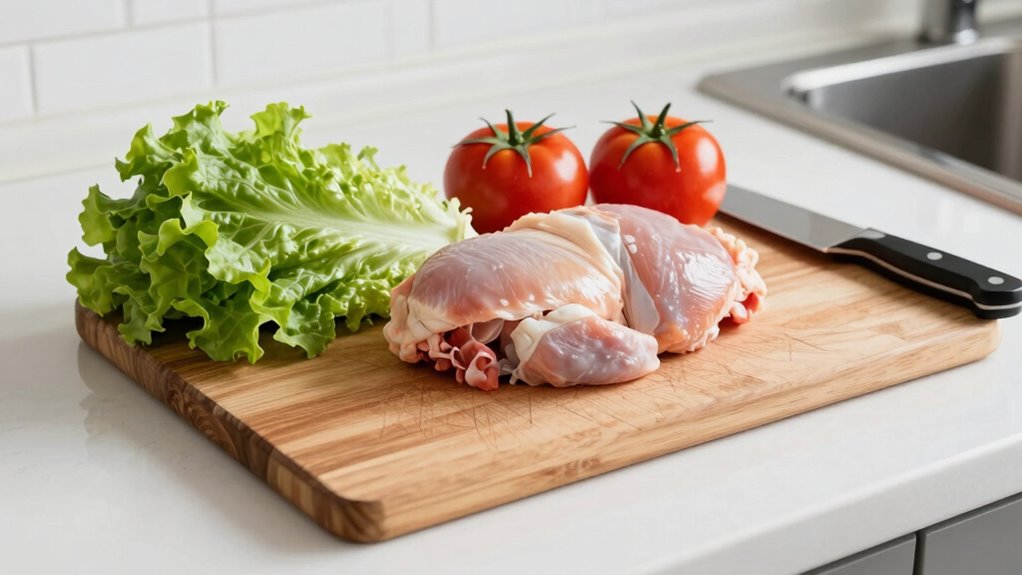
The biggest habit to change is using the same cutting board for raw ingredients like eggs or meat and then for cooked or ready-to-eat foods without cleaning in between. This mistake spreads bacteria and risks foodborne illnesses. To prevent this, always use separate cutting boards for raw and cooked foods, wash and sanitize them thoroughly after each use, and follow proper kitchen hygiene. Keep learning more tips to keep your breakfast safe.

Get kitchen staples and gadgets delivered free with Prime
- Fast, free delivery on millions of items
- Prime Video, Amazon Music and more included
- Member-only deals all year
Key Takeaways
- Use separate, color-coded cutting boards for raw meats, produce, and cooked foods to prevent cross-contamination.
- Always wash and sanitize cutting boards thoroughly with hot, soapy water after each use.
- Replace worn or deeply scored cutting boards to eliminate bacterial hiding spots.
- Avoid using the same cutting board for raw meats and produce without proper cleaning in between.
- Store cutting boards in a clean, dry area to prevent bacterial growth and maintain hygiene.
color-coded cutting boards for kitchen
As an affiliate, we earn on qualifying purchases.
As an affiliate, we earn on qualifying purchases.
Why Cross-Contamination at Breakfast Can Make You Sick
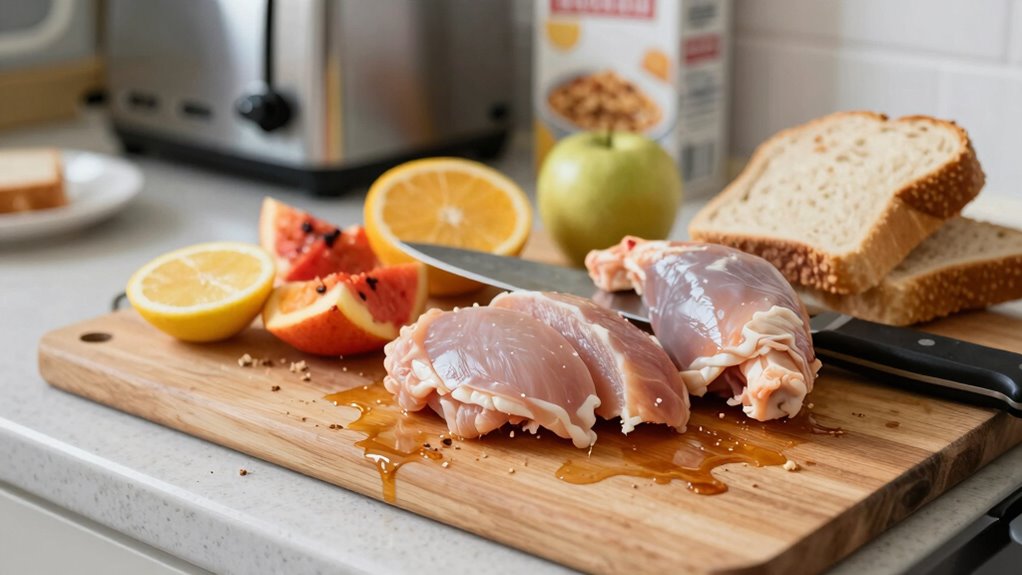
Cross-contamination at breakfast can make you sick because harmful bacteria from raw foods can transfer to cooked or ready-to-eat items if proper precautions aren’t taken. Maintaining good kitchen hygiene is essential for preventing the spread of germs. When you handle raw meats, eggs, or unwashed produce, bacteria like Salmonella or E. coli can linger on surfaces, utensils, and cutting boards. If you don’t clean thoroughly between tasks, these pathogens can contaminate foods you’ve already cooked or plan to eat raw, risking food safety. Proper food safety practices, such as washing hands, cleaning surfaces, and using separate cutting boards for raw and cooked foods, help reduce cross-contamination. Using a high-quality cutting board can also minimize bacteria buildup and make sanitation easier, further protecting you and your family from foodborne illnesses. Choosing trusted brands for your kitchen tools ensures better durability and hygiene standards. Additionally, selecting bacteria-resistant materials for your cutting boards can provide an extra layer of safety and ease of cleaning. Regularly sanitizing your cutting boards with appropriate cleaning agents is crucial for maintaining a hygienic kitchen environment. Incorporating proper maintenance routines into your kitchen hygiene can further prevent bacterial growth and ensure food safety.
How Your Breakfast Habits Spread Bacteria

Your breakfast habits can easily spread bacteria if you’re not careful. Handling raw ingredients without proper kitchen hygiene can transfer germs from one surface to another. For example, using the same knife or cutting board for raw meat and produce without cleaning increases cross-contamination risks. Touching unwashed fruit or bread after handling raw eggs or meat can transfer bacteria to your food. Additionally, neglecting to wash your hands properly before preparing breakfast can spread germs directly onto foods or utensils. Poor food safety practices at breakfast, like leaving food out too long or not cleaning surfaces, create opportunities for bacteria to multiply. Maintaining good kitchen hygiene and practicing safe handling habits are essential to prevent the spread of bacteria and ensure your breakfast remains safe to enjoy. Cross‑contamination prevention is crucial for maintaining food safety during breakfast preparation. Ensuring proper kitchen hygiene practices can significantly reduce the risk of bacterial transfer and protect your health. Being mindful of food safety guidelines helps keep your meals safe for everyone.
The Biggest Cutting Board Mistake That Causes Cross-Contamination

One of the most common mistakes people make with cutting boards is neglecting to thoroughly clean and sanitize them between uses. This oversight allows bacteria from raw foods, like meats and vegetables, to transfer easily, leading to cross-contamination. Proper knife handling is essential—avoid cutting raw meat on a board used for produce without cleaning it first. Additionally, cutting board storage plays a role; storing boards improperly can harbor bacteria and cause them to spread. Use this table to understand the risks:
| Mistake | Consequence | Solution |
|---|---|---|
| Poor knife handling | Bacteria transfer between foods | Use separate knives |
| Inadequate cleaning | Bacteria survive on surfaces | Sanitize after each use |
| Improper storage | Bacteria grow on boards | Store in dry, clean place |
| Using same board for multiple foods | Cross-contamination | Designate specific boards |
Furthermore, neglecting proper cleaning techniques can significantly increase the risk of contamination, emphasizing the importance of thorough sanitation practices. Regularly disinfecting cutting boards can help prevent the spread of harmful bacteria and ensure food safety at breakfast and beyond. Implementing food safety protocols is essential for protecting yourself and your family from illness. Additionally, understanding the types of bacteria involved can help you take more targeted cleaning measures. In particular, flat iron bikes demonstrate the importance of effective maintenance and cleaning to keep equipment in optimal condition and prevent issues caused by dirt and bacteria.
Simple Ways to Prevent Cross-Contamination in the Morning
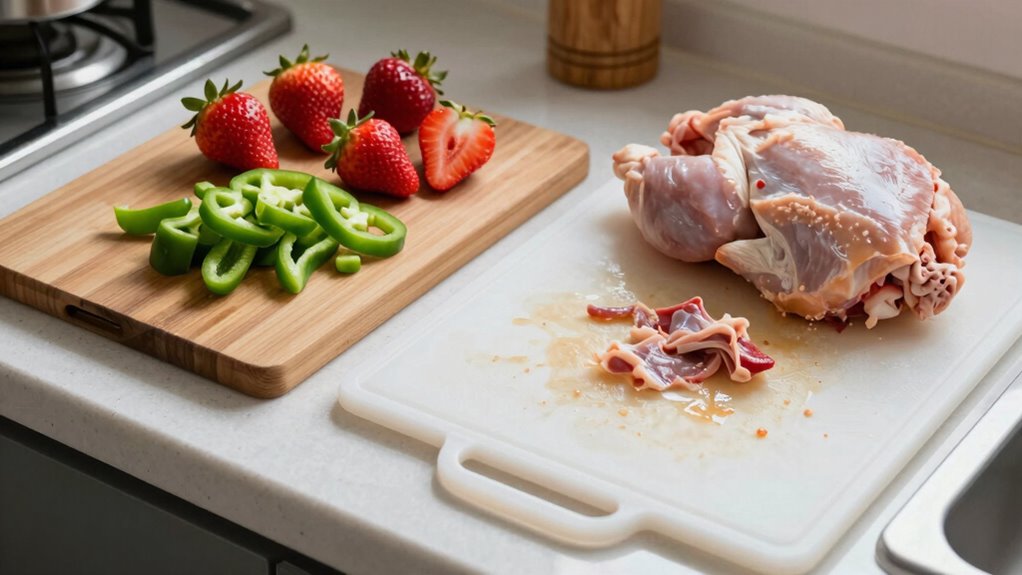
Starting your morning routine with proper kitchen practices can make a big difference in preventing cross-contamination. Use knife safety by keeping knives sharp and handling them carefully to avoid accidental cuts and spread of bacteria. Always wash your knives thoroughly after cutting raw ingredients, and avoid using the same knife for different foods without cleaning. Implement smart storage solutions by storing raw meats separately from ready-to-eat items and using airtight containers to prevent drips and leaks. Keep cutting boards and utensils clean and dry between uses. Consider designated tools for different food groups to minimize cross-contact. These simple steps reduce bacteria transfer, making your breakfast safer and healthier. Staying mindful of knife safety and storage solutions helps you protect yourself and your family from foodborne illnesses. Regularly kitchen cleaning and sanitizing your tools further reduces the risk of cross-contamination. Additionally, understanding the thermal behavior of your cutting surfaces can help you choose materials that resist bacterial buildup during busy mornings, especially when selecting bacterial-resistant materials for food preparation surfaces. Ensuring proper sanitation techniques is vital, and selecting surfaces with antimicrobial properties can further enhance hygiene. Using proper sanitation techniques on your cutting boards and utensils is essential for maintaining a hygienic kitchen environment.
Choosing the Right Cutting Boards for a Safer Breakfast
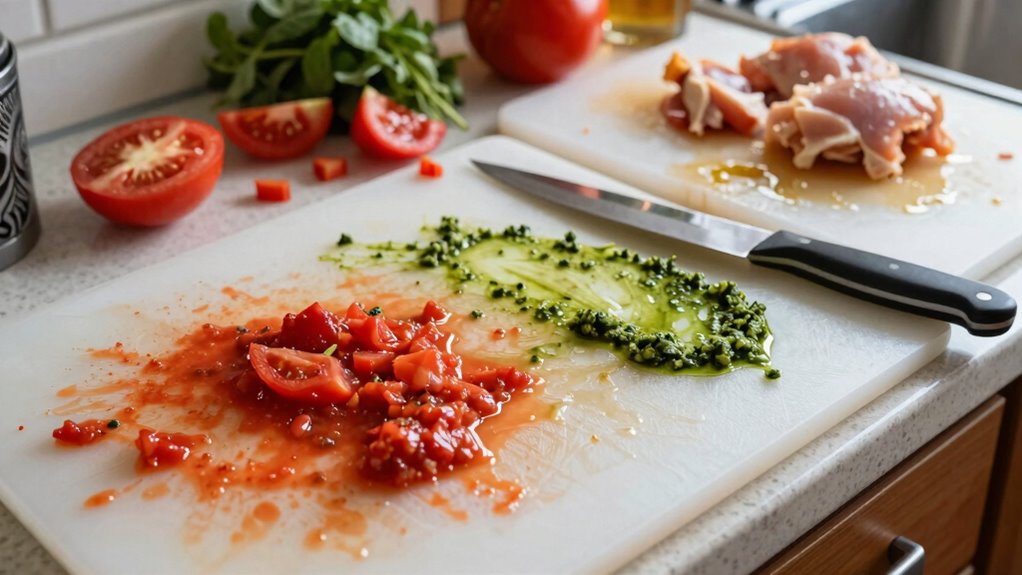
Choosing the right cutting boards is essential for preventing cross-contamination during breakfast preparation. Your choice of material and size can make a significant difference. Opt for separate boards for raw meats, fruits, and vegetables to avoid transferring bacteria. Select cutting boards made from non-porous materials like plastic or glass, which are easier to clean and sanitize. Consider the size; larger boards provide ample space for chopping and reduce clutter. Smaller boards are convenient for quick tasks but should be dedicated to specific foods. Avoid using the same board for different ingredients without proper cleaning. Proper material selection influences ease of cleaning and bacteria buildup. Additionally, understanding the surface porosity of your cutting boards helps prevent bacteria from hiding in tiny crevices, ensuring a safer food prep environment. Regular cleaning and proper maintenance are crucial for maintaining appliance hygiene, especially in busy kitchen settings.
Frequently Asked Questions
Can Cross-Contamination Occur With Cooked Foods at Breakfast?
Yes, cross-contamination can happen with cooked foods at breakfast. If you slice fruit on the same cutting board used for egg preparation or raw items without cleaning it, bacteria can transfer. Always use separate cutting boards for cooked and raw foods, and wash them thoroughly between tasks. This prevents bacteria from raw eggs or fruit from contaminating your cooked breakfast, keeping your meal safe to enjoy.
Are Plastic Cutting Boards Safer Than Wooden Ones?
You might think plastic cutting boards are safer, but don’t be fooled—they’re more durable and resistant to knife marks, making them easier to clean thoroughly. Wooden boards, though, have natural porosity that can trap bacteria if not maintained properly. It’s a classic case of “don’t judge a book by its cover,” so choose based on how well you can clean and care for them, not just durability or material.
How Often Should Cutting Boards Be Sanitized?
You should sanitize your cutting boards after each use to maintain kitchen hygiene and guarantee food safety. Regular cleaning with hot, soapy water isn’t enough; you need to disinfect with a solution like diluted bleach or vinegar, especially after cutting raw meat or poultry. This practice prevents cross-contamination and keeps your kitchen safe. Make it a habit to sanitize frequently, particularly when switching between different food types.
What Are the Signs of Bacterial Contamination on Cutting Boards?
You might notice a foul odor, slimy texture, or discoloration on your cutting board, all signs of bacterial contamination. To prevent this, follow proper knife safety and cleaning techniques—scrub thoroughly with hot, soapy water and disinfect regularly, especially after cutting raw meats or produce. If these signs appear, it’s best to replace the board or sanitize it more intensively to avoid cross-contamination.
Does Rinsing Cutlery Eliminate Bacteria Effectively?
Think of rinsing cutlery as a gentle tide washing away surface grime. Rinsing with water alone isn’t enough to eliminate bacteria; you need dish soap and a proper rinse duration to truly cleanse. Use warm water, add a splash of dish soap, and scrub thoroughly. Then, rinse well for at least 20 seconds to verify bacteria are flushed away, leaving your cutlery safe and sanitized for your next meal.
Conclusion
By changing your cutting board habits, you protect your health. Think of your breakfast as a fresh start, not a battleground for bacteria. Just as you wouldn’t serve raw meat and fruit on the same plate without washing, don’t cut both on the same board without cleaning. Small adjustments—like using separate boards—turn chaos into cleanliness. A safer breakfast begins with mindful choices, transforming a simple morning routine into a shield against cross-contamination.
Halloween Picks
halloween
As an affiliate, we earn on qualifying purchases.