
TL;DR

Get kitchen staples and gadgets delivered free with Prime
- Fast, free delivery on millions of items
- Prime Video, Amazon Music and more included
- Member-only deals all year
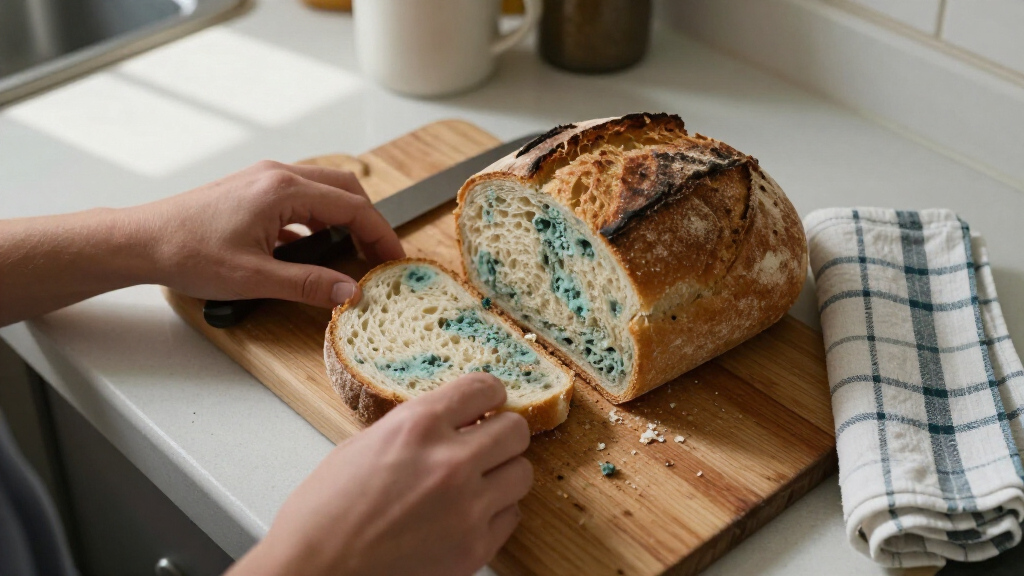
Food safety expert Darin Detwiler advises discarding an entire loaf when any bread is moldy, including sliced bread. Mold can spread through soft bread in microscopic threads that are not visible, so cutting away the affected area does not establish that the rest is safe.
A Good Housekeeping report says food safety expert Darin Detwiler advises discarding or composting an entire loaf if mold appears on any part of it. Because bread is soft and porous, mold can spread below the visible spot, making it impossible to judge the rest of the loaf by sight alone.
Detwiler, a professor emeritus of food regulatory affairs, told Good Housekeeping that mold sends out microscopic threads that may extend into the bread beyond the fuzzy patch. Those threads are too small to see, so removing the visibly moldy section does not show that the remaining bread is uncontaminated. The same advice applies to a sliced loaf: a single affected slice is not a reliable boundary for the mold’s spread.
The report says bread mold may also produce mycotoxins, substances that can be harmful. Detwiler cited possible health effects from consuming or inhaling mold, including nausea, vomiting and breathing problems, and said avoiding the risk is especially relevant for people who are immunocompromised. The report does not identify a particular mold species or quantify the likelihood of illness from a specific moldy loaf.
For disposal, Detwiler recommends putting the loaf in the trash or compost, rather than cutting around the spot or trying to salvage other slices. To help keep replacement bread fresh, he advises storing it dry in a breadbox or paper bag, which allow air to circulate. The report says the freezer is suitable for longer storage, while refrigeration can make bread stale more quickly.
Why One Moldy Slice Affects the Loaf
The practical issue is that visible mold does not mark the full extent of possible growth in a soft food. A cut surface may look clean while unseen threads remain elsewhere in the loaf, so appearance alone cannot establish that the remaining slices are safe. The report’s advice offers a clear household response: discard the loaf instead of relying on trimming.
This matters for people deciding whether to waste food or accept a possible health risk. The report describes potential symptoms and highlights additional concern for immunocompromised people, but it does not claim that every exposure causes illness. The recommendation is precautionary: the source says there is no dependable way to verify that the apparently unaffected bread is free of mold.
As an affiliate, we earn on qualifying purchases.
How Mold Spreads Through Bread
The Good Housekeeping article addresses a common food-storage question: whether bread can be treated like some harder foods by cutting away a moldy part. Detwiler’s explanation hinges on the difference between a firm food and bread’s soft, porous structure. In bread, mold threads can travel beneath the surface, where they cannot be spotted during a quick inspection.
The report also distinguishes between storage options. A breadbox or paper bag can let air circulate and limit moisture buildup, while a freezer can preserve bread for later use. Refrigeration is not presented as the best way to keep bread fresh because it may speed staling. The article does not give a storage duration or guarantee that any container will prevent mold.
“If we see [mold], it’s like the tip-of-the-iceberg sort of thing.”
— Darin Detwiler, food safety expert and professor emeritus of food regulatory affairs, as quoted by Good Housekeeping
What the Report Does Not Establish
The source does not identify the mold found on a particular loaf, state how quickly mold threads spread, or estimate the chance that someone will become ill after exposure. It also provides no test a household can use to confirm that bread beyond the visible patch is uncontaminated. Detwiler’s advice is to discard the loaf because visual inspection cannot answer that question, not because the report establishes that every mold exposure causes illness.
The article does not give a specific shelf life for bread kept in a breadbox, paper bag or freezer, and it does not say those methods eliminate mold risk. Its storage advice is general: keep bread dry, allow air circulation at room temperature, and use the freezer for longer storage.
What to Do With the Remaining Bread
If mold is visible on a loaf, the report’s recommended next step is to discard or compost the whole loaf, including slices that look unaffected. For future storage, keep bread dry in a paper bag or breadbox, or freeze it if it will not be used soon. The source does not provide a further announcement or scheduled follow-up; its guidance is practical advice rather than a developing policy or investigation.
Key Questions
Can I cut the moldy part off bread and eat the rest?
No. The report says mold can spread through bread in microscopic threads that are not visible. Cutting away the spot does not establish that the remaining bread is uncontaminated.
Should I throw out a whole sliced loaf if one slice has mold?
Yes. Detwiler’s advice applies to sliced bread as well, because mold may have spread beyond the slice where it first appears.
What symptoms can mold exposure cause?
The report lists possible effects including nausea, vomiting and breathing problems. It does not say that every exposure causes symptoms or give a risk estimate.
How should I store bread to help it last longer?
The report recommends keeping bread dry in a breadbox or paper bag, which allow air circulation. It says freezing is suitable for longer storage and refrigeration may make bread stale more quickly.
Source: rss
NFL season / tailgating Picks
team gear
As an affiliate, we earn on qualifying purchases.