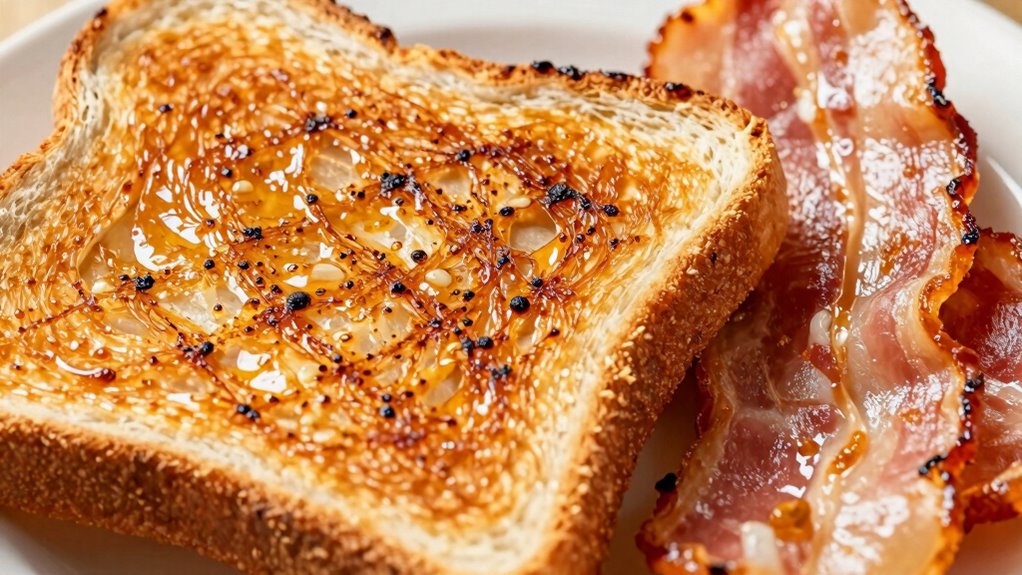

The Maillard reaction explains why toast turns golden and bacon becomes crispy. When you heat foods rich in sugars and amino acids, chemical reactions create new flavors, aromas, and browning. This process happens most efficiently at high temperatures above 150°C, with moisture control and pH playing key roles. By mastering these factors, you can enhance browning and flavor. If you keep exploring, you’ll uncover how to perfect your own crispy, flavorful creations.
Key Takeaways
- The Maillard reaction occurs when heat interacts with amino acids and sugars, creating the golden-brown color and complex flavors in toast and bacon.
- Optimal browning happens above 150°C (302°F), with higher temperatures accelerating flavor development and crust formation.
- Controlling moisture and pH levels enhances Maillard browning, preventing steaming or burning while developing rich, crispy textures.
- Overcrowding or low heat can hinder the Maillard reaction, leading to uneven browning and less flavor complexity.
- Precise temperature and seasoning management, like salting or drying, improve the Maillard process for perfectly crispy toast and bacon.
What Is the Maillard Reaction and Why Does It Matter?

Have you ever wondered why bread turns golden brown when baked or why grilled meat develops a savory aroma? That’s the Maillard reaction at work, a chemical process that occurs when heat interacts with amino acids and sugars. This reaction is essential because it’s responsible for flavor enhancement, giving your food complex, rich tastes that can’t be achieved through other cooking methods. It also plays a key role in aroma development, creating those irresistible smells that make you hungry. Without the Maillard reaction, your food would lack the deep, nuanced flavors and enticing scents we associate with perfectly cooked dishes. Understanding this process helps you appreciate how heat transforms ordinary ingredients into mouthwatering masterpieces. Chemical reactions are fundamental to the browning and flavoring process in many cooked foods.
How Heat Triggers the Maillard Reaction in Cooking
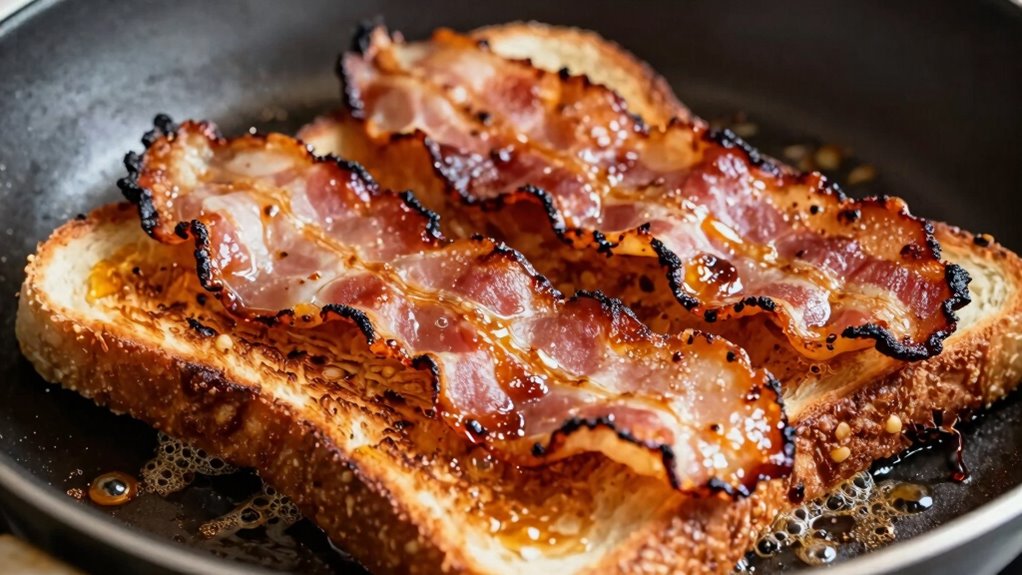
When heat interacts with food, it sets off a series of chemical reactions that transform raw ingredients into flavorful dishes. Heat transfer—whether through conduction, convection, or radiation—raises the temperature of your food, initiating the browning process. As temperature climbs, amino acids and sugars react faster, accelerating the Maillard reaction. This reaction requires a specific temperature range, usually above 285°F (140°C), to produce those rich, complex flavors. Proper heat control ensures optimal browning and flavor development during cooking. Additionally, thermal conductivity influences how quickly heat penetrates different foods, affecting the uniformity of browning and caramelization during the Maillard process. To achieve consistent results, understanding the heat transfer methods can help cooks fine-tune their techniques for different ingredients.
What’s Happening at the Molecular Level During Food Browning?
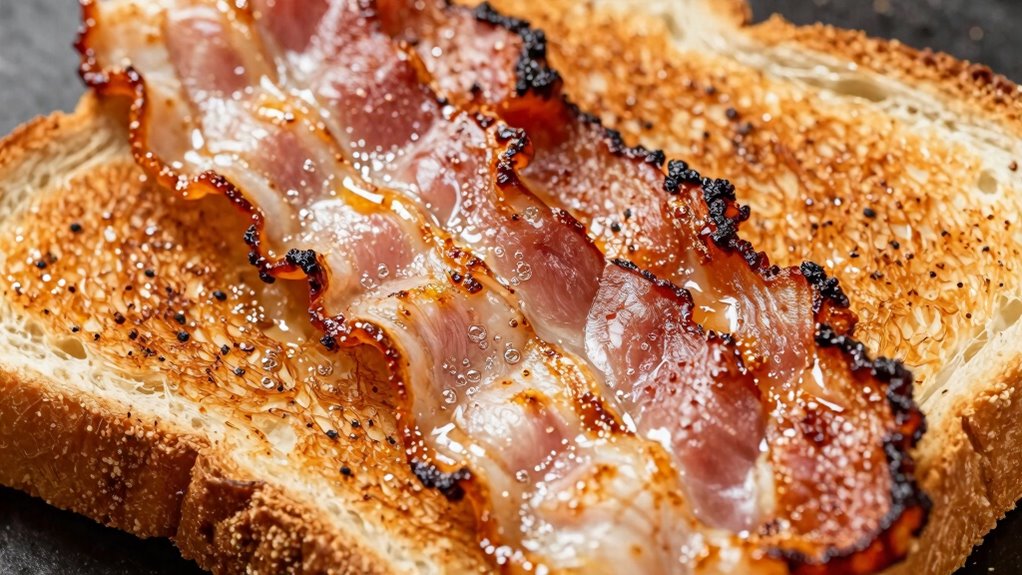
As heat causes food molecules to break down and recombine, complex chemical reactions unfold at the molecular level during browning. During Maillard chemistry, amino acids and sugars react, forming new molecules that create the rich aroma and appealing color you see. These reactions produce a variety of flavor compounds, giving foods their characteristic toasted, roasted, or caramelized notes. The process involves multiple steps, including the formation of intermediate compounds that further transform into complex molecules responsible for the distinctive taste and smell. As temperature rises, these reactions accelerate, intensifying browning and flavor development. Temperature control plays a crucial role in managing the rate of these chemical reactions, helping to prevent burning or underdeveloped flavors. Understanding these molecular changes helps explain why certain foods turn golden and crispy, revealing the fascinating chemistry behind the art of cooking. Additionally, controlling factors like heat and moisture can influence the browning process, which is essential for achieving desired textures and flavors. Recognizing the chemical reactions involved allows chefs and home cooks alike to optimize their techniques for perfect results. Moreover, knowledge of food chemistry enables more precise control over the cooking process, enhancing flavor and texture outcomes. Temperature management and moisture levels are critical factors in modulating the browning rate, ensuring optimal flavor development without burning.
Key Factors That Affect Maillard Browning in Foods

Temperature plays a pivotal role in Maillard browning; if it’s too low, the reaction slows down, but if it’s too high, it can burn quickly. Your food’s pH level also matters, as more alkaline conditions accelerate browning. Additionally, moisture content influences the process—too much moisture slows it, while lower water levels promote better browning. Controlling these factors ensures optimal Maillard reaction and enhances flavor development.
Temperature Thresholds
The Maillard reaction accelerates markedly once food reaches a certain temperature, making temperature thresholds essential for controlling browning. When you hit specific heat activation points, you unlock the rich flavors and golden hues we associate with perfectly cooked foods. Understanding these thresholds helps you avoid undercooking or burning. Proper temperature management is crucial for achieving consistent results, much like calibrating a mount, OTA, and camera setup for optimal imaging. Here are key points to consider: 1. 150°C (302°F): The initial phase of browning begins, creating subtle color and aroma. 2. 160°C (320°F): Rapid heat activation enhances flavor complexity. 3. 170°C (338°F): Browning intensifies, but risk of burning increases. 4. 180°C (356°F): Ideal for achieving crispy, golden textures without overdoing it. Mastering temperature thresholds ensures consistent, delicious results every time.
pH Levels Influence
Did you know that pH levels can considerably influence the Maillard reaction in your food? The acidity influence plays a vital role in browning processes. When your food has a higher pH, meaning it’s more alkaline, the Maillard reaction accelerates, leading to faster and darker browning. Conversely, acidic conditions slow down this reaction, resulting in lighter color and less flavor development. Adjusting pH levels through ingredients like baking soda or vinegar can modify how intensely foods brown during cooking. Maintaining the right pH balance helps you control the flavor, aroma, and appearance of your dishes. Understanding the acidity influence allows you to optimize browning, whether you want a deep crust or a delicate golden hue. Food chemistry and understanding food chemistry are essential for mastering cooking techniques that rely on the Maillard reaction. Your control over pH levels ultimately impacts the quality of the final cooked product. Additionally, pH control can be used strategically to enhance the nutritional profile of certain foods during processing.
Moisture Content Impact
Moisture content plays a significant role in determining how the Maillard reaction progresses during cooking. Too much moisture inhibits browning because it slows the temperature rise, limiting the Maillard reaction’s speed. Conversely, as moisture evaporates, the surface dries out, intensifying the drying effects that promote browning and flavor development. Your control over moisture influence can turn a pale crust into a golden masterpiece. Consider these key points:
- Excess moisture prevents browning, resulting in soggy textures.
- Proper drying concentrates sugars and amino acids, boosting flavor.
- Low moisture levels accelerate drying effects, creating crispiness.
- Achieving the right balance encourages *ideal* Maillard browning without burning. Proper moisture management is essential for consistent results and optimal flavor development during cooking.
Understanding moisture’s impact helps you craft perfectly browned foods with rich flavors and appealing textures.
Tips to Maximize Browning and Flavor Development in Your Cooking
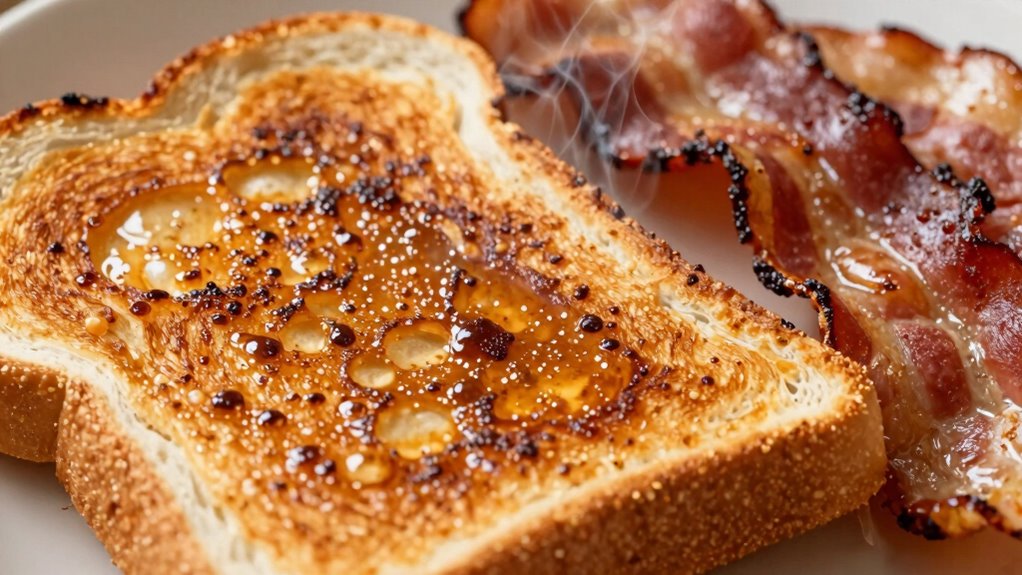
Maximizing browning and flavor development starts with understanding how the Maillard reaction works and controlling the cooking conditions accordingly. To enhance this process, use seasoning strategies that include dry herbs, spices, or a light dusting of sugar, which can boost browning. Keep in mind that high heat is essential; avoid overcrowding the pan to ensure even heat distribution. Proper plating techniques also matter—serve foods immediately after cooking to preserve their crispy exterior and rich aroma. Additionally, marinating meats with acidic ingredients can complement browning, while salt can help draw out moisture, promoting better browning. Managing cooking temperatures is crucial for optimal Maillard reaction activity, ensuring the perfect crust and flavor. By managing these factors, you’ll develop deeper, more complex flavors and achieve that perfect, appetizing crust.
Common Mistakes That Prevent Proper Maillard Browning

One common mistake that can hinder proper Maillard browning is crowding the pan. When you pack too much into it, the temperature drops, causing steaming rather than browning. This stalls the Maillard reaction and results in uneven, pale food. To avoid overcooking pitfalls, never cook in too-low heat or for too long, which can burn the surface or create bitter flavors. Be mindful of seasoning effects—excess salt or sugar can interfere with browning or cause uneven coloration.
Here are key mistakes to watch for:
- Overcrowding the pan, leading to steaming instead of browning
- Using too low heat, preventing proper browning
- Overcooking, which burns the surface and ruins flavor
- Ignoring seasoning effects, which can inhibit Maillard reactions
What’s the Difference Between Maillard Reaction and Caramelization?
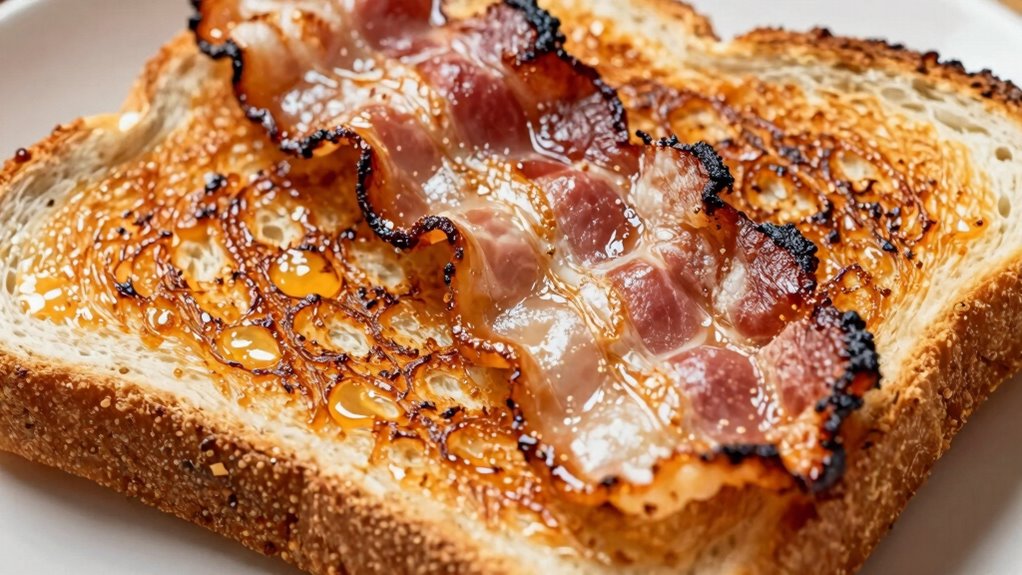
While both the Maillard reaction and caramelization produce delicious browned flavors, they are distinct chemical processes. The Maillard reaction occurs when amino acids and reducing sugars, like glucose and fructose, interact at moderate heat, creating complex flavors and browning. It often involves enzymes browning, which accelerates browning in fresh produce. In contrast, caramelization is solely sugar caramelization, where sugars break down under high heat, forming new compounds responsible for the golden color and rich taste. Unlike the Maillard reaction, caramelization doesn’t require proteins or amino acids. Understanding these differences helps you control browning in cooking, ensuring you achieve the desired flavor and color for your dishes. Both processes contribute unique qualities, but their chemistry and conditions set them apart clearly. Proper piercing care and hygiene can also help prevent complications during food preparation, emphasizing the importance of cleanliness in both cooking and personal care.
Creative Culinary Uses and Recent Innovations of the Maillard Reaction
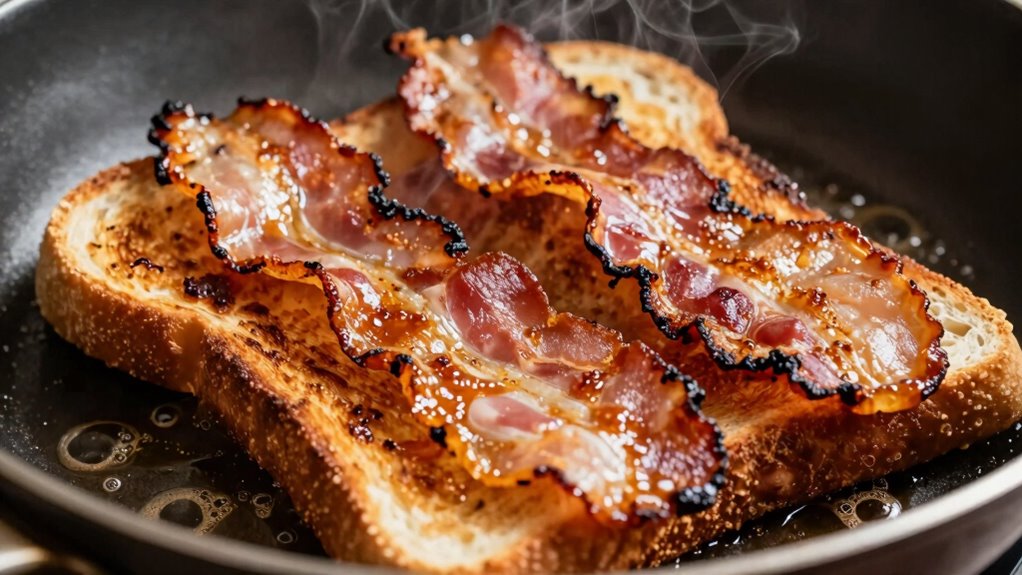
The Maillard reaction’s versatility extends far beyond traditional roasting and frying, inspiring innovative culinary techniques and presentations. In molecular gastronomy, chefs harness this reaction to create surprising textures and flavors, elevating dishes to art. You can experiment with innovative flavoring, developing complex profiles that surprise your palate. Here are some exciting culinary uses:
- Crafting edible foams and gels that showcase the Maillard-induced flavors.
- Using controlled heat to create rich, browned sauces with deep umami notes.
- Applying the reaction to develop unique crusts on fusion dishes.
- Infusing ingredients with roasted, caramelized aromas for enhanced sensory appeal.
- Exploring the chemical processes that enable precise control over browning and flavor development to push culinary boundaries. Understanding the youngster choice behind flavor formation can help chefs refine their techniques and achieve consistent results. Additionally, mastering thermal management techniques allows for more accurate control of browning levels and flavor profiles. Incorporating precise temperature control is essential in harnessing the Maillard reaction effectively, ensuring optimal results in modern culinary applications.
These innovations allow you to push culinary boundaries, making ordinary ingredients extraordinary through the science of the Maillard reaction.
Frequently Asked Questions
How Does pH Influence the Maillard Reaction?
You’ll find that pH levels substantially influence the Maillard reaction by affecting enzyme activity and sugar reactivity. When the pH is more alkaline, it accelerates the reaction, leading to quicker browning and richer flavors. Conversely, acidic conditions slow down enzyme activity, reducing browning. So, controlling pH helps you achieve the perfect balance of color and flavor in your toasted bread or crispy bacon.
Can the Maillard Reaction Occur at Low Temperatures?
Yes, the Maillard reaction can occur at low temperatures, but it’s much slower and less intense. At these temperatures, low temperature browning happens gradually, giving your food a subtle flavor change. Enzyme activity may influence initial reactions, but generally, the Maillard process requires higher heat to proceed efficiently. So, while you might see some browning at low temperatures, achieving the rich flavors and colors typically needs more heat.
What Role Do Amino Acids Play in Browning?
Amino acids play a vital role in browning by engaging in amino acid interactions that lead to protein modification. When heated, these interactions create complex compounds responsible for the golden color and rich flavors. You’ll notice this process during cooking, where amino acids react with sugars, enhancing aroma and taste. This protein modification is essential for developing the appealing crust on bread and crispy bacon, giving them their delicious, browned exterior.
Is the Maillard Reaction Responsible for Food Aroma?
Yes, the Maillard reaction is responsible for food aroma, playing a key role in aroma development. When you cook, this reaction creates complex, flavorful compounds that produce appealing smells. It’s what makes freshly baked bread or roasted coffee smell so inviting. As amino acids and sugars react under heat, they release volatile molecules that enhance your food’s aroma, making your dishes smell as delicious as they taste.
How Does Moisture Content Affect Maillard Browning?
Moisture content markedly affects Maillard browning by influencing water activity and moisture migration. When water activity is high, it slows down the Maillard reaction because water acts as a heat sink, reducing temperature. As moisture migrates away and water activity drops, the reaction accelerates, producing browning. So, controlling moisture levels allows you to optimize browning, ensuring your toast or bacon achieves that perfect golden, crispy finish.
Conclusion
As you master the Maillard reaction, you’ll notice how everyday moments—like toasting bread or frying bacon—transform simple ingredients into something extraordinary. Sometimes, it’s the small, unexpected changes in heat or timing that release richer flavors and perfect browning. In those fleeting moments of coincidence, you realize the magic isn’t just in the science, but in your hands. Embrace these surprises, and your cooking will always tell a delicious, beautiful story.