Discover the rich flavors of a traditional Mexican breakfast, where chilaquiles, tamales, and atole highlight Mexico’s culinary history. You’ll find dishes that emphasize regional ingredients, such as spicy salsa, masa dough, and sweet corn beverages. From hearty tamale varieties to innovative twists on classic flavors, you’ll experience a vibrant mix of history and modern influences. Keep exploring to uncover the secrets behind these cherished breakfast favorites and their cultural significance.
Key Takeaways
- Chilaquiles, tamales, and atole are traditional Mexican breakfast dishes with deep cultural roots and regional variations.
- Chilaquiles utilize fried tortillas with salsa, symbolizing resourcefulness and community, often enjoyed during celebrations.
- Tamales feature masa dough with diverse fillings like pork, chicken, or cheese, showcasing regional culinary diversity, especially in Oaxaca.
- Atole is a warm, sweet corn-based beverage flavored with fruits, spices, or vanilla, serving as a comforting breakfast staple.
- Modern adaptations include fusion flavors and artistic presentation techniques, enhancing traditional dishes’ visual appeal and taste.
The History and Cultural Significance of Chilaquiles
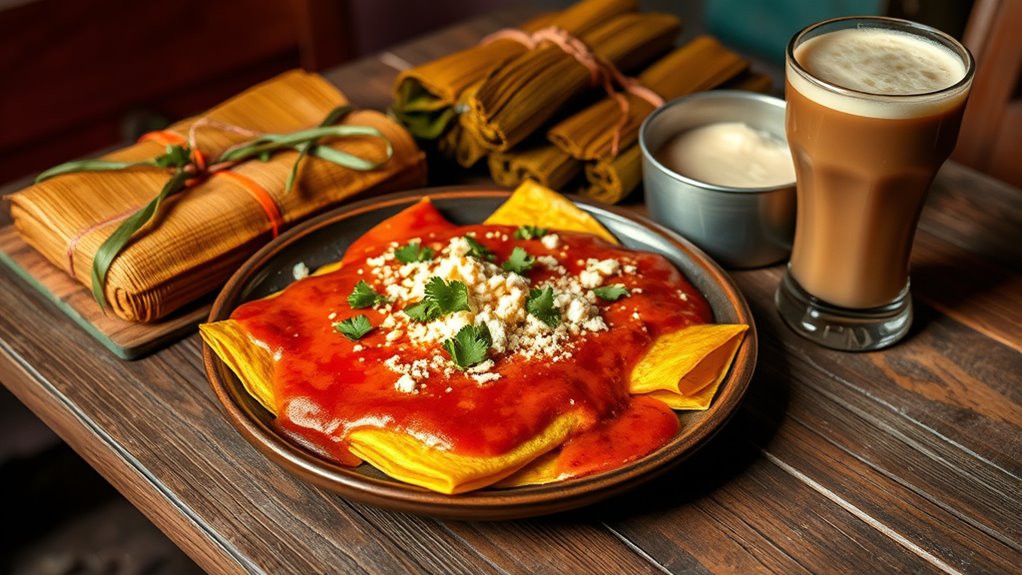
Chilaquiles hold a special place in Mexican cuisine because they blend history, culture, and tradition into a comforting breakfast. Their origins trace back centuries, possibly to pre-Hispanic times, when indigenous communities used leftover tortillas and chilies to create hearty dishes. Over time, chilaquiles became more refined, symbolizing resourcefulness and community. They carry cultural symbolism, representing nourishment and togetherness, often enjoyed during family gatherings or celebrations. The dish’s vibrant flavors reflect Mexico’s rich culinary history, blending local ingredients with traditional cooking methods. Today, chilaquiles remain a beloved staple, embodying the country’s history and cultural identity. By enjoying this dish, you connect with generations of Mexicans who have treasured it as a symbol of warmth and resilience. Additionally, the use of traditional ingredients highlights the enduring importance of regional flavors in Mexican gastronomy.
Exploring Different Types of Tamales

Building on the rich culinary traditions of Mexico, tamales stand out as a versatile and beloved dish that showcases regional flavors and techniques. When exploring the different types of tamales, you’ll notice a variety of tamale fillings that reflect local ingredients and cultural influences. Some popular types include:
Tamales reflect regional flavors and ingredients, showcasing Mexico’s rich culinary diversity and tradition.
- Red chili and pork—a classic, hearty option often found in central Mexico.
- Green tomatillo and chicken—offering a tangy, fresh flavor typical of the Yucatán region.
- Sweet tamales with fruits and sugar—great for dessert or breakfast, common in southern Mexico.
- Vegetarian options with beans, cheese, or vegetables—catering to diverse diets and regional tastes.
Each type of tamale highlights unique tamale fillings, making this dish incredibly adaptable and flavorful. Authentic ingredients play a significant role in distinguishing regional tamales, adding depth and authenticity to each variety.
The Making and Variations of Atole

Atole is a traditional Mexican beverage made by simmering masa or corn flour with water or milk, then sweetening it with sugar, cinnamon, or vanilla. To make it, you whisk the masa with the liquid until smooth, then heat it gently, stirring constantly to prevent lumps. Atole flavors vary widely; you can add fruits like strawberries or pineapple, or infuse it with spices such as cloves or anise for unique twists. The traditional preparation keeps it simple, emphasizing the rich, comforting taste of corn and the aromatic spices. The diverse flavors cater to different regional preferences and personal tastes. Some regions prefer thicker or thinner versions, adjusting the amount of liquid accordingly. No matter the variation, a good atole remains warm, smooth, and sweet, making it a perfect pairing for breakfast or chilly mornings.
Traditional Preparation Techniques and Tips
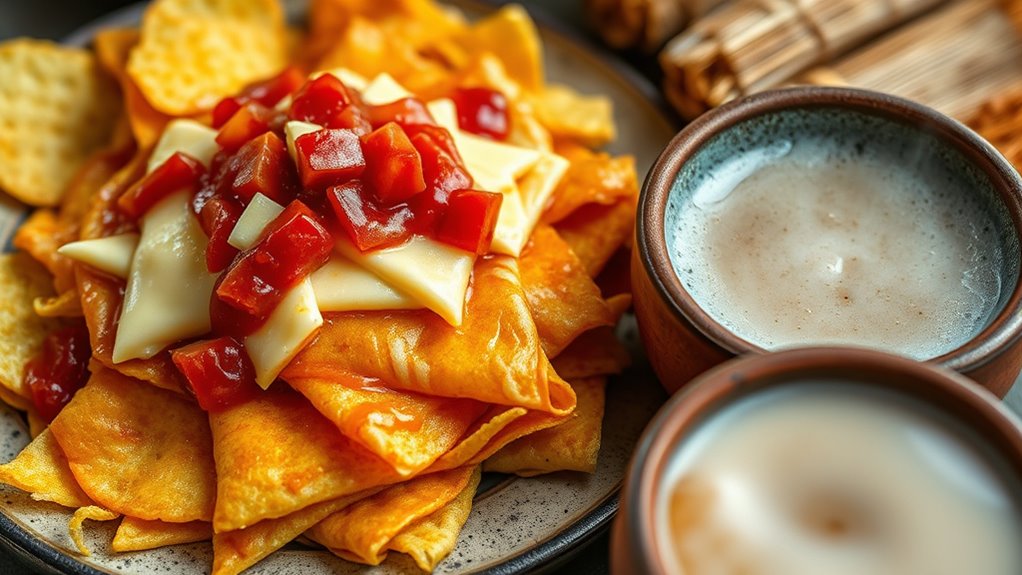
To prepare authentic Mexican breakfasts, you should focus on traditional cooking methods like using comals and clay pots for rich flavors. Make sure to use fresh, high-quality ingredients—especially for staples like corn and chilies—to get the best results. Keep these tips in mind to preserve the authentic taste and texture of classic dishes. Incorporating traditional cookware can also enhance the authenticity and flavor of your meals.
Authentic Cooking Methods
Authentic Mexican breakfast dishes rely heavily on traditional cooking methods that have been passed down through generations. To preserve authentic flavors, focus on sustainable sourcing for ingredients and use traditional utensils like molcajetes and comales. When preparing dishes like chilaquiles or tamales, follow these key techniques:
- Use fresh, locally sourced produce to enhance flavor and support sustainability.
- Grind spices and chilies with a molcajete for authentic texture.
- Cook sauces slowly over a low flame in a comal to develop depth.
- Incorporate time-honored methods like steaming tamales or toasting tortillas on a comal for genuine taste.
- Paying attention to traditional cooking methods ensures the authenticity and preservation of cultural culinary practices.
Essential Ingredient Tips
Mastering traditional Mexican breakfast dishes requires paying close attention to ingredient preparation. To enhance flavor, experiment with ingredient substitutions that suit your taste or availability, like swapping fresh tomatillos for tomatoes in salsas. Proper seasoning techniques are essential; taste as you go and balance acidity, spice, and salt to achieve authentic flavor. When preparing chilaquiles, use toasted tortilla chips for crunch and adjust the heat level with chilies or hot sauce. For tamales, select authentic ingredients like masa harina and lard, but feel free to substitute with plant-based alternatives if needed. Atole benefits from the right amount of sweetener and cinnamon. Remember, mastering these tips ensures your dishes stay true to tradition while allowing flexibility in your kitchen. Additionally, being mindful of environmental impacts and adopting sustainable practices can help preserve the ingredients and resources essential for traditional Mexican cuisine.
Regional Variations and Modern Twists

Different regions in Mexico put their unique spin on breakfast dishes, offering a rich variety to explore. In the north, expect hearty, spicy flavors, while Oaxaca showcases an array of moles and tamales. Modern twists blend traditional recipes with fusion flavors, creating exciting new breakfast experiences. Additionally, regional preferences influence the variety of payment methods used by local businesses, reflecting both cultural diversity and technological adaptation.
Northern Mexico: Spicy and Hearty
In Northern Mexico, breakfast dishes are known for their bold, spicy flavors and hearty ingredients that reflect the region’s rugged landscape. You’ll find meals packed with heat and substantial components designed to energize your day. Here are some regional highlights:
- Chilaquiles with spicy salsa verde or rojo, topped with cheese and eggs.
- Machaca con huevos, shredded beef cooked with peppers and tomatoes.
- Breakfast burritos filled with spicy chorizo, potatoes, and beans.
- Menudo, a hearty soup with tripe and chili peppers that packs a fiery punch.
High refresh rates enhance the overall experience of these vibrant dishes.
These dishes celebrate the region’s love for intense flavors and filling ingredients, making every morning a satisfying and spicy start to your day. Northern Mexico’s breakfast truly embodies hearty dishes with a kick.
Oaxaca: Moles and Tamales Variety
Oaxaca’s breakfast scene is a vibrant tapestry of flavors, centered around its renowned moles and tamales. Oaxaca moles are famous for their complex, layered flavors, blending chilies, spices, chocolate, and herbs. Each region offers its own twist, from the rich black mole to the fragrant red and green varieties. Tamale varieties in Oaxaca are equally diverse, with fillings ranging from chicken and pork to vegetarian options like cheese and vegetables. You’ll notice the use of banana leaves, which add aroma and authenticity. These tamales are often enjoyed alongside fresh salsas and local cheeses, creating a hearty, flavorful start to the day. Exploring Oaxaca’s moles and tamales gives you a true taste of the region’s culinary depth and cultural richness.
Modern Adaptations: Fusion Flavors
Modern twists on traditional Mexican breakfast dishes creatively blend regional flavors with international influences, offering exciting new options for breakfast enthusiasts. These fusion flavors often feature innovative fusion toppings that elevate familiar favorites. For example, you might see chilaquiles garnished with kimchi or tamales served with avocado crema and sriracha. Contemporary plating techniques also enhance visual appeal, turning humble dishes into artful presentations. Notable adaptations include:
- Incorporating Southeast Asian spices into salsas or sauces
- Adding grilled vegetables or proteins for a hearty, modern touch
- Using international cheeses or herbs to complement traditional ingredients
- Presenting dishes with minimalist, artistic arrangements for a contemporary look
- Understanding the 16PF traits behind flavor combinations can inspire creative culinary innovations.
These modern adaptations make traditional Mexican breakfast dishes more dynamic and appealing for today’s diverse palate.
Pairing Mexican Breakfast Dishes With Beverages
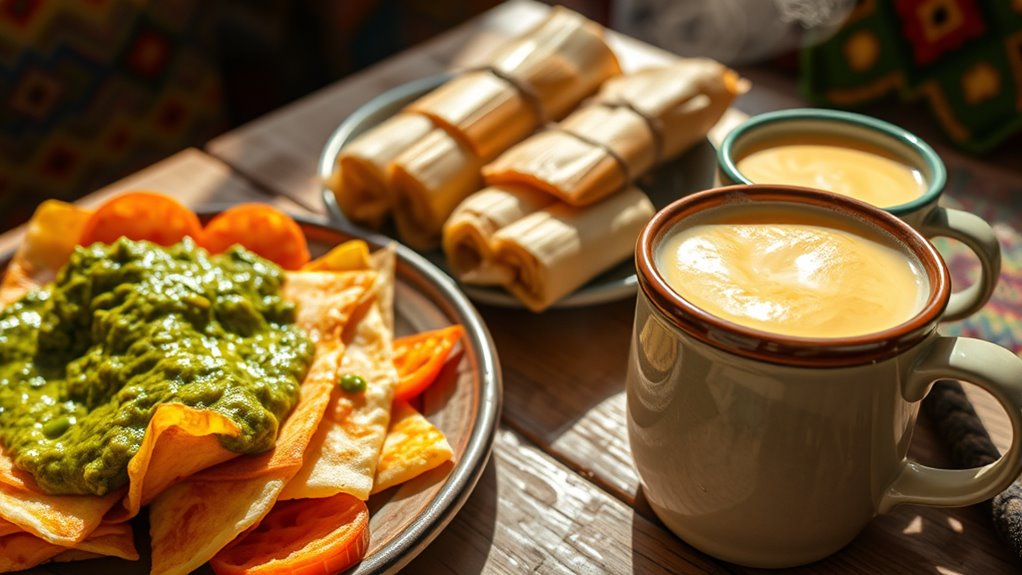
Pairing Mexican breakfast dishes with the right beverages can elevate your meal and highlight authentic flavors. When selecting beverage pairings, consider how each drink complements the dish’s ingredients and textures. For example, a warm cup of atole pairs beautifully with tamales, offering comfort and tradition. Chilaquiles go well with fresh fruit juices or a light coffee, balancing the richness of the sauce. Beverages in Mexican culture hold cultural significance, often tied to regional customs and history, making your meal more meaningful. By choosing traditional drinks like horchata, atole, or Mexican coffee, you honor the authentic experience and deepen your appreciation for Mexico’s culinary heritage. Proper pairing enhances the flavors and creates a more immersive, enjoyable breakfast.
Frequently Asked Questions
What Are the Best Accompaniments for Mexican Breakfast Dishes?
When choosing accompaniments for Mexican breakfast dishes, you can’t go wrong with salsa varieties. They add vibrant flavors and spice that elevate your meal. Pair your dishes with traditional beverage options like hot chocolate or fresh fruit juices. These choices complement the savory flavors and keep your breakfast authentic. Experiment with different salsas and beverages to find your perfect match, making your morning meal truly special.
How Do Dietary Restrictions Influence Traditional Mexican Breakfast Recipes?
You might find that dietary restrictions influence traditional Mexican breakfast recipes by encouraging gluten-free adaptations and dairy-free substitutions. For example, you could replace wheat tortillas with corn tortillas or use plant-based milk instead of dairy. These changes help you enjoy authentic flavors while respecting your dietary needs. By customizing recipes, you maintain the vibrant, comforting essence of Mexican breakfasts without compromising your health or preferences.
Are There Any Vegetarian or Vegan Options for Chilaquiles and Tamales?
You’ll find plenty of plant-based adaptations for chilaquiles and tamales. For vegan chilaquiles, substitute chicken broth with vegetable broth and use plant-based cheese or no cheese at all. For tamales, swap traditional lard with vegetable shortening or oil, and fill them with beans, vegetables, or plant-based proteins. Substitution tips like these make it easy to enjoy these dishes while maintaining a vegetarian or vegan diet.
How Can I Make Authentic Mexican Breakfast Dishes at Home Easily?
You can make authentic Mexican breakfast dishes easily at home by using traditional spice blends like cumin, oregano, and chili powder to boost flavor. Focus on fresh ingredients—tomatoes, onions, and cilantro—to enhance your dishes. For chilaquiles, toast your tortilla chips with salsa; for tamales, use pre-made masa dough and fill with veggies or beans. Keep it simple, fresh, and flavorful for an authentic taste.
What Are Some Common Mistakes to Avoid When Preparing These Dishes?
Cooking pitfalls can quietly undermine your efforts, so watch out. When preparing traditional dishes, avoid ingredient substitutions that don’t match the authentic flavors—this can dull their vibrant taste. Be gentle with chilaquiles to prevent sogginess, and don’t rush tamales, as patience ensures perfect texture. Missing these details might seem minor but can make a big difference, so stay attentive and respect each ingredient’s role for a truly delicious breakfast.
Conclusion
As you delve into traditional Mexican breakfast favorites like chilaquiles, tamales, and atole, you’ll find that each bite tells a story of history and culture. Sometimes, the simplest ingredients come together unexpectedly to create something extraordinary—much like how your own mornings can become rich with tradition and flavor. So, next time you prepare these dishes, remember that even a small breakfast can connect you to a vibrant, centuries-old heritage.