Nigerian breakfast staples like Akara, Moi Moi, and Pap are rich in history and cultural significance, representing Nigeria’s diverse culinary heritage. You’ll find Akara made from black-eyed peas, Moi Moi from peeled beans, and Pap from fermented maize—all offering nutritious, flavorful options. They range from traditional frying and steaming methods to modern twists that make them popular worldwide. Explore further to discover how these dishes continue to evolve and delight across the globe.

Get kitchen staples and gadgets delivered free — and shop member deals
- Fast, free delivery on millions of items
- Access to Prime Big Deal Days deals on October 6–7
- Prime Video, Amazon Music and more included
Key Takeaways
- Akara, Moi Moi, and Pap are traditional Nigerian breakfast dishes symbolizing community and cultural heritage.
- Akara is made from black-eyed peas, Moi Moi from peeled beans, and Pap from fermented maize.
- Preparation involves blending, frying or steaming, and boiling, with various regional and modern variations.
- These dishes are commonly served with vegetables, sauces, or beverages for balanced, flavorful meals.
- They are gaining global popularity through fusion recipes and modern culinary adaptations.
As an affiliate, we earn on qualifying purchases.
The Origins and Cultural Significance of Akara, Moi Moi, and Pap

Akara, Moi Moi, and Pap are more than just breakfast staples in Nigeria; they embody the country’s rich cultural history and diverse culinary traditions. These dishes hold deep cultural symbolism, often representing community, celebration, and hospitality. Their historical evolution reflects Nigeria’s diverse ethnic influences—from the Yoruba’s love for Akara to the Igbo’s preference for Moi Moi. Over time, these foods have transformed from traditional street foods to national symbols, enjoyed across social classes. Their origins date back centuries, rooted in indigenous recipes, yet they continue to adapt with modern ingredients and techniques. By sharing these dishes, Nigerians connect with their heritage, celebrating history while embracing contemporary culinary expressions.
Key Ingredients and Nutrition Profiles of Each Dish

Understanding the key ingredients behind these beloved Nigerian dishes reveals much about their flavor and nutritional value. Akara primarily uses black-eyed peas, onions, and spices, providing protein, fiber, and essential nutrients. Moi Moi combines peeled beans, oil, and seasonings, making it rich in plant-based protein and healthy fats. Pap, made from fermented maize, offers carbohydrates and probiotics that aid digestion. These ingredients can be adapted into fusion recipes or tailored for dietary needs, like reducing oil for lower fat intake or substituting ingredients for gluten-free options. Overall, each dish balances flavor with nutrition, making them versatile staples that support various dietary adaptations while remaining true to traditional roots. Their key ingredients not only define taste but also contribute to a nourishing breakfast experience.
Traditional Preparation Techniques and Variations

Traditional Nigerian breakfast dishes are prepared using time-honored techniques that emphasize simplicity and flavor. For Akara and Moi Moi, you start with blending beans, onions, and spices into smooth pastes, then frying or steaming to achieve their signature textures. Pap involves boiling millet or cornmeal until it thickens into a porridge. To add variety, many cooks incorporate fusion recipes, blending local ingredients with international flavors. Ingredient substitutions are common; for example, you might swap black-eyed peas for black beans in Moi Moi or use plantains instead of millet for Pap. These variations allow you to customize each dish without compromising tradition. The core techniques remain consistent—grinding, mixing, and cooking—highlighting the versatility and enduring appeal of Nigerian breakfast classics. Cooking techniques play a vital role in preserving authenticity while allowing creative adaptations.
Serving Suggestions and Complementary Dishes
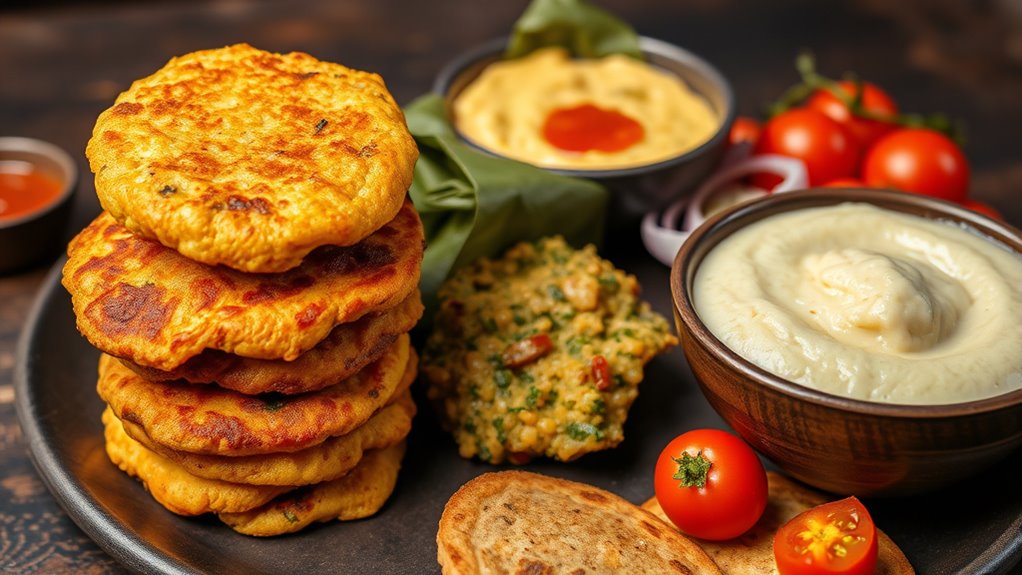
To truly enjoy Nigerian breakfast dishes, pairing them with the right side items and condiments enhances their flavors and creates a balanced meal. For a vibrant presentation, serve akara and moi moi with fresh vegetables, spicy sauces, or tangy salsas. Fusion flavors work beautifully when you add elements like avocado, cheese, or even international dips, elevating the traditional dishes. Presentation tips include using colorful plates or garnishing with herbs and sliced peppers to make the meal visually appealing. Pap pairs well with honey, sugar, or milk to suit your taste. Incorporating presentation techniques such as plating with colorful garnishes can make the meal more enticing. By thoughtfully combining these sides and condiments, you not only enrich the flavors but also create an inviting, well-rounded breakfast experience that highlights both tradition and creativity.
Modern Twists and Popularity Beyond Nigeria

Nigerian breakfast dishes have gained popularity worldwide, thanks to their bold flavors and hearty ingredients. Chefs and home cooks are now creating fusion recipes that blend traditional Akara, Moi Moi, and Pap with global cuisines, making them more accessible. International adaptations often feature added spices, herbs, or ingredients like cheese, avocado, or chilies to suit local tastes. These modern twists appeal to diverse palates and help spread Nigerian culinary culture beyond Africa. You might find Akara served with sweet chutneys or Moi Moi incorporated into sandwiches, showcasing their versatility. The global appetite for authentic and innovative flavors keeps these dishes trending, proving that Nigerian breakfast classics can evolve while maintaining their delicious roots.
Frequently Asked Questions
How Long Does It Take to Prepare Each Dish From Start to Finish?
Preparation times vary based on ingredient variations and your experience. Typically, it takes about 20-30 minutes to prepare each dish from start to finish. For example, Akara might take longer due to frying, while Moi Moi requires steaming, which can extend the process. Pap is quicker, often ready in around 10-15 minutes. Planning ahead helps make certain you manage your time efficiently for a delicious breakfast.
Are There Any Common Allergens Found in Nigerian Breakfast Classics?
Think of Nigerian breakfast classics as a tapestry woven with diverse ingredients. You should be aware that some dishes may contain common allergens like gluten, especially if wheat flour is used, and nuts, which are sometimes added for flavor. If you have gluten concerns or nut allergies, it is crucial to check ingredient lists or ask about preparation methods. Being cautious ensures you enjoy these delicious dishes safely.
Can Akara, Moi Moi, and Pap Be Made Vegan or Gluten-Free?
You can definitely make akara, moi moi, and pap vegan or gluten-free. For vegan substitutes, use flaxseed or chia seeds instead of eggs in akara and moi moi, and plant-based oils. To make them gluten-free, choose gluten-free flours like rice or cassava flour for akara and moi moi. Pap is naturally gluten-free, so no change needed. These options let you enjoy traditional flavors with dietary modifications.
What Are Traditional Occasions or Festivals Where These Dishes Are Prominently Served?
Imagine a vibrant tapestry woven with colorful threads—this is how Nigerian festivals and traditional celebrations come alive. During these Festive Celebrations, dishes like Akara, Moi Moi, and Pap take center stage, symbolizing unity and cultural pride. They’re prominently served during lively occasions such as the New Yam Festival, Egungun Festival, and Christmas, where food becomes a shared language, honoring age-old Cultural Traditions and community spirit.
How Do Regional Differences Within Nigeria Influence These Dishes’ Flavors?
You’ll notice regional differences within Nigeria influence these dishes’ flavors through spice variations and ingredient substitutions. In the north, you might find more spicy, peppery flavors, while southern regions favor milder, sweeter profiles. Local ingredients also shape the dishes; for example, you could see different beans or seasonings used. These regional spice variations and ingredient substitutions give each version a unique taste, reflecting Nigeria’s diverse culinary traditions.
Conclusion
Explore the delightful dance of akara, moi moi, and pap, where tradition and taste twirl together. These beloved breakfast bites bring bold beauty to your mornings, blending history, health, and happiness. Whether you stick to the simple secrets or spice things up with modern twists, you’ll savor each soulful, satisfying bite. Embrace these enduring dishes, and let their rich roots and rustic flavors reignite your craving for Nigerian breakfast classics.
NFL season / tailgating Picks
team gear
As an affiliate, we earn on qualifying purchases.