If your waffles keep falling flat, it’s likely due to batter issues or temperature problems. Make certain your batter is smooth, pourable, and not too liquid or thick. Avoid overmixing, which can make waffles dense, and guarantee all ingredients are at room temperature. Preheat your waffle iron properly to help set the batter and maintain shape. Following these tips can improve your results, and there’s more to discover that can help perfect your waffles.

Get kitchen staples and gadgets delivered free — and shop member deals
- Fast, free delivery on millions of items
- Access to Prime Big Deal Days deals on October 6–7
- Prime Video, Amazon Music and more included
Key Takeaways
- Use the right batter consistency—avoid too thin or overly thick batter for proper rise and shape.
- Mix ingredients gently until just combined to prevent gluten development and dense waffles.
- Preheat the waffle iron thoroughly to ensure proper setting and prevent batter from spreading.
- Ensure ingredients are at room temperature to improve batter flow and consistency.
- Adjust liquid and flour amounts to achieve a pourable, lightly coating batter for optimal fluffiness.
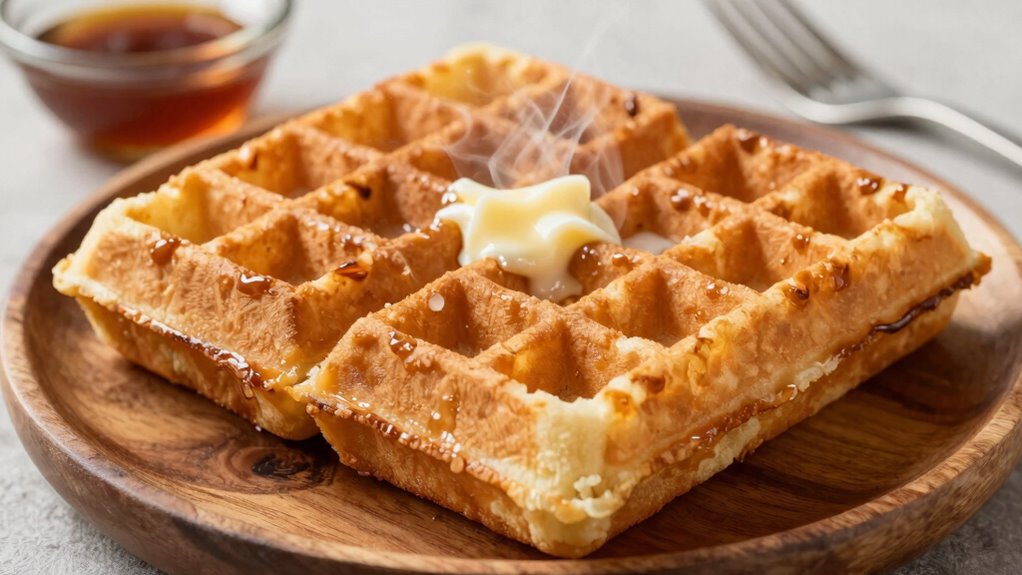
Ever wondered why your waffles sometimes turn out flat and lacking that perfect crunch? It’s often a matter of waffle texture, which is directly influenced by your batter consistency. When your batter is too thin or runny, your waffles won’t hold their shape well in the iron, leading to a flat appearance and a soggy texture. Conversely, if the batter is too thick, it might be difficult to spread evenly, resulting in uneven cooking and a dense, rubbery waffle. Striking the right balance in batter consistency is key to achieving fluffy, crispy waffles with a pleasing texture.
Proper batter consistency is key to fluffy, crispy, and well-shaped waffles.
To improve your waffle texture, start by evaluating your batter. A good waffle batter should be smooth and pourable but not overly liquid. It should coat a spoon lightly, with some thickness to hold air bubbles. When mixing your ingredients, be cautious not to overmix. Overmixing develops gluten in the flour, which can make your waffles tough and dense rather than light and airy. Instead, mix until just combined, leaving small lumps in the batter. This helps incorporate air, which contributes to fluffiness, and prevents gluten from forming excessively. Additionally, proper mixing technique can help preserve the batter’s lightness and prevent overdevelopment of gluten.
Another common mistake is using ingredients that affect batter consistency. Too much liquid, such as milk or water, can thin out the batter, causing your waffles to spread and flatten during cooking. To fix this, consider reducing the liquid slightly or adding a bit more flour to thicken the mixture. On the other hand, if your batter feels too stiff, add small amounts of liquid gradually until the desired pourable consistency is reached. Paying attention to these proportions makes a noticeable difference in the final waffle texture.
Temperature also plays a role in batter consistency and waffle quality. Make sure your ingredients are at room temperature before mixing. Cold ingredients can cause clumping and affect how the batter flows. Additionally, preheat your waffle iron thoroughly. An adequately heated iron helps set the batter quickly, preventing it from spreading too much and becoming flat. If your waffle iron isn’t hot enough, the batter can ooze out, resulting in a soggy, flat waffle. Ensuring the right batter temperature can significantly impact the outcome.
As an affiliate, we earn on qualifying purchases.
Frequently Asked Questions
Can the Type of Flour Affect Waffle Texture?
Yes, the type of flour affects waffle texture. Regular all-purpose flour promotes gluten development, giving your waffles structure and a tender crumb. Using flour alternatives like almond or rice flour can result in a different texture, often more delicate or crumbly, because they don’t develop gluten the same way. Experimenting with different flours can help you achieve your preferred waffle consistency, whether you want crispiness or softness.
Does Resting Batter Improve Waffle Fluffiness?
Yes, resting batter can improve waffle fluffiness. Imagine a thick, sluggish river versus a lively, flowing stream—that’s how resting affects batter consistency. By letting it sit, you allow the flour to fully absorb moisture and the gluten to develop, which results in a lighter texture. Also, using ingredient temperature—cold milk and eggs—slows gluten formation, giving your waffles a tender, airy interior rather than dense, flat ones.
How Does Altitude Influence Waffle Recipe Outcomes?
Altitude challenges can cause your waffles to turn out different than expected, often making them flatter or drier. To adapt, you should make recipe adjustments like reducing baking powder or baking soda, and increasing liquids slightly. You might also need to alter cooking times. These tweaks help counteract the effects of lower air pressure, ensuring your waffles stay fluffy and delicious despite altitude challenges.
Should I Preheat the Waffle Iron Before Pouring Batter?
Yes, you should preheat your waffle iron before pouring batter. It guarantees your waffles cook evenly and become crisp. Preheating also helps with waffle storage; freshly made waffles stay crisp longer if cooked properly from a hot iron. Plus, a hot iron makes it easier to add waffle toppings later, as they won’t soggy or stick. Always preheat for the best texture and flavor in every bite.
Can Adding Sugar Impact Waffle Rise and Crunch?
Adding sugar can impact your waffle’s rise and crunch by influencing sweetness balance and sugar crystallization. Sugar enhances browning and crispness, but too much can make the batter too dense, preventing proper rise. Balance the sugar to guarantee your waffles are sweet without compromising texture. Sugar crystallization helps form a crisp exterior, but overdoing it may cause excessive crunch or uneven cooking. Adjust sugar carefully for perfect waffles.
Conclusion
Now that you know the common pitfalls and their fixes, your waffles can rise to their full golden glory. Think of your batter as a blank canvas—by tweaking your technique, you’re painting a masterpiece every time. Remember, even the best chefs face flops; it’s part of the journey. With a little patience and practice, you’ll turn your flat waffles into fluffy works of art—sweet victories in every bite.
NFL season / tailgating Picks
team gear
As an affiliate, we earn on qualifying purchases.