You’re influenced by breakfast menu prices that use psychological tricks like ending prices in .99 or .95 to make items seem cheaper and more appealing. This strategy taps into how your brain focuses on the first digit, making the actual cents less noticeable. It creates perceived savings, encourages quick decisions, and prompts you to spend more. If you keep exploring, you’ll discover how these tactics subtly guide your choices and boost restaurant sales.

Get kitchen staples and gadgets delivered free with Prime
- Fast, free delivery on millions of items
- Prime Video, Amazon Music and more included
- Member-only deals all year
Key Takeaways
- Prices ending in .99 or .95 create the perception of better deals, influencing quick decision-making.
- Small cents differences are often overlooked, making prices appear lower and more attractive.
- Such pricing tricks evoke a sense of savings and value, encouraging impulse purchases.
- Pricing strategies guide consumer choices subtly, especially in fast-paced breakfast environments.
- These tactics leverage psychological biases to prompt higher spending and reduce hesitation.
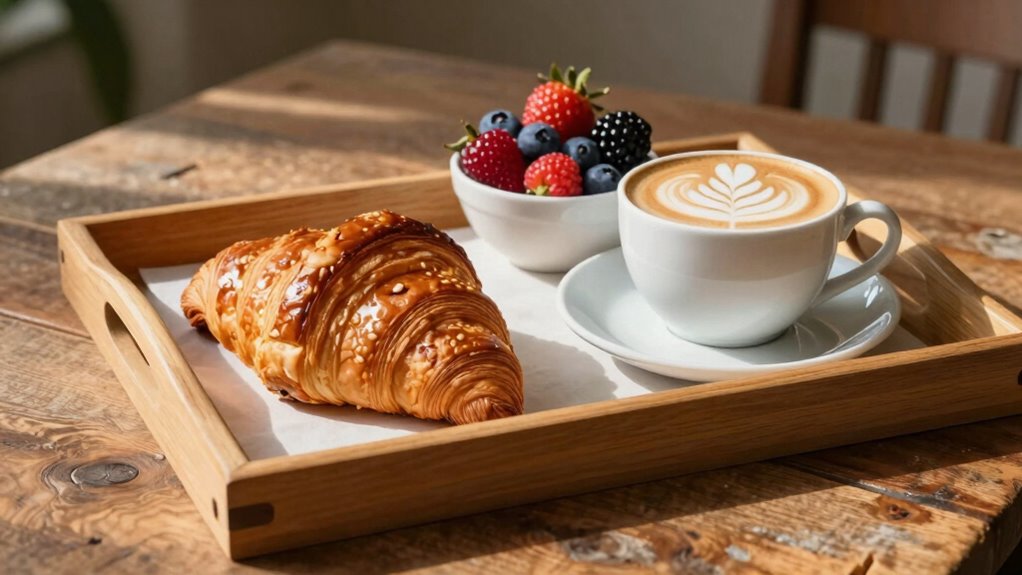
Have you ever wondered why breakfast menus often feature prices ending in .99 or .95? It’s not just about tradition or making prices look lower; there’s real psychology behind these numbers. When you see a price like $4.99 instead of $5.00, your mind perceives it as substantially cheaper. This phenomenon, known as pricing perception, influences how you evaluate the value of what you’re about to order. You might think you’re getting a better deal, even if the actual difference is just a penny. This subtle trick taps into consumer behavior, steering you toward making quicker decisions and feeling more satisfied with your purchase. It’s a strategic move used by restaurants to create an illusion of savings and value, encouraging you to choose certain items over others simply because the price feels more appealing.
Your reaction to these prices isn’t accidental; it’s rooted in how your brain processes numbers and value. When you see a menu with prices ending in .99 or .95, your brain tends to focus on the first digit, often ignoring the cents. This cognitive shortcut makes the price seem lower than it actually is, which can make you more inclined to order the item. Restaurants know this, and they leverage it to influence your choices. If a breakfast dish is priced at $8.95 instead of $9.00, you might perceive it as more affordable, even though the difference is minimal. This perception encourages you to spend a little more on other items, feeling like you’re getting a good deal overall.
Furthermore, these pricing strategies tap into consumer behavior by creating a sense of urgency. When prices end in .99, it signals a deal or discount, prompting you to act quickly before the opportunity slips away. It’s a psychological nudge that reduces hesitation and increases the likelihood of impulse purchases. Understanding consumer psychology is essential for restaurants to effectively design their menus and pricing strategies. This is especially effective in busy breakfast spots where quick decisions are common. The subtle art of ending prices in .99 or .95 isn’t just about aesthetics; it’s about understanding human psychology and steering consumer choices in favor of the restaurant. So next time you’re ordering breakfast, recognize how these small price details influence your perception of value and your behavior, often without you even realizing it.
breakfast menu pricing strategy book
As an affiliate, we earn on qualifying purchases.
As an affiliate, we earn on qualifying purchases.
Frequently Asked Questions
How Do Seasonal Changes Affect Breakfast Menu Pricing Strategies?
Seasonal changes impact your breakfast menu pricing by shifting seasonal demand and ingredient costs. When demand rises during holidays or seasons, you can increase prices slightly, knowing customers are willing to pay more. Conversely, during off-peak times, lowering prices or offering specials helps attract customers. You should also consider ingredient costs, which fluctuate seasonally, to maintain profit margins without alienating budget-conscious diners.
What Role Does Competitor Pricing Play in Menu Item Costs?
You should consider competitor pricing because it influences your price elasticity and value perception. When rivals set lower prices, you might need to adjust your menu item costs to stay attractive, ensuring customers see your offerings as providing good value. Conversely, if your prices are higher, emphasizing quality or unique features can justify costs and maintain customer loyalty. Monitoring competitors helps you balance affordability with perceived value, keeping your menu competitive.
How Does Customer Income Level Influence Breakfast Pricing?
Your customers’ income levels substantially impact breakfast pricing. If they’re income sensitive, you’ll want to keep prices affordable to attract a broader audience. Conversely, luxury branding appeals to higher-income clients willing to pay more for premium experiences. Understanding your target market’s income level allows you to set prices that resonate with their spending habits, maximizing sales and reinforcing your restaurant’s positioning—whether as budget-friendly or upscale.
Do Cultural Factors Impact Breakfast Menu Price Perceptions?
Your perception of breakfast menu prices can be wildly influenced by cultural factors, making price differences seem like a world of their own. Cultural influences shape what you expect to pay, and perception differences determine whether you see a price as fair or steep. These factors can make a breakfast seem like a luxurious treat or an everyday expense, showing just how deeply culture impacts how you view menu pricing.
How Often Should Restaurants Adjust Their Breakfast Prices?
You should adjust your breakfast prices based on demand and price elasticity, which indicates how sensitive customers are to price changes. Regularly reviewing sales data helps identify ideal points. Offering promotional discounts during slow periods can attract more customers without permanently lowering prices. Keep an eye on competitors and customer feedback, adjusting prices periodically—perhaps quarterly or seasonally—to maximize revenue while maintaining customer satisfaction.
Conclusion
So, next time you glance at a breakfast menu, remember it’s more than just food—it’s a mirror reflecting your choices. The prices are like silent signals, guiding your decision without you realizing. Just as a sunrise hints at new beginnings, these subtle tactics shape your day’s start, often before your first sip of coffee. Recognize the dance behind the prices, and you hold the power to choose consciously, turning breakfast into a mindful ritual rather than a mere transaction.
Halloween Picks
halloween
As an affiliate, we earn on qualifying purchases.